
Difference Between Stroke and Heart Attack: Symptoms, Causes, and Treatment

Heart attacks and strokes are two of the most serious medical emergencies that affect millions of people every year. Many people confuse these two conditions because both involve blocked blood flow and can lead to life-threatening complications. However, they affect different organs and have different symptoms, causes, and treatments.
Understanding the difference between stroke and heart attack is very important because early recognition and quick treatment can save lives. If a person receives medical care within the first few hours, doctors can significantly reduce the damage caused to the heart or brain.
In this guide, we will clearly explain the difference between stroke and heart attack, their symptoms, causes, treatment options, and prevention tips so that everyone can recognize the warning signs early.
What Is a Heart Attack?
A heart attack occurs when the blood supply to the heart muscle becomes blocked. This blockage usually happens due to a buildup of fatty deposits called plaque inside the coronary arteries.
When the blood flow stops, the heart muscle does not receive enough oxygen. If treatment is not given quickly, the heart muscle begins to die.
Heart attacks are one of the leading causes of death worldwide, but many people survive when they receive immediate medical treatment.
Patients experiencing symptoms should immediately seek care at a Multispeciality Hospital in Kadapa where emergency cardiac treatment is available.
What Is a Stroke?
A stroke happens when the blood supply to the brain is interrupted. The brain cells require a constant supply of oxygen and nutrients from the blood. When blood flow stops, brain cells begin to die within minutes.
There are two main types of stroke:
1.Ischemic stroke
This is the most common type and occurs when a blood clot blocks an artery supplying blood to the brain.
2.Hemorrhagic Stroke
This happens when a blood vessel in the brain bursts, causing bleeding inside the brain.
Because the brain controls many functions of the body, a stroke can cause serious complications such as paralysis, speech problems, and memory loss.
Immediate treatment from specialists at a Neurosurgery Hospital in Kadapa can help reduce brain damage and improve recovery.
Difference Between Stroke and Heart Attack
Many people think that stroke and heart attack are the same condition, but they are quite different. Understanding the difference between stroke and heart attack can help people recognize the symptoms faster and seek emergency care.
| Feature | Heart Attack | Stroke |
|---|---|---|
| Organ affected | Heart | Brain |
| Main cause | Blocked coronary artery | Blocked or burst brain blood vessel |
| Common symptom | Chest pain | Sudden weakness or paralysis |
| Medical specialty | Cardiology | Neurology |
| Treatment | Angioplasty, medication | Clot-busting drugs, surgery |
Both conditions are medical emergencies and require immediate treatment.
Patients experiencing symptoms should visit a Cardiology Hospital in Kadapa or emergency care center without delay.
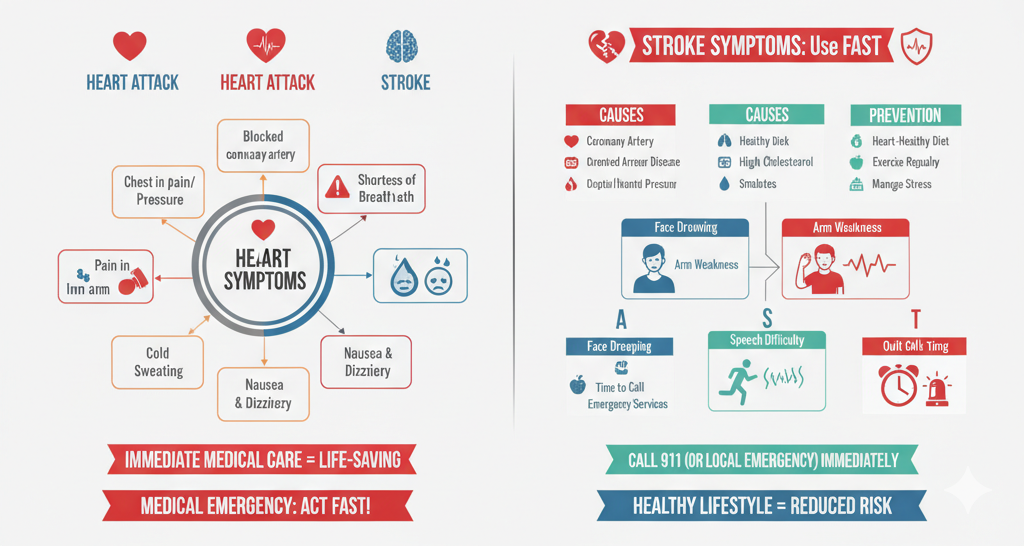
Symptoms of a Heart Attack
Recognizing the symptoms of a heart attack early can save lives. Many people ignore the warning signs or mistake them for acidity or muscle pain.
Common heart attack symptoms include:
Chest Pain or Pressure
This is the most common symptom. The pain may feel like tightness, squeezing, or heaviness in the chest.
Pain in Other Areas
The pain may spread to the arms, neck, jaw, shoulders, or back.
Shortness of breathe
Difficulty breathing may occur even while resting.
Cold Sweating
Many people experience sudden sweating along with chest discomfort.
Nausea and Dizziness
Some people may feel nauseous or light-headed during a heart attack.
If these symptoms appear, immediate treatment from a Cardiothoracic Surgery Hospital in Kadapa may be required for life-saving procedures.
Symptoms of a Stroke
Stroke symptoms appear suddenly and require immediate medical attention.
Doctors often use the FAST rule to recognize stroke symptoms:
F – Face Drooping
One side of the face may droop or feel numb.
A – Arm Weakness
The person may not be able to raise one arm.
S – Speech Difficulty
Speech may become slurred or difficult to understand.
T – Time to call Emergency Services
Immediate medical treatment is critical.
Other stroke symptoms include:
- Sudden severe headache
- Difficulty seeing
- Loss of balance
- Confusion
- Numbness on one side of the body
Early treatment at a Neurosurgery Hospital in Kadapa can prevent long-term brain damage.
Causes of Heart Attack
Several factors can increase the risk of heart attacks.
Coronary Artery Disease
This is the most common cause. Fatty deposits narrow the arteries supplying blood to the heart.
High Blood Pressure
Hypertension damages blood vessels and increases the risk of blockage.
High Cholesterol
Excess cholesterol leads to plaque formation in arteries.
Smoking
Smoking damages blood vessels and increases clot formation.
Diabetes
People with diabetes have a higher risk of heart disease.
Regular health checkups at a Cardiology Hospital in Kadapa help detect these risk factors early.
Causes of Stroke
Stroke risk factors are similar to those of heart attacks.
High Blood Pressure
This is the leading cause of stroke.
Blood Clots
Clots can travel to the brain and block blood flow.
Heart Disease
Certain heart conditions increase stroke risk.
Smoking and Alcohol
Both can damage blood vessels and increase stroke risk.
Obesity
Excess weight increases the risk of both stroke and heart disease.
Lifestyle changes and preventive care at a Multispeciality Hospital in Kadapa can significantly reduce these risks.
Treatment for Heart Attack
Treatment for heart attack focuses on restoring blood flow to the heart.
Medications
Doctors may give medications to dissolve clots and improve blood flow.
Angioplasty
A procedure where doctors open blocked arteries using a balloon and stent.
Coronary Artery Bypass Surgery
In severe cases, surgeons create a new path for blood to flow around blocked arteries.
These procedures are performed by specialists at a Cardiothoracic Surgery Hospital in Kadapa.
Treatment for Stroke
Stroke treatment depends on the type of stroke.
Clot-Dissolving Medication
Used for ischemic strokes to restore blood flow.
Endovascular Procedures
Doctors remove clots using specialized instruments.
Brain Surgery
In hemorrhagic strokes, surgery may be needed to stop bleeding.
Expert treatment at a Neurosurgery Hospital in Kadapa can improve recovery outcomes.
Prevention Tips for Stroke and Heart Attack
Although these conditions are serious, many cases can be prevented with healthy lifestyle choices.
Maintain Healthy Blood Pressure
Regular monitoring helps detect hypertension early.
Eat a Heart-Healthy Diet
Include fruits, vegetables, whole grains, and healthy fats.
Exercise Regularly
Physical activity improves heart and brain health.
Quit Smoking
Smoking significantly increases the risk of stroke and heart attack.
Manage Stress
Chronic stress affects heart health.
Regular Health Checkups
Routine screening at a Multispeciality Hospital in Kadapa helps detect risk factors early.
When Should You See a Doctor?
Seek immediate medical attention if you experience:
- Chest pain lasting more than a few minutes
- Sudden weakness on one side of the body
- Difficulty speaking
- Severe headache or dizziness
- Sudden shortness of breath
Early diagnosis and treatment can save lives and prevent complications.
If you notice any warning signs, consult specialists at a Cardiology Hospital in Kadapa or Neurosurgery Hospital in Kadapa without delay.
Conclusion
Understanding the difference between stroke and heart attack is essential because both conditions require immediate medical attention. While a heart attack affects the heart and causes chest pain and breathing difficulties, a stroke affects the brain and can lead to paralysis, speech problems, and confusion.
Both conditions share similar risk factors such as high blood pressure, smoking, diabetes, and high cholesterol. Maintaining a healthy lifestyle and getting regular medical checkups can significantly reduce the risk.
Early recognition of symptoms and quick treatment from specialists at a Multispeciality Hospital in Kadapa, Cardiology Hospital in Kadapa can make the difference between life and death.
If you or someone around you experiences symptoms of stroke or heart attack, seek medical help immediately. Timely treatment saves lives and improves recovery.