
When Knee Replacement Is Needed: Signs, Symptoms, and Right Time for Surgery
Knee pain is one of the most common problems people face, especially after the age of 50. Many patients live with pain for years, trying home remedies, medications, and physiotherapy. But at some point, a serious question comes up:
“When is knee replacement actually needed?”
Let’s be clear—knee replacement is not the first option. But delaying it too long can make things worse.
This guide will help you understand exactly when knee replacement is needed, who should consider it, and when you’re just wasting time avoiding the obvious.
What Is Knee Replacement Surgery?
Knee replacement surgery is a procedure in which worn-out or damaged knee joint surfaces are replaced with artificial implants.
It is usually recommended for patients with severe joint damage, most commonly due to arthritis.
This procedure is commonly performed at a Orthopedic Hospital in Kadapa, where specialists evaluate your condition before recommending surgery.
When Knee Replacement Is Needed
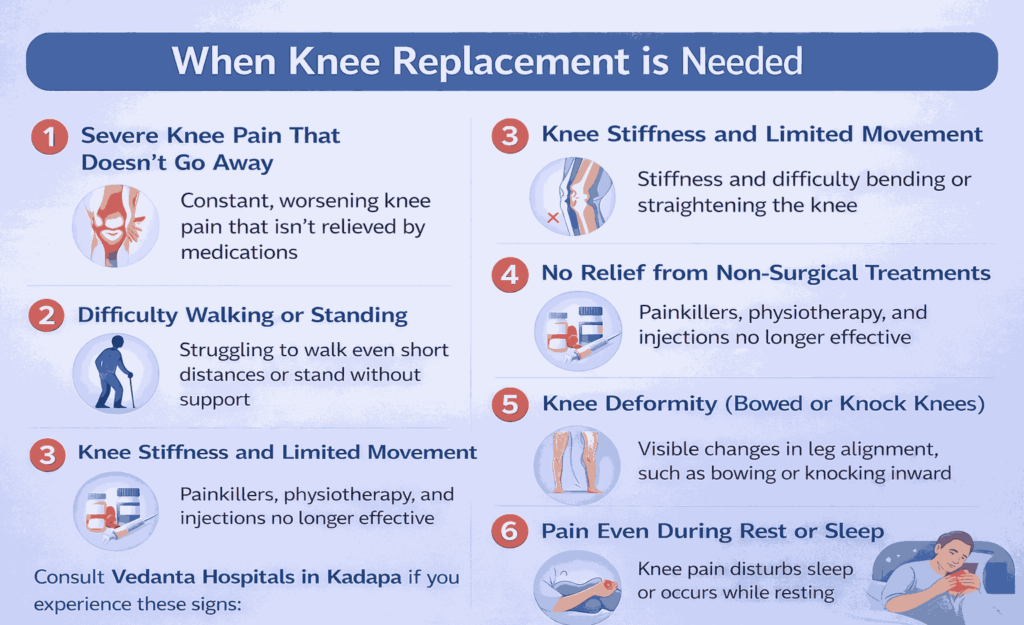
Let’s get straight to the point. You don’t need surgery just because you have knee pain.
Knee replacement is needed when pain starts controlling your life—not the other way around.
Here are the clear signs:
1. Severe Knee Pain That Doesn’t Go Away
If your knee pain is:
- Constant
- Not improving with medications
- Getting worse over time
Then you’re not dealing with a minor issue anymore.
Patients often ignore this stage and keep delaying treatment. That’s a mistake.
Consulting a specialist at a Orthopedic Hospital in Kadapa at this stage helps you make the right decision early.
2. Difficulty Walking or Standing
This is where things get serious.
If you:
- Struggle to walk even short distances
- Need support while standing
- Avoid stairs completely
Then your knee joint is likely severely damaged.
At this point, doctors at a Multispeciality Hospital in Kadapa may recommend knee replacement.
3. Knee Stiffness and Limited Movement
If your knee:
- Feels stiff in the morning
- Cannot bend or straighten properly
- Locks or gets stuck
This is a strong indicator of advanced joint damage.
Ignoring this leads to reduced mobility and long-term disability.
4. No Relief from Non-Surgical Treatments
Let’s be honest—most patients try everything before surgery:
- Painkillers
- Physiotherapy
- Injections
- Home remedies
If none of these are working anymore, continuing them is just delaying the inevitable.
Doctors at a Orthopedic Hospital in Kadapa usually recommend surgery only after these options fail.
5. Knee Deformity (Bowed or Knock Knees)
Visible changes in knee alignment are a serious red flag.
If your legs appear:
- Bowed outward
- Knocked inward
This indicates structural damage that often requires surgical correction.
6. Pain Even During Rest or Sleep
This is one of the most ignored signs.
If knee pain:
- Disturbs your sleep
- Occurs even when resting
Then the joint damage is already advanced.
At this stage, delaying treatment can worsen the condition.
Causes That Lead to Knee Replacement
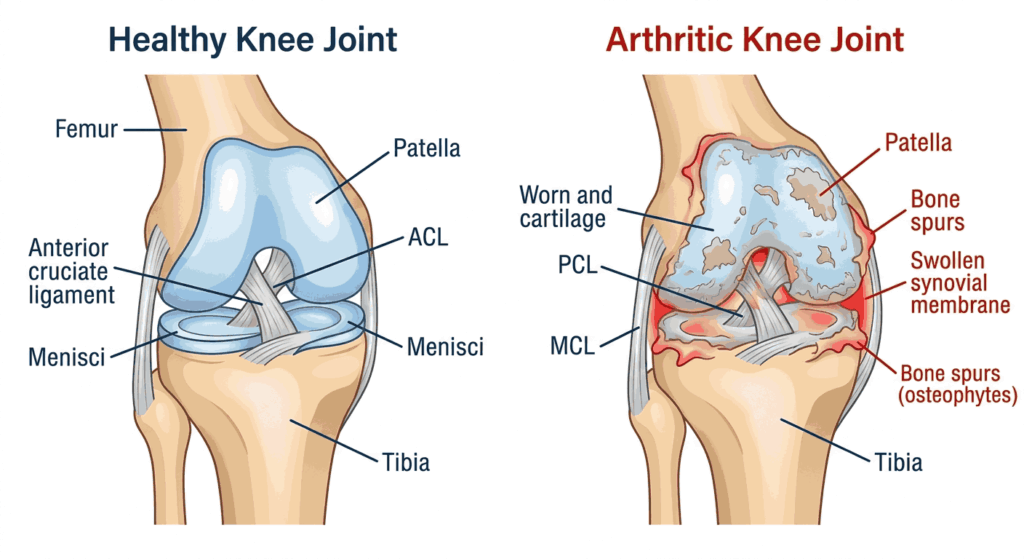
Understanding the cause helps you see why surgery becomes necessary.
Osteoarthritis (Most Common)
Wear and tear of the joint over time.
Rheumatoid Arthritis
An autoimmune condition that damages joints.
Injury or Trauma
Old injuries can lead to long-term joint damage.
Obesity
Excess weight puts pressure on knee joints.
Patients are usually evaluated at a Multispeciality Hospital in Kadapa to identify the exact cause.
Who Needs Knee Replacement the Most?
Not everyone with knee pain needs surgery.
High-risk group:
- Age above 50
- Severe arthritis
- Chronic knee pain
- Limited mobility
Doctors at a Orthopedic Hospital in Kadapa assess whether surgery is the best option.
What Happens If You Delay Knee Replacement?
Here’s the part people don’t want to hear.
Delaying surgery can lead to:
- Worsening pain
- Increased joint damage
- Reduced mobility
- Muscle weakness
- More complicated surgery later
You’re not avoiding surgery—you’re just making it harder.
Benefits of Knee Replacement Surgery
If done at the right time, results can be life-changing.
Major benefits:
- Significant pain relief
- Improved mobility
- Better quality of life
- Ability to walk normally again
Patients treated at a Multispeciality Hospital in Kadapa often regain independence after surgery.
Is Knee Replacement Safe?
Let’s address the fear directly.
Yes, knee replacement is generally safe when performed by experienced surgeons.
Modern techniques have improved safety significantly.
What makes it safer today:
- Advanced surgical methods
- Better implants
- Improved infection control
- Faster recovery protocols
Choosing the right Orthopedic Hospital in Kadapa plays a major role in safety.
Recovery After Knee Replacement
Recovery is not instant—but it’s manageable.
Typical recovery timeline:
- Walking with support: within days
- Basic activities: within weeks
- Full recovery: a few months
Physiotherapy is critical. Skipping it is one of the biggest mistakes patients make.
Alternatives to Knee Replacement
Let’s be practical—surgery is not always needed.
Non-surgical options:
- Physiotherapy
- Weight loss
- Medications
- Injections
But here’s the reality:
If joint damage is severe, these won’t solve the problem.
Doctors at a Orthopedic Hospital in Kadapa help decide the right approach.
How Doctors Decide You Need Surgery
Doctors don’t randomly suggest surgery.
They consider:
- Pain severity
- X-ray findings
- Mobility level
- Response to treatment
A proper evaluation at a Multispeciality Hospital in Kadapa ensures the right decision.
When Should You See a Doctor?
Don’t wait until it becomes unbearable.
Consult a doctor if:
- Pain lasts more than a few weeks
- Difficulty walking
- Swelling in knee
- Reduced movement
Early consultation at a Orthopedic Hospital in Kadapa prevents complications.
Final Answer: When Knee Replacement Is Needed
Let’s simplify everything.
Knee replacement is needed when:
- Pain is severe and constant
- Daily activities become difficult
- Non-surgical treatments fail
- Joint damage is advanced
If you’re still delaying at this stage, you’re not being cautious—you’re being careless.
Conclusion
Knee pain is not just a minor issue—it can completely affect your quality of life.
The biggest mistake patients make is waiting too long out of fear.
The smarter approach is:
- Understand your symptoms
- Get evaluated early
- Take the right decision at the right time
If you or your family members are experiencing severe knee pain, consult specialists at a Orthopedic Hospital in Kadapa or Multispeciality Hospital in Kadapa to understand whether knee replacement is the right option.