
Laparoscopic Surgery or Open Surgery: Which Is Better for You?
Introduction
When a doctor recommends surgery, most patients immediately ask one question:
“Should I choose laparoscopic surgery or open surgery?”
This isn’t just a technical decision—it directly affects how much pain you feel, how long you stay in the hospital, how fast you recover, and even how quickly you return to normal life.
The problem is, most people either assume laparoscopic surgery is always better or think open surgery is outdated. Both assumptions are wrong.
The reality is simple:
The right choice depends on your condition, not preference or trend.
In this guide, you’ll understand the real difference, when each is used, and which one is better for your situation.
What Is Laparoscopic Surgery?
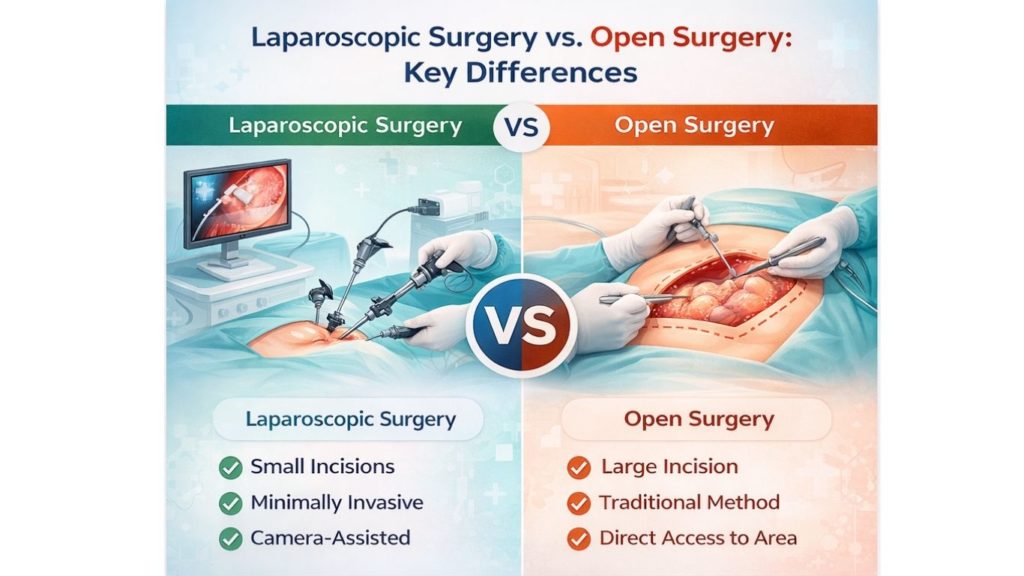
Laparoscopic surgery, also called minimally invasive surgery, is a modern technique where surgeons operate using small incisions and a camera.
Instead of opening the entire area, a thin tube with a camera (laparoscope) is inserted, allowing the surgeon to view and perform the procedure on a screen.
This method has become popular because it reduces physical trauma to the body. Procedures like gallbladder removal, appendix surgery, and hernia repair are commonly done this way in a multispeciality hospital in Kadapa with advanced facilities.
In simple terms, laparoscopic surgery is designed to do the same job with less damage to the body.
What Is Open Surgery?
Open surgery is the traditional method where a larger incision is made to directly access the affected organ or area.
While it may sound more invasive, it is still the preferred option in many serious and complex cases. It gives surgeons direct visibility and more control, which is crucial in certain situations.
For example, in emergencies or advanced disease conditions, open surgery allows quicker and more precise intervention.
So, calling open surgery “outdated” is not just wrong—it’s dangerous thinking.
Laparoscopic vs Open Surgery: The Core Difference
The main difference between these two approaches is how the surgery is performed, not necessarily what is being treated.
Laparoscopic surgery uses small incisions and technology to minimize damage, while open surgery relies on direct access for better control.
From a patient’s perspective, the differences show up in recovery, pain, and hospital stay.
Key differences at a glance:
- Laparoscopic surgery involves small cuts and faster healing
- Open surgery involves larger cuts but better visibility
- Recovery is usually quicker in laparoscopic procedures
- Open surgery is often safer for complex or emergency cases
But don’t oversimplify this—“faster recovery” doesn’t always mean “better choice.”
Which Surgery Is Better?
Here’s the honest answer most blogs avoid:
Laparoscopic surgery is better in many cases—but not all.
If the condition is simple, diagnosed early, and the patient is stable, laparoscopic surgery is usually preferred.
However, if the condition is complicated, involves severe damage, or requires immediate intervention, open surgery becomes the safer and more effective option.
The decision is not about what sounds modern—it’s about what works best for your medical condition.
Advantages of Laparoscopic Surgery
Laparoscopic surgery is widely preferred because it offers several patient-friendly benefits.
It reduces trauma to the body, which leads to faster recovery and less discomfort. Patients typically experience less pain after surgery and can return to daily activities sooner.
Some of the key advantages include:
- Smaller incisions and minimal scarring
- Reduced pain after surgery
- Shorter hospital stay
- Lower risk of infection
- Faster return to normal life
This is why many patients actively ask for minimally invasive options when consulting doctors.
Advantages of Open Surgery
Now here’s where people get it wrong.
Open surgery is not inferior—it is essential in many situations. In fact, in certain cases, it is the only safe option.
It allows surgeons to directly see and handle the affected area, which is critical in complex procedures.
Open surgery is particularly useful when:
- The condition is advanced or complicated
- There is heavy internal bleeding or infection
- The patient requires emergency surgery
- Laparoscopic access is not feasible
In these cases, choosing laparoscopic surgery just because it sounds “better” can actually increase risk.
Recovery Time: What Patients Actually Care About
Let’s be practical—most patients are not worried about surgical techniques. They care about one thing:
“How fast can I recover?”
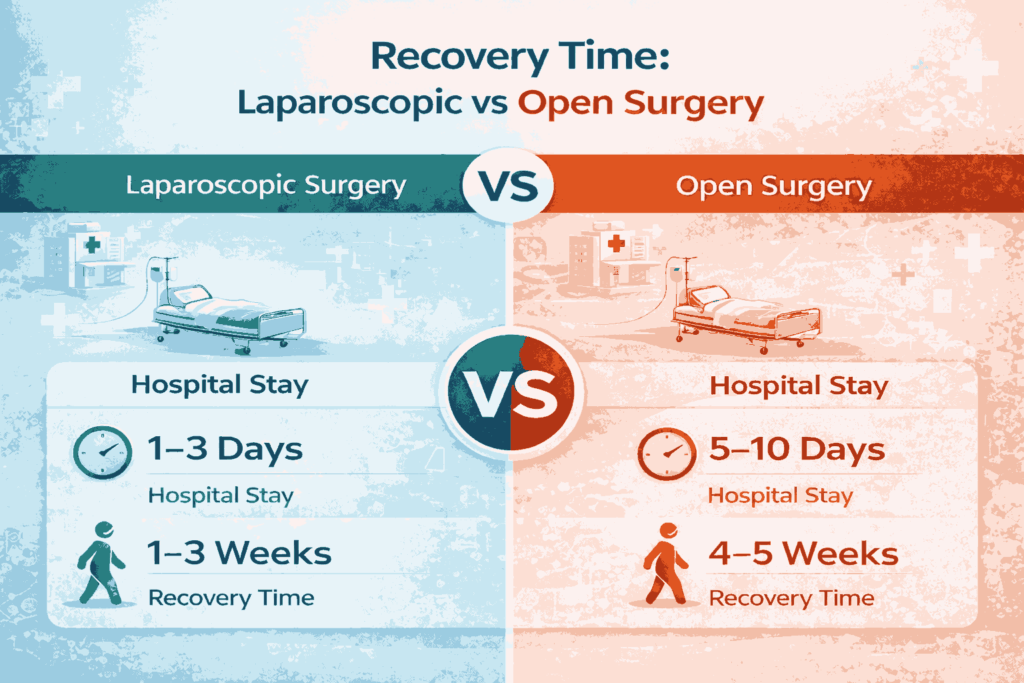
Laparoscopic surgery usually allows quicker recovery because the body experiences less trauma. Most patients can leave the hospital within a few days and resume normal activities within a couple of weeks.
Open surgery, on the other hand, involves longer healing because of the larger incision. Patients may need extended hospital stays and more time before returning to normal routines.
In general:
- Laparoscopic surgery recovery: faster (1–3 weeks for basic recovery)
- Open surgery recovery: slower (4–8 weeks or more)
If you’re comparing recovery timelines across procedures, understanding topics like spine surgery recovery time can give you a broader perspective on how healing varies.
Risks and Complications
No surgery is risk-free, and pretending otherwise is irresponsible.
Laparoscopic surgery has fewer complications overall, but it is not suitable for every patient. There can be technical limitations, especially in complex conditions.
Open surgery carries higher risks of infection and longer healing time, but it provides better control in difficult situations.
The key point is this:
Risk depends more on the condition and hospital quality than the method itself.
Getting treated at a well-equipped multispeciality hospital in Kadapa significantly reduces complications.
Cost Difference: What You Should Know
Cost is often a deciding factor, but most people misunderstand how it works.
Laparoscopic surgery may have a slightly higher initial cost due to advanced equipment and technology. However, the overall cost can be lower because of shorter hospital stays and faster recovery.
Open surgery may appear cheaper upfront, but longer hospitalization and delayed recovery can increase indirect costs.
For example, understanding appendix surgery cost in Kadapa helps patients evaluate the total financial impact, not just the procedure cost.
How to Decide the Right Option
Instead of guessing or following trends, focus on practical factors.
Ask yourself:
- Is the condition simple or complex?
- Is the surgery planned or an emergency?
- What does your doctor recommend based on your case?
- What are the risks involved in your specific situation?
The right decision is always based on medical evaluation—not assumptions.
Role of Technology in Modern Surgery
Both laparoscopic and open surgeries have improved significantly over the years.
Modern laparoscopic procedures use high-definition cameras and precision instruments, making them safer and more effective.
At the same time, open surgery techniques have also advanced with better safety protocols, anesthesia, and post-operative care.
This means patients today have better outcomes regardless of the method—provided they choose the right hospital.
Choosing the Right Hospital in Kadapa
The success of your surgery depends not just on the method, but also on where you get treated.
A reliable multispeciality hospital in Kadapa offers:
- Experienced surgeons
- Advanced surgical equipment
- ICU and emergency support
- Post-surgery rehabilitation
Choosing the right hospital can make a significant difference in both recovery and overall outcome.
Final Verdict
So, laparoscopic surgery or open surgery—which is better?
- Laparoscopic surgery is better for faster recovery, less pain, and minimal scarring.
- Open surgery is better for complex, serious, or emergency conditions.
There is no universal answer. The best option depends on your specific medical condition and professional evaluation.
Conclusion
Surgery is a major decision, and choosing the right method can directly impact your recovery and quality of life.
Instead of relying on assumptions or trends, focus on proper diagnosis, expert consultation, and informed decision-making.
If you are considering surgery, consult experienced specialists at a trusted multispeciality hospital in Kadapa to understand the best option for your condition.