
Gynecomastia Surgery in Kadapa
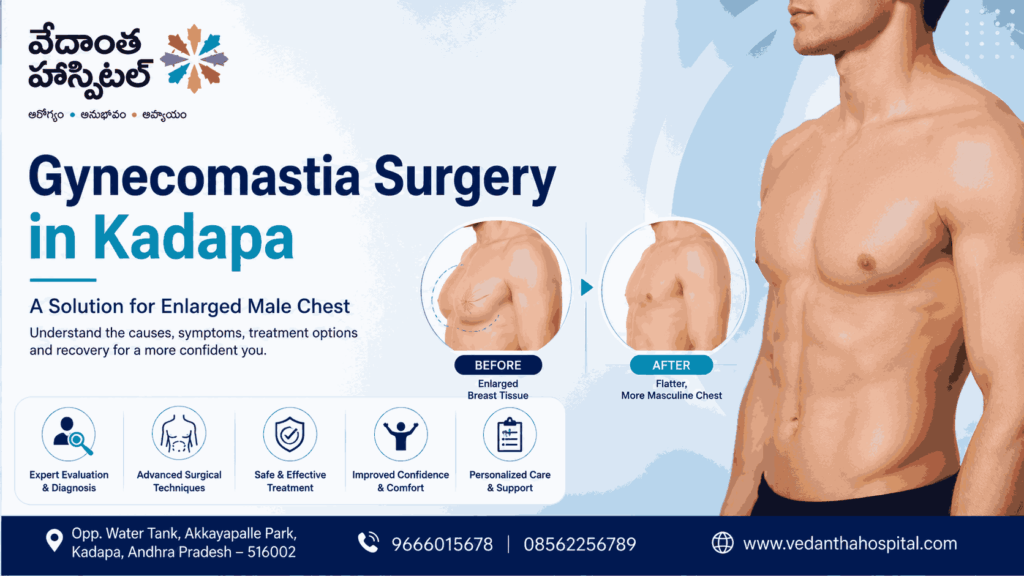
Many men feel uncomfortable discussing changes in their chest appearance. If you have noticed enlarged breast tissue or a fuller chest that looks similar to female breasts, you may be experiencing a condition called gynecomastia.
The good news is that gynecomastia is a common medical condition and can often be treated successfully. Modern procedures help restore a flatter and more masculine chest appearance while improving confidence and comfort.
If you are searching for gynecomastia surgery in Kadapa, this guide explains everything you need to know in simple language, including causes, symptoms, treatment options, recovery, and when surgery may be recommended.
Quick Answer: What Is Gynecomastia?
Gynecomastia is a condition where male breast tissue becomes enlarged due to hormonal changes, certain medications, medical conditions, or excess glandular tissue.
It can affect one side of the chest or both sides.
While it is not usually dangerous, it can affect self-confidence, clothing choices, physical activities, and emotional well-being.
In cases where lifestyle changes and medical treatment do not help, gynecomastia surgery may be recommended to improve chest contour and appearance.
What Is Gynecomastia?
Gynecomastia is the enlargement of breast tissue in males.
Many people mistakenly think it is simply excess fat, but that is not always true.
There are two different situations:
True Gynecomastia
This occurs when actual breast gland tissue increases.
Pseudogynecomastia
This occurs when fat accumulates in the chest area due to weight gain.
The treatment approach depends on the underlying cause.
A proper medical evaluation helps determine which condition is present.
Why Does Gynecomastia Happen?
Gynecomastia often develops because of an imbalance between two hormones:
- Testosterone
- Estrogen
Although estrogen is commonly known as a female hormone, men also have small amounts of it.
When the balance between these hormones changes, breast tissue may enlarge.
Common causes include:
- Hormonal changes during puberty
- Aging
- Obesity
- Certain medications
- Liver disease
- Kidney disease
- Thyroid disorders
- Steroid use
- Genetic conditions
In many teenage boys, gynecomastia improves naturally. However, persistent cases may require treatment.
Many men feel uncomfortable discussing changes in their chest appearance. If you have noticed enlarged breast tissue or a fuller chest that looks similar to female breasts, you may be experiencing a condition called gynecomastia.
The good news is that gynecomastia is a common medical condition and can often be treated successfully. Modern procedures help restore a flatter and more masculine chest appearance while improving confidence and comfort.
If you are searching for gynecomastia surgery in Kadapa, this guide explains everything you need to know in simple language, including causes, symptoms, treatment options, recovery, and when surgery may be recommended.
Many men feel uncomfortable discussing changes in their chest appearance. If you have noticed enlarged breast tissue or a fuller chest that looks similar to female breasts, you may be experiencing a condition called gynecomastia.
The good news is that gynecomastia is a common medical condition and can often be treated successfully. Modern procedures help restore a flatter and more masculine chest appearance while improving confidence and comfort.
If you are searching for gynecomastia surgery in Kadapa, this guide explains everything you need to know in simple language, including causes, symptoms, treatment options, recovery, and when surgery may be recommended.
Signs and Symptoms of Gynecomastia
The symptoms may vary from person to person.
Common signs include:
- Enlarged chest tissue
- Puffy nipples
- Uneven chest appearance
- Tenderness around the chest
- Feeling self-conscious about appearance
Some patients notice difficulty wearing fitted clothing or participating in sports due to embarrassment.
If the enlargement continues or becomes uncomfortable, medical evaluation is important.
How Common Is Gynecomastia?
Many men believe they are the only ones dealing with this condition.
That is not true.
Studies show that gynecomastia affects a significant percentage of males at different stages of life.
It commonly occurs:
- During infancy
- During puberty
- In older age
Because many people avoid discussing it, the condition often feels more uncommon than it actually is.
Can Exercise Remove Gynecomastia?
This is one of the most searched questions online.
The answer depends on the cause.
If the enlarged chest is mainly due to excess body fat, weight loss and exercise may help improve appearance.
However, if enlarged gland tissue is present, exercise alone usually cannot remove it.
Example
A person with excess chest fat may notice improvement after weight loss.
A person with enlarged gland tissue may still have a prominent chest despite regular exercise.
This is why proper diagnosis is important before starting treatment.
When Should You Consider Treatment?
Treatment may be considered when:
- Chest enlargement persists for a long time
- The condition affects confidence
- Physical discomfort occurs
- Exercise and weight loss do not improve appearance
- The chest remains enlarged after puberty
A consultation helps determine the best course of action.
Gynecomastia Treatment Options
Treatment depends on the cause and severity of the condition.
Lifestyle Changes
In some cases, doctors may recommend:
- Weight management
- Exercise
- Nutritional improvements
- Avoiding substances that may contribute to hormone imbalance
These changes may help if excess body fat is contributing to the condition.
Medical Management
If a medical condition or medication is causing gynecomastia, treating the underlying issue may help.
Hormonal evaluation may also be recommended.
Gynecomastia Surgery
For persistent cases, surgery is often the most effective treatment.
The goal is to:
- Remove excess gland tissue
- Remove excess fat when needed
- Improve chest contour
- Create a more natural appearance
Modern techniques are designed to minimize scarring and improve recovery.
What Happens During Gynecomastia Surgery?
The exact procedure varies depending on the patient’s condition.
In general, surgery may involve:
- Removal of gland tissue
- Removal of excess fat
- Chest contour correction
The surgeon creates a personalized treatment plan based on the patient’s anatomy and goals.
Most patients are surprised by how much the chest shape can improve after treatment.
Benefits of Gynecomastia Surgery
Many patients choose surgery because it offers long-term improvement.
Potential benefits include:
- Improved chest appearance
- Better confidence
- Easier clothing choices
- Increased comfort during activities
- Enhanced body image
The goal is not perfection but natural-looking improvement.
Important Facts About Gynecomastia
Many misconceptions exist regarding gynecomastia.
Here are some important facts:
- Gynecomastia is common.
- It can affect males of different ages.
- Exercise cannot always remove gland tissue.
- Hormonal imbalance is a common cause.
- Modern surgery can provide effective correction.
Understanding these facts helps patients make informed decisions.
Recovery After Gynecomastia Surgery
Recovery varies depending on the individual and the procedure performed.
Most patients experience:
- Mild swelling
- Temporary discomfort
- Gradual improvement in chest contour
The final result continues to improve as healing progresses.
Following post-operative instructions is extremely important.
Care After Surgery
Good recovery habits support better outcomes.
What You Should Do
Patients are usually advised to:
- Attend follow-up appointments
- Wear compression garments if recommended
- Rest adequately
- Follow activity guidelines
- Stay hydrated
What You Should Avoid
Patients should generally avoid:
- Heavy lifting
- Intense exercise too early
- Ignoring follow-up visits
- Smoking
Following medical guidance improves healing and results.
Why Choose Vedanta Hospital for Gynecomastia Surgery in Kadapa?
Choosing the right medical team is one of the most important decisions.
At Vedanta Hospital, patients have access to specialized plastic surgery care provided by experienced specialists.
Plastic surgery services are led by Dr. Bharath Prakash Reddy J, MS General Surgery, MCh Plastic Surgery (JIPMER).
Patients benefit from:
- Comprehensive evaluation
- Personalized treatment planning
- Advanced surgical techniques
- Recovery guidance
- Patient-centered care
Frequently Asked Questions
Is gynecomastia dangerous?
In most cases, gynecomastia is not dangerous, but it should be evaluated to identify the underlying cause.
Can gynecomastia return after surgery?
Recurrence is uncommon when the underlying causes are addressed and medical advice is followed.
Is surgery the only treatment?
Not always. Treatment depends on the cause and severity of the condition.
Will surgery leave scars?
Modern surgical techniques aim to minimize visible scarring.
How long does recovery take?
Recovery varies, but most patients gradually return to normal activities based on their surgeon’s recommendations.
When Should You Consult a Specialist?
You should consider medical evaluation if you notice:
- Persistent chest enlargement
- Uneven chest appearance
- Tenderness or discomfort
- Emotional distress related to appearance
- Lack of improvement despite exercise and weight loss
Early evaluation helps identify the cause and determine appropriate treatment.
Final Thoughts
Gynecomastia is a common condition that affects many men and boys. Although it is often not medically dangerous, it can have a significant impact on confidence and quality of life.
Understanding the causes, symptoms, and treatment options is the first step toward finding the right solution.
If you are considering gynecomastia surgery in Kadapa, consulting an experienced plastic surgery team can help you explore your options and choose the treatment that best suits your needs.
📍 Vedanta Hospital, Opp. Water Tank, Akkayapalle Park, Kadapa, Andhra Pradesh – 516002
📞 9666015678 | 08562256789
🌐 https://vedanthahospital.com