
Laser Kidney Stone Surgery in Kadapa
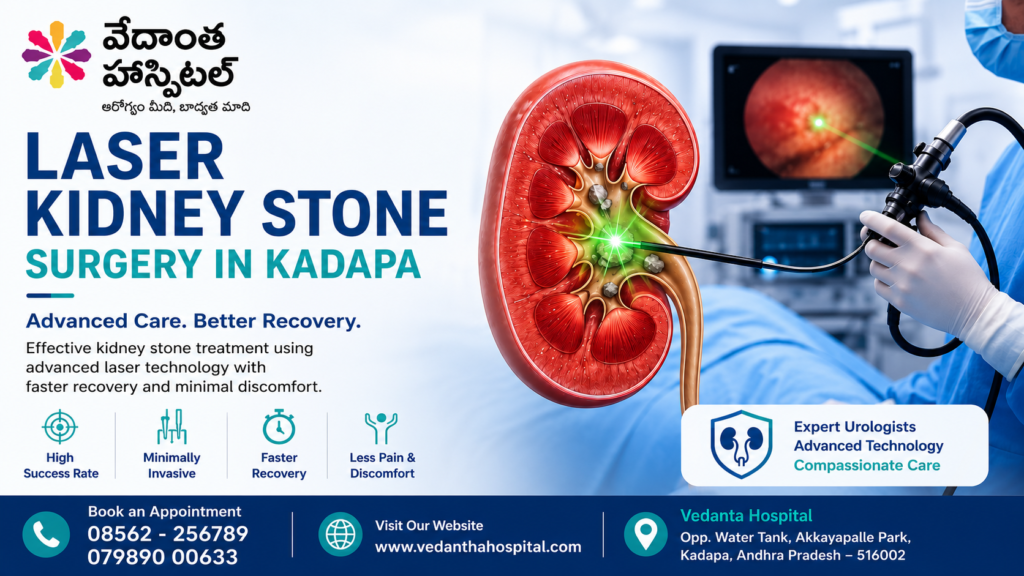
Kidney stones are one of the most painful urinary problems a person can experience. The pain often begins suddenly and can disrupt even simple daily activities. Many people tend to ignore early warning signs such as mild back pain or a burning sensation during urination, only seeking help when the discomfort becomes severe.
With advancements in medical technology, kidney stone treatment has become much safer and more effective. Today, Laser Kidney Stone Surgery in Kadapa offers a minimally invasive and highly precise solution that helps patients recover faster with fewer complications.
At Vedantha Hospital Kadapa, patients receive a complete evaluation along with advanced treatment options using modern diagnostic tools and minimally invasive procedures, ensuring safe and effective care.
What is Laser Kidney Stone Surgery?
Laser Kidney Stone Surgery is a minimally invasive procedure where laser energy is used to break kidney stones into tiny fragments. These fragments are either removed during the procedure or pass naturally through urine. It is commonly recommended for stones that are large, painful, or difficult to pass on their own.
What Are Kidney Stones?
Small particles present in urine can sometimes combine and form hard stone-like structures inside the kidneys. These are known as kidney stones.However, when these substances become concentrated, crystals can form and gradually grow into stones.
These stones can vary in size—from as small as a grain of sand to as large as a golf ball. While smaller stones may pass naturally, larger ones often require medical intervention.
Where Can Kidney Stones Develop?
Kidney stones can form in different parts of the urinary system, including:
- Kidneys
- Ureters (tubes connecting kidneys to the bladder)
- Bladder
- Urethra
The location and size of the stone play a key role in deciding the treatment approach.
What Causes Kidney Stones?
Kidney stones can develop due to a combination of lifestyle, dietary, and medical factors. Recognizing these common causes can help individuals take preventive measures and reduce the likelihood of developing kidney stones in the future.
Kidney stones can develop for several reasons. Some of the most common risk factors include:
- Not drinking required amount of water throughout the day
- Consuming a diet high in salt
- If any ancestors having kidney stones
- Certain medical conditions that affect the kidneys or urinary system
- Dietary habits that encourage the buildup of minerals in urine
Understanding these factors can help reduce the risk of future kidney stone formation.
What Are the Symptoms of Kidney Stones?
The signs and symptoms of kidney stones often depend on how large the stone is and where it is located within the urinary tract.Small stones may not cause noticeable symptoms initially, but larger stones can lead to intense discomfort.
Common symptoms include:
- Sharp pain in the back or side
- Pain spreading to the lower abdomen or groin
- Burning sensation during urination
- Blood in urine
- Frequent urge to urinate
- Nausea and vomiting
- Fever in some cases
- Difficulty passing urine
Quick Answer
What does kidney stone pain feel like?
Kidney stone pain is usually severe, sharp, and sudden. It often starts in the back or side and may move toward the lower abdomen or groin.
When Should You See a Doctor?
While some kidney stones may pass on their own, certain symptoms should not be ignored. Delaying medical care can lead to complications and affect kidney function.
You should consult a doctor if you experience:
- Severe or persistent pain
- Blood in urine
- Recurrent urinary infections
- Difficulty urinating
- Fever along with pain
- Continuous nausea or vomiting
Early diagnosis helps in timely treatment and prevents further complications.
How Are Kidney Stones Diagnosed?
A proper diagnosis is important because it helps doctors identify the size, location, and type of kidney stone before recommending the most suitable treatment.Doctors usually combine clinical evaluation with diagnostic tests to understand the size, location, and type of stone.
Common diagnostic methods include:
- Physical Examination: Assessment of symptoms and medical history
- Urine Tests: Detect infection and identify stone-forming substances
- Blood Tests: Evaluate kidney function and mineral levels
- Ultrasound: Initial imaging to detect stones
- CT Scan: Provides detailed information about stone size and location
Diagnostic Comparison Table
| Test | Purpose |
|---|---|
| Urine Test | Detect infection and crystals |
| Blood Test | Evaluate kidney function |
| Ultrasound | Identify stones |
| CT Scan | Detailed stone assessment |
What Are the Treatment Options for Kidney Stones?
Treatment depends on several factors such as stone size, location, symptoms, and overall health of the patient.
For Small Kidney Stones
Small stones often pass naturally with supportive care. Treatment may include:
- Increased fluid intake
- Pain relief medications
- Medications to help stone passage
For Larger Kidney Stones
When stones are too large or cause severe symptoms, medical procedures are required. These include:
- Laser Kidney Stone Surgery
- Ureteroscopy
- PCNL (Percutaneous Nephrolithotomy)
- ESWL (Shock Wave Therapy)
What Is Laser Kidney Stone Surgery?
Laser Kidney Stone Surgery has become a widely used treatment for removing kidney stones with minimal invasion and improved patient comfort. It involves inserting a thin instrument through the urinary tract to reach the stone without making large cuts.
Once the stone is located, laser energy is used to break it into very small fragments. These fragments are either removed during the procedure or allowed to pass naturally through urine.
Because it is minimally invasive, patients usually experience less pain and faster recovery compared to traditional surgery. It involves inserting a thin instrument through the urinary tract to reach the stone without making large cuts.
Benefits of Laser Kidney Stone Surgery
Laser treatment is widely preferred due to its safety and effectiveness. It offers several advantages over conventional methods.
Key benefits include:
- Minimally Invasive: No large surgical cuts
- Faster Recovery: Patients return to normal activities sooner
- High Precision: Laser targets stones accurately
- Less Post-Procedure Discomfort: Patients typically experience milder discomfort and a smoother recovery after treatment.
- Lower Risk of Complications: Improved safety with modern techniques
Who May Need Laser Kidney Stone Surgery?
Not all kidney stones require surgery, but laser treatment is recommended in certain situations.
Laser kidney stone surgery may be considered if you experience any of the following:
- Stones that do not pass naturally
- Recurrent kidney stones
- Severe or persistent pain
- Stones blocking urine flow
- Stones located in the ureter
- Preference for minimally invasive treatment
The final decision is based on medical evaluation and imaging results.
What Happens During the Procedure?
Understanding the procedure can help reduce anxiety and prepare patients better.
The process typically involves:
- Administration of anesthesia
- Insertion of a thin scope through the urinary tract
- Identification of the stone
- Use of laser energy to break the stone
- Removal or natural passage of fragments
Since there are no large incisions, the procedure is generally safe and efficient.
Recovery After Laser Kidney Stone Surgery
Recovery after laser surgery is usually smooth, and most patients can return to normal activities within a short period.
Common Post-Procedure Experiences
- Mild discomfort during urination
- Temporary increase in urinary frequency
- Slight blood in urine for a short duration
Recovery Tips
To ensure faster healing:
- Drink plenty of water
- Follow prescribed medications
- Attend follow-up appointments
- Avoid heavy physical activity initially
How Can You Prevent Future Kidney Stones?
Preventing kidney stones is just as important as treating them. Simple lifestyle changes can significantly reduce the risk of recurrence.
Helpful prevention tips include:
- Stay Hydrated: Drink enough water daily
- Reduce Salt Intake: Limit sodium in your diet
- Follow Dietary Advice: Based on stone type
- Maintain Healthy Weight: Supports overall health
- Regular Check-Ups: Helps detect issues early
Why Choose Vedantha Hospital for Laser Kidney Stone Surgery in Kadapa?
Choosing the right hospital plays a crucial role in successful treatment and recovery. Vedantha Hospital Kadapa offers advanced care with a patient-focused approach.
Patients benefit from:
- Experienced specialists
- Advanced diagnostic facilities
- Modern minimally invasive procedures
- Personalized treatment plans
- Comprehensive patient care
- Multispecialty support
The hospital focuses on delivering safe, effective, and compassionate kidney stone treatment.
Key Takeaways
Kidney stones are hard mineral deposits that can cause severe pain and urinary problems. Early diagnosis and proper treatment are essential to avoid complications.
- Laser Kidney Stone Surgery is a safe and minimally invasive treatment
- Recovery is faster compared to traditional surgery
- Symptoms should not be ignored
- Lifestyle changes can help prevent recurrence
Conclusion
Kidney stones can significantly affect daily life, but modern treatments have made management easier and more effective. Laser Kidney Stone Surgery in Kadapa provides a safe, precise, and minimally invasive solution for patients dealing with painful or persistent stones.
With advanced technology, experienced specialists, and personalized care, Vedantha Hospital Kadapa ensures comprehensive diagnosis and treatment, helping patients return to a healthier and more comfortable life.
Frequently Asked Questions
Is laser kidney stone surgery painful?
The procedure is performed under anesthesia, and most patients experience only mild discomfort during recovery.
How long does laser kidney stone surgery take?
The duration depends on the size and location of the stone but is usually completed within a few hours.
Can kidney stones come back after surgery?
Yes, kidney stones can recur if preventive measures are not followed.
How soon can I return to work?
Most patients can resume normal activities within a few days, depending on recovery.
Is laser treatment better than open surgery?
Yes, laser treatment is minimally invasive and involves less pain, quicker recovery, and fewer complications.
Is laser kidney stone surgery an effective treatment for kidney stones?
The success rate is generally high, especially when performed by experienced specialists and for suitable cases.