
Symptoms of Brain Stroke in Women: Early Warning Signs Every Woman Should Know
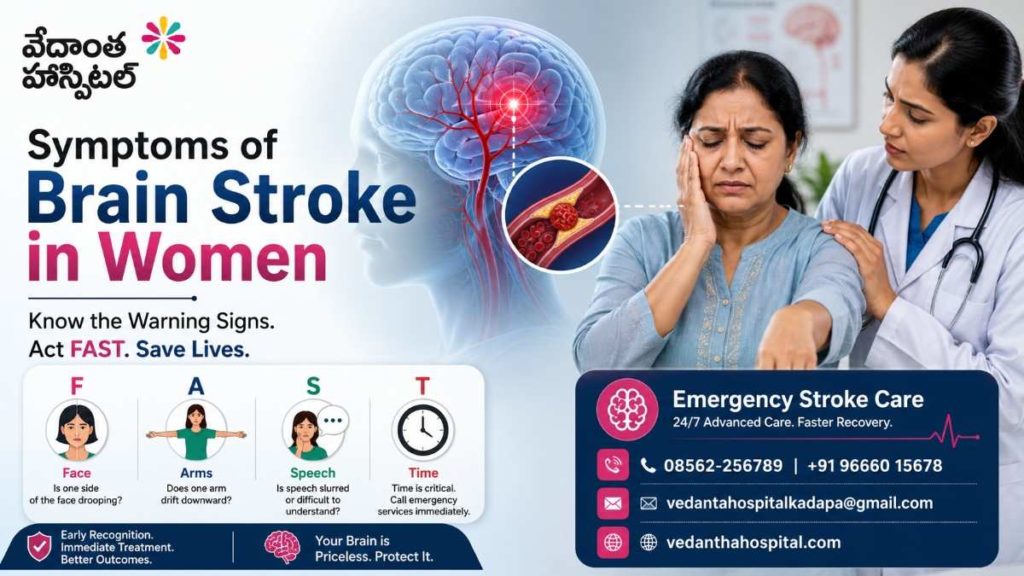
A brain stroke is a medical emergency that can happen without warning. It occurs when the blood supply to a part of the brain is blocked or when a blood vessel in the brain bursts.Brain cells start to die within minutes if they do not receive enough oxygen-rich blood and nutrients. Quick medical treatment can save lives and reduce the risk of permanent disability.
Although both men and women can have a stroke, women may experience certain warning signs that are different or less obvious. Many women mistake these symptoms for stress, fatigue, or other common health problems, which can delay treatment.
If you are searching for Symptoms of Brain Stroke in Women in Kadapa, this guide explains the early warning signs, causes, risk factors, diagnosis, treatment, and prevention in simple language.
Quick Answer
The most common symptoms of brain stroke in women include sudden weakness or numbness on one side of the body, difficulty speaking, confusion, severe headache, dizziness, loss of balance, and vision problems. Some women may also experience unusual symptoms such as nausea, hiccups, chest pain, shortness of breath, or sudden fatigue. Immediate medical attention can significantly improve recovery and reduce the risk of permanent brain damage.
What Is a Brain Stroke?
A brain stroke happens when blood flow to part of the brain is interrupted. Since the brain depends on a constant supply of oxygen-rich blood, even a few minutes without it can damage brain cells.
There are two main ways this can happen:
- A blood clot blocks a blood vessel (ischemic stroke)
- A blood vessel bursts and bleeds into the brain (hemorrhagic stroke)
Both conditions require emergency medical care.
The faster a person receives treatment, the better the chances of recovery.
Why Women Should Be Aware of Their Stroke Risk
Stroke can affect anyone, but certain factors increase the risk in women.
Women generally live longer than men, and the risk of stroke increases with age. Hormonal changes, pregnancy, certain birth control pills, and menopause may also contribute to stroke risk in some women.
Other health conditions can further increase the chances of having a stroke.
These include:
- High blood pressure
- Diabetes
- High cholesterol
- Heart disease
- Obesity
- Smoking
- Lack of physical activity
Understanding these risk factors can help women take preventive steps before a stroke occurs.
Early Symptoms of Brain Stroke in Women
Recognizing the early symptoms can save a life.
Many stroke symptoms appear suddenly and should never be ignored.
Common early warning signs include:
Sudden Weakness or Numbness
One of the earliest signs is sudden weakness or numbness on one side of the body.
It may affect:
- Face
- Arm
- Leg
Sometimes, one side of the face begins to droop, making it difficult to smile.
Difficulty Speaking
A woman having a stroke may suddenly struggle to speak clearly.
She may:
- Slur her words
- Speak slowly
- Have trouble understanding others
- Become confused during conversations
This symptom usually appears suddenly.
Severe Headache
A sudden, severe headache with no obvious cause can be a warning sign, especially in hemorrhagic strokes.
Some women describe it as:
“The worst headache of my life.”
The headache may be accompanied by vomiting or dizziness.
Vision Problems
Stroke can affect one or both eyes.
Symptoms include:
- Blurred vision
- Double vision
- Sudden loss of vision
- Difficulty focusing
Any sudden change in eyesight should be treated as a medical emergency.
Loss of Balance
Women may suddenly lose their balance while standing or walking.
They may experience:
- Difficulty walking
- Loss of coordination
- Frequent stumbling
- Feeling unsteady
These symptoms should never be ignored.
Dizziness
Sudden dizziness can occur during a stroke.
Unlike ordinary dizziness, it often appears along with other symptoms such as weakness, blurred vision, or trouble speaking.
Unique Stroke Symptoms in Women
While many stroke symptoms are common in both men and women, women can sometimes experience less typical signs.
These include:
- Sudden nausea or vomiting
- Shortness of breath
- Chest pain
- Hiccups
- Extreme fatigue
- Sudden confusion
- Fainting
- Seizures
- Personality changes
Because these symptoms may resemble other illnesses, women sometimes delay seeking medical help.
If these symptoms appear suddenly, immediate evaluation is important.
Remember the FAST Warning Signs
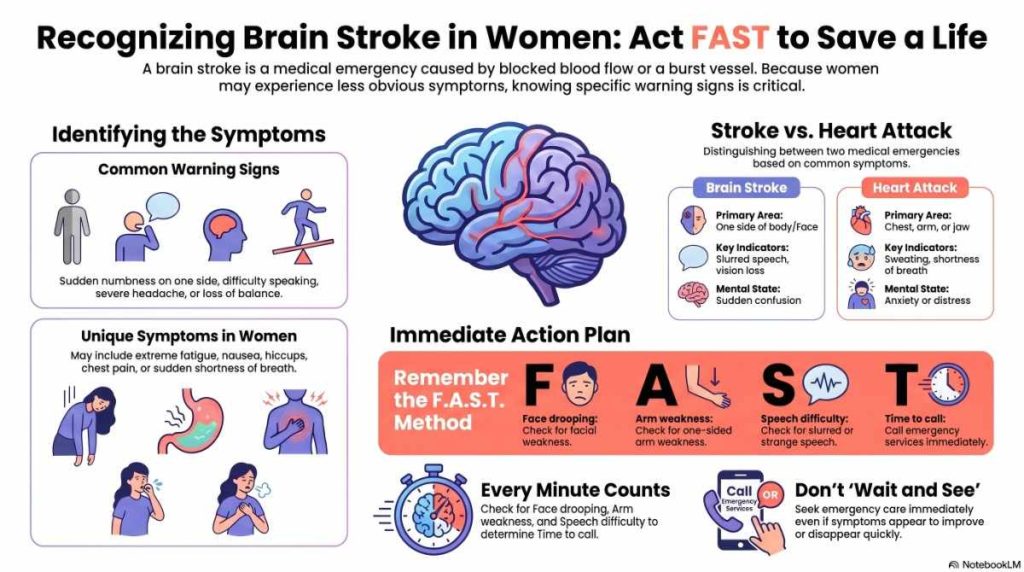
The easiest way to identify a stroke is by remembering FAST.
F – Face: Ask the person to smile. Does one side of the face droop?
A – Arms: Ask them to lift both arms.If one arm drops or cannot be raised, it may be a sign of a stroke.
S – Speech: Ask them to say a simple sentence. Listen for slurred or unclear speech.
T – Time: If you notice any of these signs, call emergency medical services immediately.
Every minute counts during a stroke.
Types of Brain Stroke
Understanding the different types of stroke helps explain why symptoms can vary.
Ischemic Stroke
This is the most common type of stroke.
It occurs when a blood clot blocks blood flow to the brain.
Nearly 80–85% of all strokes fall into this category.
Hemorrhagic Stroke
This type occurs when a blood vessel in the brain bursts.
The bleeding damages nearby brain tissue and increases pressure inside the skull.
Immediate treatment is essential.
Transient Ischemic Attack (TIA)
A TIA is often called a mini-stroke.
The symptoms are similar to a stroke but usually disappear within a few minutes or hours.
Even though symptoms improve, a TIA should never be ignored because it can be an early warning sign of a major stroke.
Stroke vs Heart Attack
Many people mistake a stroke for a heart attack, even though they affect different parts of the body.
Although both are medical emergencies, they affect different organs.
A stroke impacts the brain, whereas a heart attack occurs in the heart due to reduced blood flow.
Stroke symptoms usually include:
- Weakness on one side
- Difficulty speaking
- Vision problems
- Loss of balance
Heart attack symptoms commonly include:
- Chest pain
- Pain spreading to the arm or jaw
- Sweating
- Shortness of breath
Both conditions require immediate medical attention.
Who Should Be Extra Careful?
Some women have a higher chance of developing a stroke than others.
You are more likely to have a stroke if you:
- Are over 55 years of age
- Have high blood pressure
- Have diabetes
- Have high cholesterol
- Smoke or use tobacco
- Are overweight or obese
- Have an irregular heartbeat (atrial fibrillation)
- Have a family history of stroke
- Lead a physically inactive lifestyle
Regular health checkups can help identify these risk factors early.
Causes of Brain Stroke in Women
A stroke happens when the brain does not receive enough oxygen-rich blood. This can occur because a blood vessel becomes blocked or bursts.
Several factors can increase a woman’s risk of having a stroke.
High Blood Pressure
High blood pressure is the leading cause of stroke.
When blood pressure remains high for a long time, it damages the blood vessels, making them more likely to become blocked or rupture.
Regular blood pressure checks are one of the best ways to reduce stroke risk.
Diabetes
High blood sugar can damage blood vessels over time.
Women with diabetes have a higher chance of developing a stroke, especially if their blood sugar levels are not well controlled.
High Cholesterol
High cholesterol can lead to fatty deposits inside the blood vessels.
Over time, these deposits narrow the arteries, reducing blood flow to the brain and increasing the risk of stroke.
Heart Disease
Certain heart conditions, such as atrial fibrillation (an irregular heartbeat), can cause blood clots to form. These clots may travel to the brain and block blood flow.
Smoking and Tobacco Use
Smoking damages blood vessels and raises blood pressure. It also increases the formation of blood clots.
Quitting smoking significantly lowers the risk of stroke.
Obesity and Physical Inactivity
Being overweight and not exercising regularly can contribute to:
- High blood pressure
- Diabetes
- High cholesterol
- Heart disease
Maintaining a healthy weight and staying physically active can reduce the risk of stroke.
Pregnancy and Hormonal Changes
Some women have a slightly higher risk of stroke during pregnancy or shortly after childbirth.
Hormonal changes, certain birth control pills, and hormone replacement therapy may also increase stroke risk in some women, especially when combined with smoking or high blood pressure.
How Is a Brain Stroke Diagnosed?
If a stroke is suspected, doctors perform several tests to identify the type of stroke and begin treatment as quickly as possible.
Common diagnostic tests include:
- Physical and neurological examination
- Blood pressure measurement
- Blood tests
- CT scan of the brain
- MRI scan
- CT angiography or MR angiography
- Electrocardiogram (ECG)
- Echocardiogram
- Carotid Doppler ultrasound
These tests help determine whether the stroke is caused by a blocked artery or bleeding in the brain.
Treatment for Brain Stroke
Stroke treatment depends on the type of stroke and how quickly the patient reaches the hospital.
Treatment for Ischemic Stroke
If the stroke is caused by a blood clot, doctors may recommend:
- Clot-dissolving medication (when given within the recommended time window)
- Mechanical thrombectomy to remove large blood clots
- Blood-thinning medicines
- Medicines to control blood pressure and cholesterol
Early treatment can reduce brain damage and improve recovery.
Treatment for Hemorrhagic Stroke
If the stroke is caused by bleeding in the brain, treatment focuses on stopping the bleeding and reducing pressure inside the skull.
Treatment may include:
- Blood pressure control
- Medicines to reduce brain swelling
- Surgery in selected cases
- Intensive monitoring in the hospital
Recovery After a Brain Stroke
Recovery varies from person to person.
Some women recover within weeks, while others may need several months of rehabilitation.
Recovery depends on:
- The severity of the stroke
- The area of the brain affected
- How quickly treatment was received
- The patient’s overall health
Early rehabilitation plays an important role in improving recovery.
Rehabilitation After Stroke
Stroke rehabilitation helps patients regain independence and improve their quality of life.
Depending on the patient’s condition, rehabilitation may include:
- Physiotherapy to improve strength and movement
- Speech therapy for communication and swallowing difficulties
- Occupational therapy for daily activities
- Psychological support when needed
- Nutritional guidance for a healthy recovery
Consistent rehabilitation can significantly improve long-term outcomes.
Can Brain Stroke Be Prevented?
Although not every stroke can be prevented, many risk factors can be controlled through healthy lifestyle choices.
Here are some effective ways to reduce your risk:
- Monitor your blood pressure regularly.
- Keep diabetes under control.
- Maintain healthy cholesterol levels.
- Eat a balanced diet rich in fruits and vegetables.
- Exercise for at least 30 minutes most days of the week.
- Maintain a healthy weight.
- Avoid smoking and tobacco products.
- Limit alcohol consumption.
- Get regular health checkups.
- Take prescribed medications as advised by your doctor.
Making these lifestyle changes can greatly reduce the risk of stroke.
When Should You Visit a Hospital?
Do not wait to see if the symptoms improve.
Seek immediate medical attention if you or someone around you experiences:
- Sudden weakness or numbness on one side of the body
- Difficulty speaking or understanding speech
- Sudden loss of vision
- Severe headache with no known cause
- Loss of balance or coordination
- Sudden confusion
- Fainting or seizures
A stroke is a medical emergency. Early treatment can save brain tissue, improve recovery, and even save a person’s life.
Why Choose Vedanta Hospital for Stroke Care in Kadapa?
When it comes to stroke treatment, every minute matters.
At Vedanta Hospital, Kadapa, patients receive timely evaluation, advanced diagnostic support, and expert care for neurological emergencies.
The hospital offers:
- Experienced neurosurgery specialists
- Advanced brain imaging facilities
- Emergency stroke evaluation
- Personalized treatment plans
- Comprehensive rehabilitation support
- Patient-centered care
For neurological care, patients are treated under the expertise of Dr. Kranthi Kumar Sunnepaneni, a Consultant Neurosurgeon and Spine Surgeon with extensive experience in managing complex brain and spine conditions.
Prompt diagnosis and appropriate treatment can make a significant difference in stroke recovery.
Frequently Asked Questions
Are stroke symptoms different in women?
Yes. While many symptoms are the same in both men and women, women may also experience unusual signs such as nausea, extreme fatigue, hiccups, chest pain, shortness of breath, confusion, or fainting.
What is the first sign of a brain stroke?
The first sign is often sudden weakness or numbness on one side of the face, arm, or leg. Difficulty speaking, vision problems, and loss of balance are also common early symptoms.
Can young women have a stroke?
Yes. Although stroke is more common in older adults, younger women can also have a stroke due to conditions such as high blood pressure, heart disease, pregnancy-related complications, blood clotting disorders, or certain hormonal medications.
Can stroke be cured completely?
Some people recover fully, while others may have long-term effects. Early treatment and rehabilitation greatly improve the chances of recovery.
How quickly should a stroke patient reach the hospital?
A stroke patient should reach the hospital immediately after symptoms begin. Early treatment can reduce brain damage and improve survival and recovery.
Conclusion
A brain stroke is a life-threatening condition that requires immediate medical attention. Recognizing the early symptoms of brain stroke in women can make the difference between a full recovery and permanent disability.
Women should never ignore sudden weakness, difficulty speaking, severe headaches, vision changes, dizziness, or unusual symptoms such as confusion, nausea, or extreme fatigue. Acting quickly and seeking emergency medical care can save lives and protect brain function.
If you or a loved one experiences any warning signs of a stroke, do not delay treatment. Visit Vedanta Hospital, Kadapa, for prompt evaluation and expert neurological care.