
Coccydynia (Tailbone Pain): Causes, Symptoms, Diagnosis & Treatment
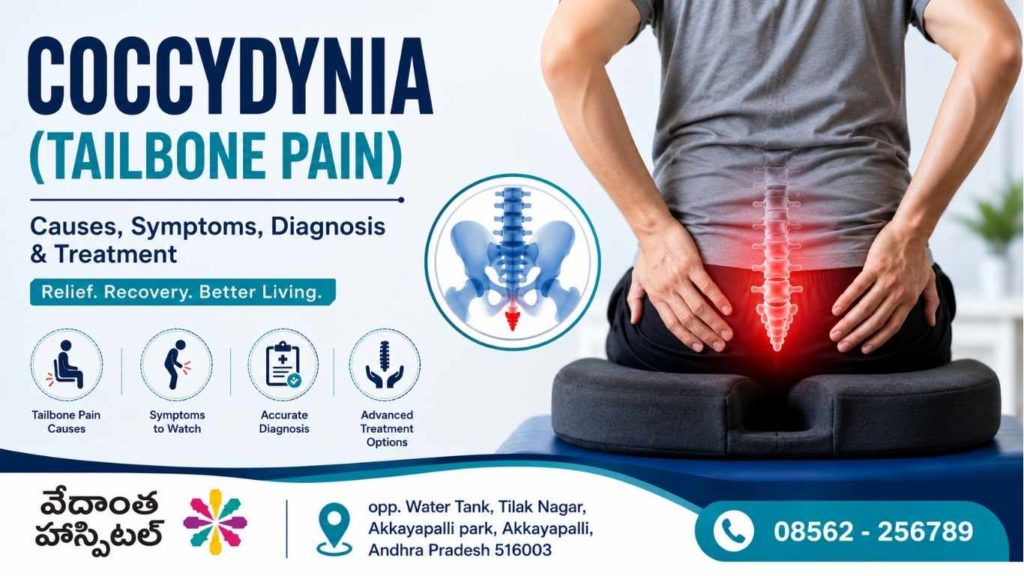
Have you ever felt pain at the bottom of your spine while sitting or getting up from a chair? If yes, you may have a condition called coccydynia, also known as tailbone pain.
Although tailbone pain is not very common, it can make everyday activities like sitting, driving, bending, or even standing up uncomfortable. The good news is that most people recover with simple treatments, while a small number may require surgery if the pain does not improve.
In this article, you’ll learn:
- What coccydynia is
- Why it happens
- Common symptoms
- How doctors diagnose it
- Treatment options
- When surgery is needed
- Tips to prevent tailbone pain
- Frequently asked questions
Let’s understand everything in simple language.
What Is Coccydynia?
Coccydynia is pain in the coccyx, which is commonly called the tailbone. The pain usually becomes worse while sitting, leaning backward, or standing up after sitting for a long time.
The pain may last for a few days after an injury, or in some people, it can continue for months if left untreated.
Although anyone can develop coccydynia, it is seen more often in:
- Women
- Middle-aged adults
- People who are overweight
- People who spend long hours sitting
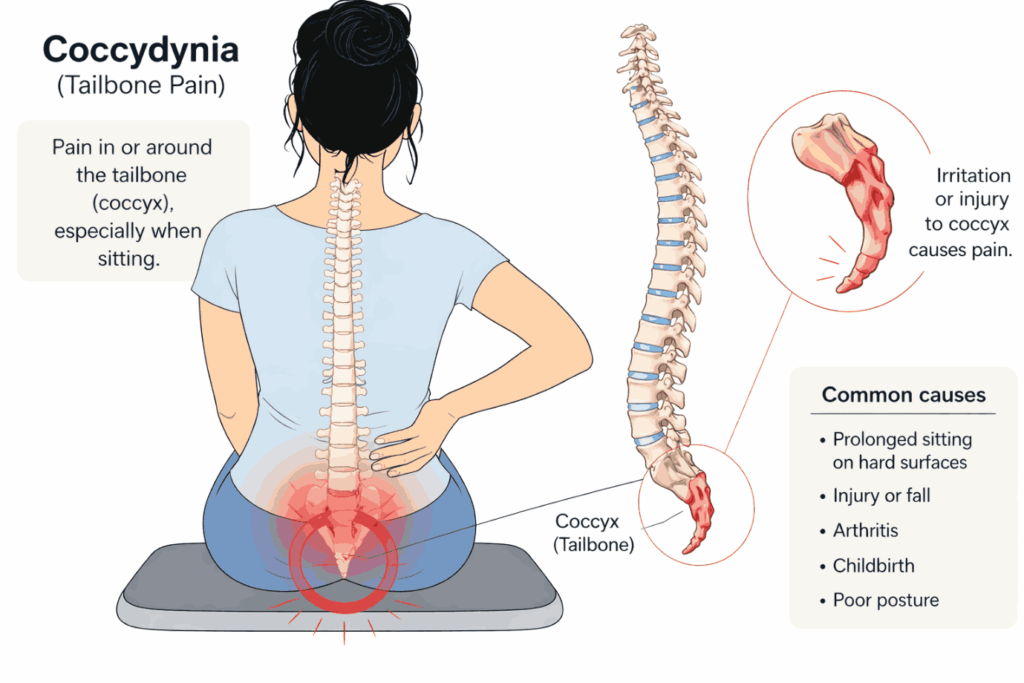
What Is the Coccyx (Tailbone)?
The coccyx, also called the tailbone, is a small triangular bone located at the base of your spine.
It is made up of four small bones joined together and attached to the sacrum (the bone just above it).
Even though it is small, the tailbone has important jobs.
Functions of the Tailbone
- Supports the body while sitting
- Acts as an attachment point for muscles and ligaments
- Helps maintain balance while sitting
- Supports muscles involved in bowel movements
Without a healthy tailbone, simple activities like sitting comfortably can become difficult.
What Causes Coccydynia?
In many people, doctors cannot identify one exact cause. However, several common reasons can lead to tailbone pain.
1. Fall or Injury
One of the most common causes is falling directly on the buttocks.
Examples include:
- Slipping on wet floors
- Falling down stairs
- Sports injuries
The impact can bruise, dislocate, or even fracture the tailbone.
2. Childbirth
During a difficult delivery, the tailbone may bend or become injured due to pressure from childbirth.
Women sometimes develop tailbone pain after giving birth.
3. Long Hours of Sitting
People who drive long distances or work at desks for many hours put continuous pressure on the coccyx.
Over time, this pressure can cause pain and inflammation.
4. Obesity
Extra body weight increases pressure on the tailbone while sitting.
This makes overweight individuals more likely to develop coccydynia.
5. Repetitive Strain
Activities like cycling, rowing, or sitting on hard surfaces repeatedly can irritate the coccyx.
6. Infection or Rare Medical Conditions
In rare cases, infections, tumors, or other spinal conditions may cause tailbone pain.
That is why persistent pain should always be evaluated by a specialist.
Symptoms of Coccydynia
Symptoms can vary from person to person.
Common signs include:
- Pain at the base of the spine, near the tailbone
- Pain while sitting
- Pain while standing up after sitting
- Pain during long drives
- Pain while leaning backward
- Tenderness over the tailbone
- Pain during bowel movements in some patients
- Pain during sexual intercourse in some individuals
Some people experience only mild discomfort, while others may have severe pain that affects daily life.
When Should You See a Doctor?
Visit a spine specialist if:
- Pain lasts more than two weeks
- Pain becomes severe
- Sitting becomes difficult
- Pain follows a fall or accident
- Swelling or redness develops
- Pain keeps returning
- Home remedies are not helping
Early diagnosis often leads to faster recovery.
How Is Coccydynia Diagnosed?
The doctor will first ask about your symptoms and medical history, followed by a physical examination.
They may ask questions such as:
- When did the pain start?
- Did you fall recently?
- Does sitting make the pain worse?
- Where do you feel the pain the most?
If needed, imaging tests may be recommended.
These include:
X-rays
Used to detect fractures or abnormal movement of the coccyx.
MRI Scan
Helps identify inflammation, ligament injuries, infections, or other problems around the tailbone.
CT Scan
Sometimes used when doctors need more detailed images of the bone.
Not every patient requires scans. In many cases, the doctor can diagnose coccydynia through a physical examination without the need for additional tests.
Treatment for Coccydynia
Most patients improve without surgery.
Treatment usually begins with conservative methods.
1. Rest
Reducing activities that worsen pain gives the inflamed tissues time to heal.
2. Pain Relief Medicines
Doctors may prescribe painkillers or anti-inflammatory medicines to reduce pain and swelling.
Patients should always take medicines only as advised by their doctor.
3. Use a Coccyx Cushion
A coccyx cushion or donut cushion reduces pressure on the tailbone while sitting.
This simple change often provides significant relief.
4. Physiotherapy
A physiotherapist may recommend:
- Gentle stretching
- Pelvic floor exercises
- Posture correction
- Muscle strengthening exercises
These treatments improve movement and reduce pain.
5. Lifestyle Changes
Simple habits can make a big difference.
These include:
- Avoid sitting continuously
- Stand up every 30–45 minutes
- Maintain a healthy body weight
- Use soft seating whenever possible
- Avoid activities that increase pain
6. Pain Management Injections
If pain continues despite medicines and physiotherapy, doctors may recommend pain procedures.
These include:
- Caudal epidural block
- Ganglion impar block
These injections help reduce pain by targeting the affected nerves and may provide long-lasting relief for selected patients.
Conservative Management of Coccydynia
Managing coccydynia typically begins with conservative strategies aimed at alleviating discomfort and preventing further injury. Rest is fundamental and allows inflamed tissues around the tailbone to recover. Analgesics, such as over-the-counter pain medications, are commonly used to reduce pain and improve daily functioning.
For individuals who experience pain while sitting, it is recommended to use specialized seating options. A coccyx seat or donut seat provides a cut-out or circular design that reduces pressure on the tailbone, helping to prevent repeated injury and minimize symptoms during prolonged sitting.
Physical therapy may be beneficial for some patients. Physiotherapists can guide exercises and techniques designed to decrease pain and improve mobility, often targeting muscles and ligaments connected to the coccyx. In cases where coccydynia occurs without an identifiable organic cause, psychotherapy can offer support and help manage chronic pain, addressing psychological factors that may contribute to symptoms.
When Is Surgery Needed?
Most people never require surgery.
However, surgery may be recommended when:
- Pain lasts for several months
- Medicines do not work
- Physiotherapy fails
- Daily activities become difficult
- Imaging confirms that the tailbone is the source of pain
The surgery is called Coccygectomy, which means removing the painful tailbone.
Doctors recommend surgery only after other treatments have been tried.
Is Coccygectomy Safe?
Yes.
Coccygectomy is generally considered a safe procedure when performed by an experienced spine surgeon.
The operation usually takes 15 to 45 minutes.
Most patients go home on the same day or the next day, depending on their recovery.
Like every surgery, there are some risks, including:
- Infection
- Delayed wound healing
- Bleeding
- Risks related to anesthesia
- Rarely, incomplete pain relief
Your surgeon will explain these risks before the procedure.
Recovery After Surgery
Recovery differs from one patient to another.
Most patients are encouraged to:
- Walk carefully after surgery
- Keep the wound clean and dry
- Avoid prolonged sitting initially
- Follow medication instructions
- Attend follow-up appointments
- Perform rehabilitation exercises if advised
Many people gradually return to normal activities over the following weeks.
Can Coccydynia Be Prevented?
Although not every case can be prevented, these habits reduce your risk.
- Maintain good posture.
- Avoid sitting for long periods.
- Use a proper chair with support.
- Exercise regularly.
- Maintain a healthy weight.
- Lift heavy objects carefully.
- Use protective gear during sports.
- Treat injuries early.
Small lifestyle changes can help protect your spine and tailbone.
Why Choose Vedanta Hospital for Tailbone Pain Treatment in Kadapa?
If you are experiencing persistent tailbone pain, getting the right diagnosis and treatment is important.
At Vedanta Hospital, patients receive comprehensive evaluation and personalized treatment based on the cause of their pain.
Our approach includes:
- Detailed clinical evaluation
- Advanced diagnostic facilities
- Conservative treatment options
- Physiotherapy guidance
- Pain management procedures
- Advanced spine surgery when required
- Compassionate patient care
Treatment is provided by Dr. Kranthi Kumar Sunnepaneni, Senior Consultant Neurosurgeon and Spine Surgeon, who has extensive experience, having performed thousands of spine surgeries and numerous coccygectomy procedures. This expertise ensures patients receive quality treatment and compassionate care for coccydynia and related spinal conditions.
Frequently Asked Questions (FAQs)
What is coccydynia?
Coccydynia, commonly referred to as tail bone pain, is a condition predominantly affecting middle-aged women. The duration of symptoms may range from a few days to several years. Discomfort usually occurs when sitting from tailbone pressure or when bending due to muscle stretching.
What is coccyx?
The coccyx, or tail bone, is located at the distal end of the spine. It comprises a joint formed by four bones, which are connected to the sacrum of the spinal column.
What is the function of the tail bone?
The tail bone serves as an anchor for muscles involved in the regulation of defecation.
Why does coccydynia occur?
In numerous cases, coccydynia does not have a specific identifiable cause. However, it may arise from trauma, such as falling and landing on the buttocks, or from sustained pressure on the tail bone, for example, during prolonged driving sessions.
How is tail bone pain treated?
Standard treatment consists of rest and analgesics to alleviate symptoms. When seated, it is advisable to use a coccyx seat or donut seat to reduce pressure on the tail bone and prevent recurrent injury. Should conservative measures fail, surgical excision of the coccyx may be considered.
Is surgery safe for coccydynia?
Surgical intervention for coccydynia is generally regarded as safe. Patients are typically discharged either on the same day or the following day after the procedure.
What are the possible risks of tailbone surgery?
The risks associated with surgery include general risks related to anesthesia as well as surgery-specific risks. The most prevalent surgery-specific complication is impaired wound healing, attributable to the anatomical location of the surgical site between the buttocks. Rare complications include bowel incontinence, defined as loss of control over bowel function, and suboptimal recovery from pain.
How long does surgery take?
Most surgical operations for coccydynia typically take anywhere from 15 to 45 minutes to finish.
What is the cost of surgery for tail bone pain or coccydynia?
The estimated cost of surgery is approximately Rs. 50,000 at Vedanta Hospitals.
How long is a hospital stay?
Patients are typically discharged on the same day or the day following surgery.
Can tailbone pain heal on its own?
Yes. Mild cases often improve within a few weeks with rest, pain medication, and avoiding prolonged sitting.
Who is more likely to develop coccydynia?
Women, overweight individuals, people who sit for long hours, and those who have experienced a fall are at higher risk.
Is walking good for tailbone pain?
Yes. Gentle walking usually helps maintain mobility without putting too much pressure on the tailbone.
Can children develop coccydynia?
Yes. Although it is less common in children, tailbone pain can occur due to falls, sports injuries, or direct trauma
How long does recovery take?
Mild cases may improve within a few weeks, while chronic cases may require several months of treatment.
Is surgery always necessary?
No. Most patients recover without surgery.Surgery is usually recommended only if non-surgical treatments do not provide enough relief.