
How to Prevent Kidney Stones Naturally: Simple Tips for a Healthy Life
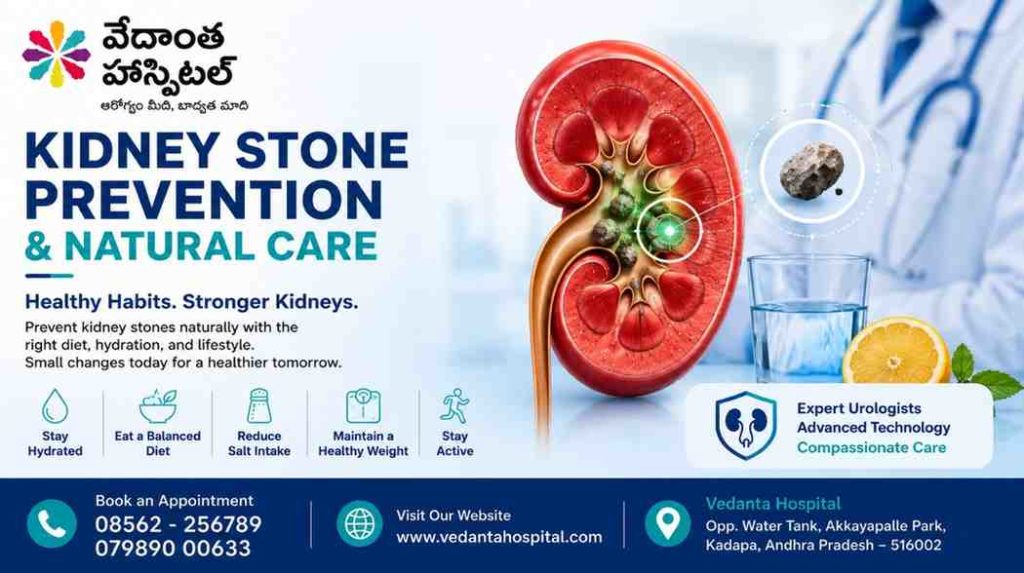
Kidney stones are a frequent urinary health problem that can affect people of all ages.
They can cause severe pain and may require medical treatment if they become large or block the flow of urine.The good news is that many kidney stones can be prevented naturally by making simple lifestyle and dietary changes.
If you are searching for how to prevent kidney stones naturally, this guide explains everything in simple language. Whether you have had kidney stones before or want to reduce your risk in the future, these practical tips can help keep your kidneys healthy.
If you live in Kadapa or nearby areas, understanding these prevention methods can help you avoid complications and know when to seek expert medical care.
Quick Answer
The best natural ways to prevent kidney stones include drinking enough water, reducing salt intake, eating calcium-rich foods in the right amount, limiting foods high in oxalates, maintaining a healthy weight, staying physically active, and eating a balanced diet. These healthy habits can reduce the risk of kidney stone formation and support long-term kidney health.
What Are Kidney Stones?
A kidney stone is a hard deposit that develops when minerals and salts in the urine form crystals inside the kidneys.
Normally, minerals dissolve in urine and leave the body without causing problems.However, if there is not enough water in the urine or certain minerals are present in large amounts, small crystals can begin to develop.Over time, these crystals stick together and develop into stones.
The size of kidney stones can vary greatly, from tiny grains of sand to stones as large as a golf ball.Small stones may pass naturally through urine, If a stone becomes too large to pass naturally, it may block the urinary tract and cause significant pain.
Why Do Kidney Stones Form?
Kidney stones usually develop when there is an imbalance of minerals, salts, and water in the urine.
Several factors can increase the risk of kidney stone formation, including:
- Drinking too little water
- Eating too much salt
- Consuming excessive animal protein
- Eating large amounts of oxalate-rich foods
- Family history of kidney stones
- Obesity
- Certain medical conditions
- Repeated urinary tract infections
- Some medications
Many of these risk factors can be controlled through healthy lifestyle habits.
Who Is More Likely to Develop Kidney Stones?
Although anyone can develop kidney stones, some people have a higher risk than others.
Your chances may be higher if you:
- Have had kidney stones before
- Have a family history of kidney stones
- Drink very little water every day
- Eat a high-salt diet
- Are overweight or obese
- Have diabetes
- Have gout
- Have digestive disorders
- Frequently develop urinary tract infections
Knowing your risk factors allows you to take preventive steps before stones develop.
Can Kidney Stones Be Prevented Naturally?
Yes.
Many kidney stones can be prevented without medication by making healthy changes to your daily routine.
While natural prevention cannot stop every type of kidney stone, it can significantly reduce the risk for most people.
The key is consistency. Small daily habits often make a bigger difference than occasional lifestyle changes.
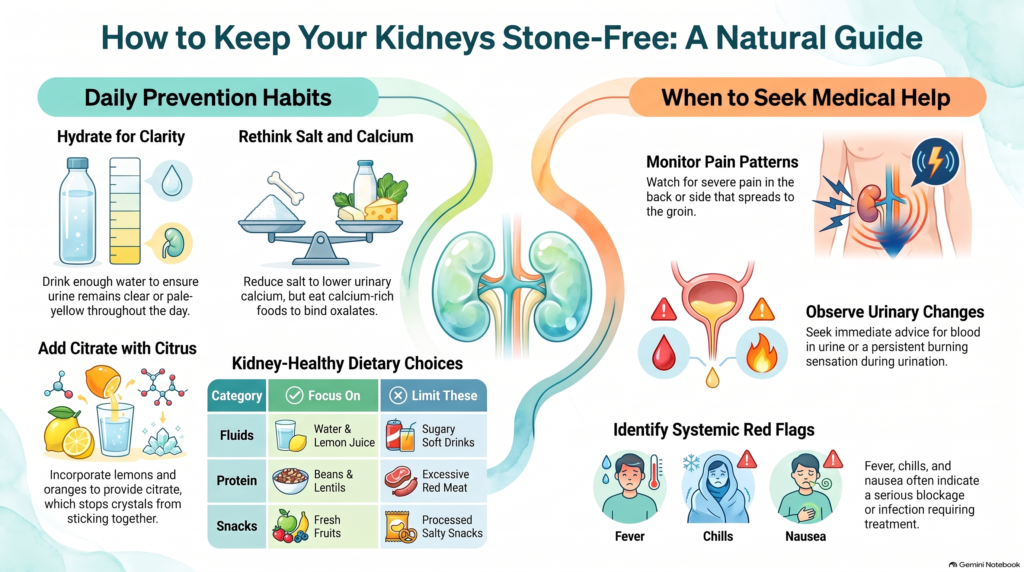
10 Natural Ways to Prevent Kidney Stones
1. Drink Plenty of Water
The easiest and most effective way to prevent kidney stones is to drink enough water.
Water dilutes the minerals in urine, making it harder for crystals to form.
Most healthy adults should aim to drink enough fluids to produce clear or pale-yellow urine throughout the day.
During hot weather or after heavy sweating, your body needs even more water.
Keeping yourself well hydrated is one of the best natural defenses against kidney stones.
2. Reduce Salt Intake
Consuming excessive salt increases calcium levels in the urine, which can contribute to the formation of kidney stones.
Higher calcium levels increase the chance of stone formation.
To reduce your salt intake:
- Avoid packaged foods
- Limit chips and processed snacks
- Reduce pickles and salty foods
- Taste food before adding extra salt
Even small reductions in daily salt intake can benefit your kidneys.
3. Eat Calcium-Rich Foods Instead of Avoiding Calcium
Many people think avoiding calcium prevents kidney stones.
This is a common myth.
In fact, eating the right amount of calcium from natural food sources can help reduce stone formation.
Healthy calcium sources include:
- Milk
- Curd
- Yogurt
- Cheese (in moderation)
Calcium binds with oxalate in the intestine, reducing the amount of oxalate that reaches the kidneys.
4. Limit Foods High in Oxalates
Oxalates are natural substances found in certain foods.
Eating large amounts of oxalate-rich foods may increase the risk of calcium oxalate stones, which are the most common type of kidney stone.
Foods high in oxalates include:
- Spinach
- Beetroot
- Chocolate
- Nuts
- Tea
- Sweet potatoes
These foods do not need to be avoided completely but should be eaten in moderation, especially if you have a history of kidney stones.
5. Include Citrus Fruits in Your Diet
Citrus fruits contain citrate, a natural substance that helps prevent crystals from sticking together.
Good choices include:
- Lemons
- Oranges
- Sweet lime
- Grapefruit
Adding fresh lemon juice to your water can be a simple way to increase citrate intake naturally.
6. Limit Sugary Drinks
Frequent consumption of soft drinks and other sugary beverages may raise the chances of kidney stone formation.
Instead of sugary drinks, choose:
- Water
- Coconut water
- Fresh lemon water
- Fresh fruit juices without added sugar
Healthy drinks support both kidney function and overall health.
7. Maintain a Healthy Weight
Excess body weight increases the risk of several health problems, including kidney stones.
Maintaining a healthy weight through balanced eating and regular exercise helps reduce this risk.
Even a small amount of weight loss can support healthier kidney function and may reduce the risk of kidney stones.
8. Stay Physically Active
Regular physical activity supports healthy metabolism and reduces the risk of obesity, diabetes, and kidney stone formation.
Simple activities include:
- Walking
- Cycling
- Swimming
- Yoga
- Light jogging
Aim for at least 30 minutes of physical activity on most days of the week.
9. Avoid Excess Animal Protein
Eating large amounts of red meat and other animal proteins may increase the amount of uric acid in the urine.
This can increase the risk of certain kidney stones.
Instead, try to:
- Eat moderate portions of meat
- Include more vegetables
- Choose plant-based protein sources such as beans and lentils
A balanced diet supports healthier kidneys.
10. Never Ignore Urinary Symptoms
Sometimes the body gives early warning signs before kidney stones become severe.
Seek medical advice if you notice:
- Pain while passing urine
- Blood in urine
- Frequent urination
- Burning sensation during urination
- Severe pain in the side or back
Early diagnosis can prevent complications and reduce the need for surgery.
Foods That Help Prevent Kidney Stones
The foods you eat every day play an important role in keeping your kidneys healthy. A balanced diet not only supports your overall health but also reduces the chances of minerals building up inside the kidneys.
Instead of following strict diets, focus on eating a variety of nutritious foods.
Some of the best foods that support kidney health include:
- Fresh fruits like oranges, lemons, and watermelon
- Vegetables such as cabbage, cauliflower, and cucumbers
- Whole grains
- Low-fat milk and yogurt
- Lentils and beans in moderate amounts
- Fresh coconut water (unless your doctor advises otherwise)
These foods help maintain a healthy balance of minerals in the body and support proper kidney function.
Foods to Limit If You Are Prone to Kidney Stones
Not all kidney stones are caused by food, but certain dietary habits can increase your risk.
If you have had kidney stones before, your doctor may recommend limiting:
- Processed foods
- Fast food
- Excess salt
- Sugary soft drinks
- Large amounts of red meat
- Foods high in oxalates such as spinach, beetroot, nuts, chocolate, and tea
You do not have to avoid these foods completely. Eating them in moderation as part of a balanced diet is usually enough for most people.
Common Myths About Kidney Stones
Many people believe myths that can actually increase their risk of developing kidney stones.
Myth 1: Drinking less water prevents frequent urination and protects the kidneys.
Fact: Drinking too little water is one of the biggest risk factors for kidney stones. Staying hydrated helps flush minerals out of the kidneys before they form stones.
Myth 2: Only older adults get kidney stones.
Fact: Kidney stones can affect people of any age, including young adults and even children.
Myth 3: Once a kidney stone is removed, it will never come back.
Fact: Unfortunately, kidney stones can return if healthy lifestyle habits are not maintained. Preventive measures are important even after successful treatment.
Myth 4: All kidney stones require surgery.
Fact: Many small kidney stones pass naturally with adequate hydration and medication. Larger stones or those causing severe blockage may require specialized treatment.
When Natural Prevention Is Not Enough
Although healthy habits can reduce the risk of kidney stones, they may not prevent every case.
Some people develop stones because of:
- Genetic factors
- Certain metabolic disorders
- Recurrent urinary tract infections
- Hormonal conditions
- Structural abnormalities of the urinary tract
In these situations, medical evaluation and treatment become necessary.
Natural remedies should never replace professional medical care when symptoms are severe.
Warning Signs You Should Never Ignore
Early treatment can prevent serious complications.
Consult a doctor immediately if you experience:
- Severe pain in the back or side
- Pain that spreads to the lower abdomen or groin
- Blood in the urine
- Burning sensation while urinating
- Frequent urge to urinate
- Fever with chills
- Nausea or vomiting
- Difficulty passing urine
Ignoring these symptoms can allow the stone to grow larger or cause blockage, infection, or kidney damage.
How Are Kidney Stones Diagnosed?
If your doctor suspects a kidney stone, several tests may be recommended to confirm the diagnosis and determine the size and location of the stone.
Common investigations include:
- Physical examination
- Urine analysis
- Blood tests
- Ultrasound scan
- CT scan
- X-ray (in selected cases)
These tests help your doctor choose the most appropriate treatment plan.
Kidney Stone Treatment in Kadapa
Treatment depends on the size, location, and type of kidney stone.
Small stones often pass naturally with:
- Increased fluid intake
- Pain-relieving medications
- Medicines that help relax the urinary tract
Larger stones or those causing blockage may require advanced procedures such as:
- Extracorporeal Shock Wave Lithotripsy (ESWL): Uses sound waves to break stones into smaller pieces that can pass naturally.
- Ureteroscopy (URS): A thin telescope is passed through the urinary tract to locate and remove or break the stone.
- Percutaneous Nephrolithotomy (PCNL): A minimally invasive surgery used to remove large or complex kidney stones.
- Laparoscopic or open surgery: Rarely required and usually reserved for complicated cases.
The choice of treatment depends on your condition and the recommendation of the urologist.
Why Choose Vedanta Hospital for Kidney Stone Treatment in Kadapa?
Preventing kidney stones is important, but when treatment becomes necessary, choosing an experienced medical team is equally essential.
At Vedanta Hospital, Kadapa, patients receive comprehensive evaluation and personalized care for kidney stone disease.
The hospital offers:
- Experienced urology specialists
- Advanced diagnostic facilities
- Modern minimally invasive stone removal procedures
- Personalized treatment plans
- Comprehensive follow-up care
- Patient-focused treatment in a comfortable environment
Kidney stone care at Vedanta Hospital is led by Dr. Dinesh Kumar Reddy, Consultant Urologist, who specializes in diagnosing and treating urinary tract disorders, including kidney stones and other urological conditions. This ensures patients receive expert care tailored to their individual needs.
Frequently Asked Questions
Can drinking more water completely prevent kidney stones?
Drinking enough water is one of the most effective ways to reduce the risk of kidney stones, but it cannot prevent every type. A healthy diet and lifestyle are also important.
Which drink is best for preventing kidney stones?
Water is the best choice. Lemon water can also be beneficial because it contains citrate, which helps reduce the formation of certain types of kidney stones.
Can kidney stones disappear naturally?
Small kidney stones often pass naturally through urine with adequate hydration and medication. Larger stones usually require medical treatment.
Are kidney stones always painful?
Not always. Some small stones may not cause symptoms until they begin moving through the urinary tract or block the flow of urine.
How much water should I drink daily?
Fluid requirements vary depending on your age, activity level, and climate. Most adults should drink enough fluids to keep their urine clear or pale yellow. Your doctor can provide personalized advice if you have kidney disease or other medical conditions.
Conclusion
Kidney stones can be extremely painful, but many cases can be prevented through simple, healthy lifestyle choices. Drinking enough water, eating a balanced diet, reducing salt intake, staying physically active, and maintaining a healthy weight can significantly lower your risk.
However, natural prevention has its limits. If you experience severe pain, blood in the urine, fever, or difficulty passing urine, do not delay seeking medical attention. Early diagnosis and timely treatment can prevent complications and protect your kidney health.
If you are looking for kidney stone treatment in Kadapa, the experienced urology team at Vedanta Hospital offers advanced diagnosis, minimally invasive treatment options, and personalized care to help you recover quickly and reduce the risk of future stones.