
Is Spine Surgery Safe for Elderly? Risks, Benefits, and What You Must Know
As people age, spine-related problems become more common. Conditions like spinal stenosis, herniated discs, and degenerative spine disease can cause severe pain, difficulty walking, and reduced quality of life.
At some point, many elderly patients and their families face a difficult question:
“Is spine surgery safe for elderly patients?”
The short answer is: Yes, spine surgery can be safe for elderly patients — but only under the right conditions.
The long answer is what actually matters, and that’s what we’ll break down clearly in this guide.
Why Spine Problems Are Common in Elderly
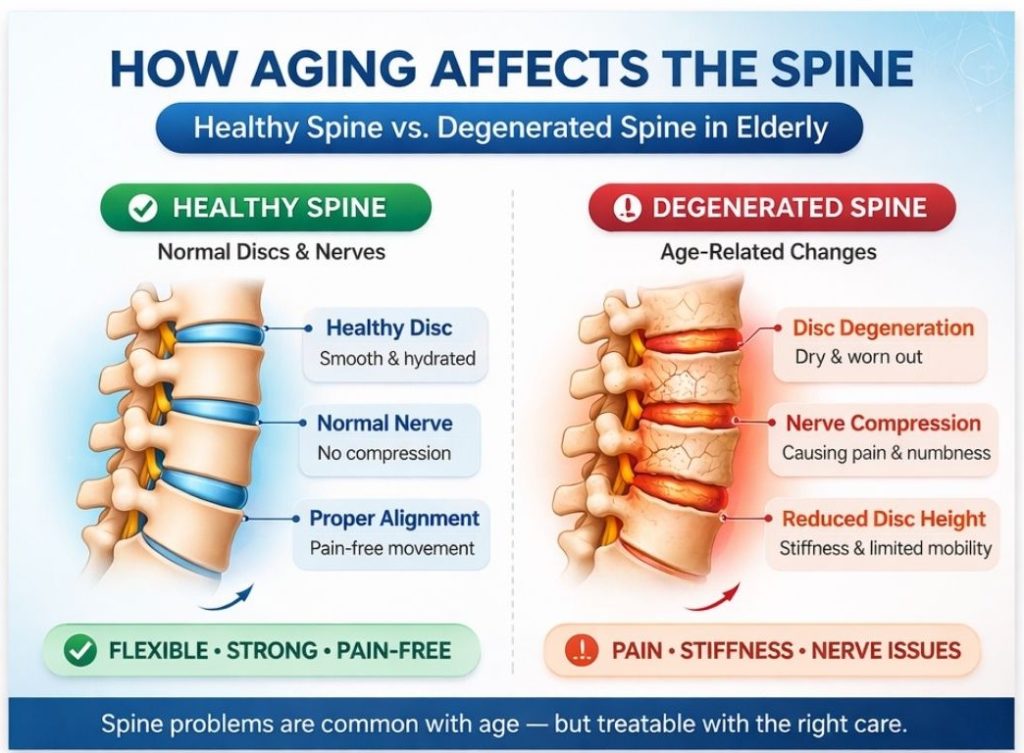
Aging naturally affects the spine. Over time, the discs lose water content, bones weaken, and joints wear out. This leads to:
- Chronic back pain
- Nerve compression
- Reduced mobility
- Difficulty standing or walking
Many patients try medications and physiotherapy first. But when these stop working, doctors may suggest surgery at a Spine Surgery Hospital in Kadapa.
Is Spine Surgery Safe for Elderly?
Age alone is NOT the main risk factor — overall health is.
An 70-year-old with controlled diabetes and good heart health may recover better than a 55-year-old with multiple uncontrolled conditions.
Spine surgery is generally safe if :
- The patient is medically stable
- Pre-surgery evaluation is done properly
- Surgery is performed by experienced specialists
- Post-operative care is followed strictly
At a well-equipped , elderly patients are carefully evaluated before surgery to reduce risks.
When Do Elderly Patients Actually Need Spine Surgery?
Here’s where people get it wrong:
They delay surgery too long thinking age is a problem — and end up making things worse.
Surgery is usually recommend when:
- Severe pain does not improve with medication
- Nerve compression causes numbness or weakness
- Difficulty walking or standing
- Loss of bladder or bowel control (serious emergency)
Ignoring these signs can lead to permanent nerve damage.
Consulting a specialist at a Orthopedic Hospital in Kadapa at the right time can prevent complications.
Types of Spine Surgeries for Elderly Patients
Not all spine surgeries are major or risky. In fact, modern techniques have made many procedures much safer.
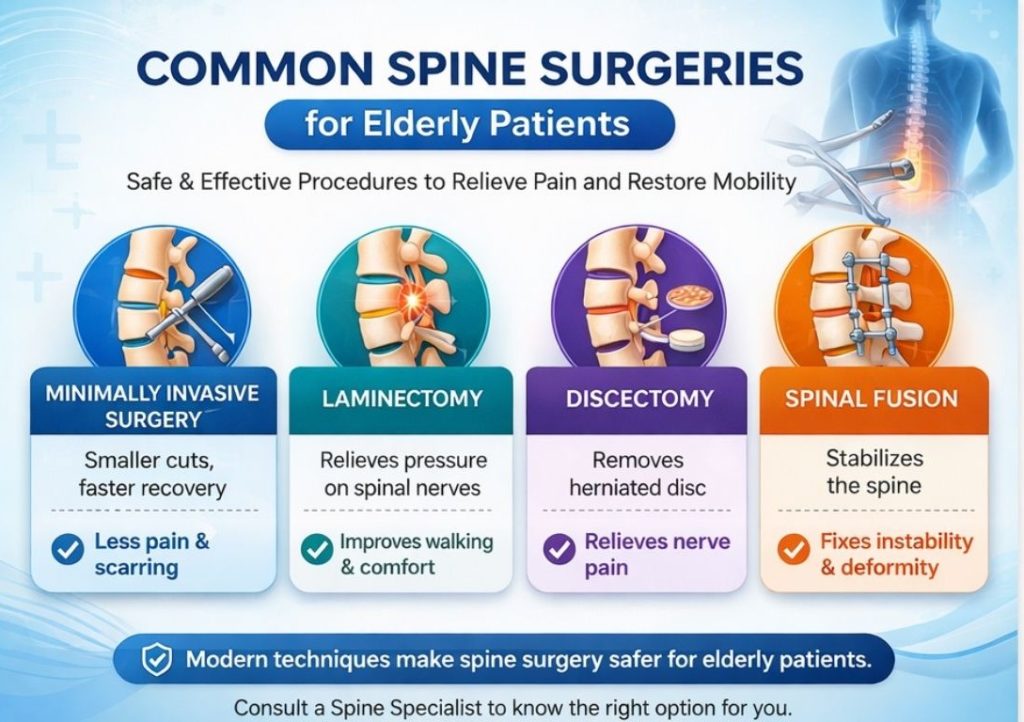
1.Minimally invasive spine Surgery
- Smaller cuts
- Less blood loss
- Faster recovery
- Lower infection risk
2.Laminectomy
Removes pressure on spinal nerves, especially in spinal stenosis.
3. Discectomy
Removes herniated disc causing nerve pain.
4.Spinal Fusion
Stabilizes the spine in cases of severe degeneration.
These procedures are performed by experts at a Spine Surgery Hospital in Kadapa, using advanced techniques to improve safety.
Risks of Spine Surgery in Elderly
Let’s not pretend it’s risk-free — that would be misleading.
Common risks include:
- Infection
- Blood clots
- Delayed healing
- Complications due to existing diseases
Higher risk if the patient has:
- Uncontrolled diabetes
- Heart disease
- Lung problems
- Obesity
This is why evaluation at a Cardiology Hospital in Kadapa may be required before surgery.
What Makes Spine Surgery Safer Today?
Spine surgery today is NOT what it was 15–20 years ago.
Major Improvements include:
- Advanced imaging technology
- Minimally invasive techniques
- Better anesthesia safety
- Improved ICU care
- Faster recovery protocols
Because of these advancements, elderly patients now undergo surgery with much better outcomes at a Multispeciality Hospital in Kadapa.
Benefits of Spine Surgery for Elderly
If done at the right time, spine surgery can dramatically improve life.
Key benefits:
- Relief from chronic pain
- Improved mobility
- Better quality of life
- Reduced dependency on others
Patients who couldn’t walk properly often regain independence after surgery at a specialized Orthopedic Hospital in Kadapa.
Recovery After Spine Surgery in Elderly
Recovery is where most people underestimate reality.
What actually happens:
- Initial recovery: 2–7 days in hospital
- Basic movement: within a few days
- Full recovery: weeks to months
Keyfactors affecting recovery :
- Age
- Overall health
- Type of surgery
- Post-surgery care
Rehabilitation support from a Multispeciality Hospital in Kadapa plays a crucial role in faster recovery.
How to Reduce Risks Before Surgery
If you’re serious about safety, this is where you focus.
Patients must:
- Control blood sugar levels
- Manage blood pressure
- Stop smoking
- Improve nutrition
- Follow doctor’s advice strictly
Skipping these steps is exactly why complications happen.
Pre-surgical clearance from a Cardiology Hospital in Kadapa helps reduce risks significantly.
Non-Surgical Alternatives (When Surgery Is Not Needed)
Let’s be honest — not every case needs surgery.
Alternatives include:
- Physiotherapy
- Pain management injections
- Lifestyle changes
- Medications
But here’s the catch:
If nerve damage has already started, these won’t fix the problem.
Delaying surgery in such cases can make recovery harder.
How to Decide: Surgery or Not?
This is where most families get confused.
Ask these questions:
- Is te pain affecting daily life?
- Are symptoms worsening?
- Have non-surgical treatments failed?
- Is there nerve damage?
If the answer is “yes” to most of these, surgery becomes the better option.
Consulting experts at a Spine Surgery Hospital in Kadapa ensures the right decision.
Common Myths About Spine Surgery in Elderly
Let’s kill the nonsense that stops people from getting treatment.
Myth 1: Elderly patients should avoid surgery
Wrong. Health condition matters more than age.
Myth 2: Recovery is always slow
Not true with modern minimally invasive techniques.
Myth 3: Surgery leads to Paralysis
Rare when done by experienced surgeons.
When Should You See a Doctor?
Don’t wait until it becomes severe.
Seek medical help if:
- Persistent back pain
- Numbness or tingling
- Weakness in legs
- Difficulty walking
Early consultation at a Orthopedic Hospital in Kadapa can prevent serious complications.
Final Verdict: Is Spine Surgery Safe for Elderly?
Here’s the straight answer:
Yes, spine surgery is safe for elderly patients — if done at the right time, in the right hospital, and with proper medical evaluation.
What actually makes it risky is:
- Delaying treatment
- Ignoring symptoms
- Choosing inexperienced care
When performed at a well-equipped Multispeciality Hospital in Kadapa, with expert surgeons and proper post-operative care, spine surgery can significantly improve quality of life.
Conclusion
Spine problems in elderly patients are not just about pain — they affect independence, mobility, and overall quality of life.
Avoiding surgery out of fear is often a bigger mistake than the surgery itself.
The smarter approach is:
- Early diagnosis
- Proper evaluation
- Right treatment decision
If you or your loved ones are facing severe spine issues, consult specialists at a Spine Surgery Hospital in Kadapa or Orthopedic Hospital in Kadapa to understand the best treatment options.