
PCOD Treatment in Kadapa: Symptoms, Causes, Diagnosis, and Best Care for Women
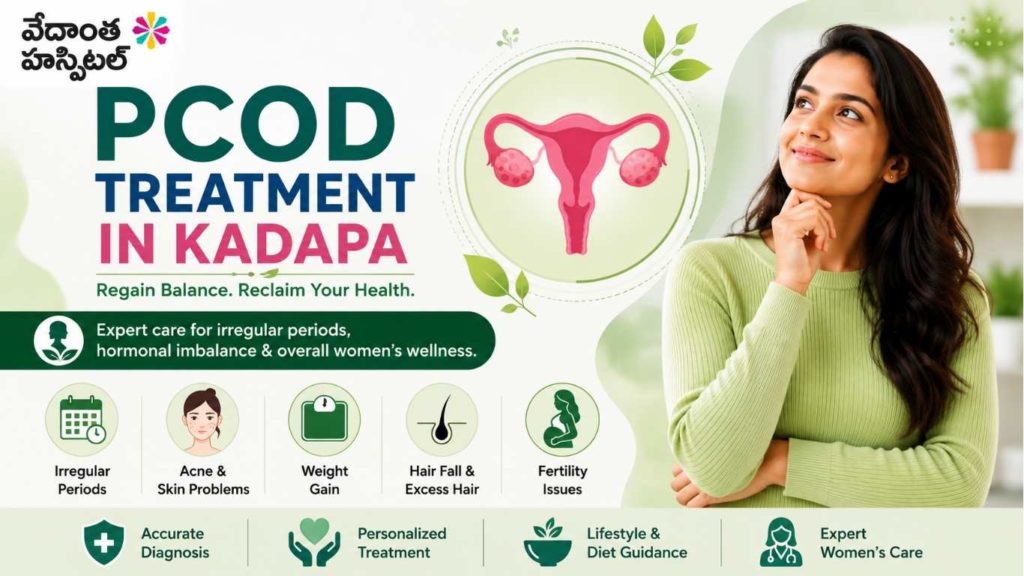
If your periods have been irregular, your weight keeps shifting without explanation, or your doctor recently mentioned PCOD — you’re not alone. Thousands of women across Kadapa and the broader YSR District deal with this condition, often without knowing what it really is or where to start.
This guide breaks everything down simply. No jargon. No scare tactics. Just clear answers about what PCOD is, what causes it, and what you can do about it right here in Kadapa.
What Is PCOD?
PCOD stands for Polycystic Ovarian Disease. It’s a hormonal condition where the ovaries produce more male hormones (called androgens) than they should. This hormonal imbalance causes small, fluid-filled cysts to form on the ovaries — and it disrupts your menstrual cycle.
It’s important to know: PCOD is not a disease in the scary sense. It’s a manageable condition. With the right lifestyle changes and medical support, most women live normal, healthy lives — including getting pregnant.
PCOD is sometimes confused with PCOS (Polycystic Ovarian Syndrome). PCOD is generally considered a milder form, though both involve similar hormonal issues and similar treatment approaches.
What Causes PCOD?
There isn’t one single cause — it’s usually a combination of factors.
Hormonal imbalance is at the core of it. When the body produces too much insulin or too many androgens, the ovaries react by forming cysts instead of releasing eggs normally.
Other contributing factors include:
- Genetics — If your mother or sister has PCOD, you’re at a higher risk
- Insulin resistance — The body doesn’t use insulin efficiently, which raises androgen levels
- Poor diet and low physical activity — Especially diets high in refined carbs and sugar
- Chronic stress — Stress hormones can directly affect your menstrual cycle
- Obesity — Excess body fat, especially around the belly, worsens hormonal imbalance
In many families across Kadapa and rural Andhra Pradesh, dietary habits tend to lean heavily on rice and fried foods, which can raise insulin levels over time. This doesn’t mean you’ve done something wrong — it just means lifestyle adjustments can make a real difference.
Signs and Symptoms of PCOD
PCOD shows up differently in different women. Some have multiple symptoms; others may notice just one or two.
The most common signs include:
- Irregular periods — cycles longer than 35 days, or fewer than 8 periods a year
- Missed periods or very light bleeding
- Unexpected weight gain, especially around the abdomen
- Acne that doesn’t respond well to regular skincare
- Excessive facial or body hair (a condition called hirsutism)
- Hair thinning or hair fall from the scalp
- Darkening of skin around the neck, armpits, or groin
- Mood swings, low energy, or difficulty concentrating
- Difficulty getting pregnant
Not every woman with PCOD will have all these symptoms. Some women only discover they have it when they struggle to conceive or during a routine ultrasound.
Who Is at Risk? Complications to Watch For
PCOD can affect women of any age after puberty, but it’s most commonly diagnosed between ages 15 and 35.
You’re at higher risk if you:
- Have a family history of PCOD or type 2 diabetes
- Are overweight or have gained significant weight recently
- Lead a largely sedentary lifestyle
- Have been under prolonged stress
If left unmanaged, PCOD can lead to more serious health concerns over time. These include:
- Type 2 diabetes — due to persistent insulin resistance
- High blood pressure and cholesterol — increasing heart disease risk
- Infertility or difficulty conceiving — since irregular ovulation makes pregnancy harder
- Endometrial cancer — a small but real risk when periods are skipped for months
- Depression and anxiety — both are significantly more common in women with PCOD
This doesn’t mean any of this will happen to you. Early diagnosis and consistent management dramatically reduce these risks.
How Is PCOD Diagnosed?
There’s no single test that confirms PCOD. Doctors typically use a combination of approaches:
Medical history — Your doctor will ask about your periods, symptoms, family history, and weight changes.
Blood tests — These check hormone levels (LH, FSH, testosterone, insulin, thyroid), blood sugar, and cholesterol.
Pelvic ultrasound — This is how the cysts are actually seen. An ultrasound checks the size of your ovaries and how many follicles (small cysts) are present.
According to international guidelines, a diagnosis usually requires at least two of three criteria: irregular ovulation, elevated androgen levels, or the presence of cysts on an ultrasound.
If you’ve been experiencing irregular cycles or any of the symptoms listed above, getting tested is worth it — and it’s straightforward to do in Kadapa.
PCOD Treatment Options That Work
Good news: PCOD is very treatable. The approach depends on your symptoms and whether you’re trying to get pregnant.
Lifestyle Changes First
This is genuinely the most effective starting point — not a cliché. Even a 5–10% reduction in body weight can regulate periods and improve fertility in women with PCOD.
- Switch to a lower-glycemic diet: more vegetables, legumes, millets, and proteins; fewer refined carbs
- Walk at least 30–45 minutes daily — even this alone improves insulin sensitivity significantly
- Cut down on packaged snacks, sugary drinks, and deep-fried foods
- Prioritize 7–8 hours of sleep — poor sleep directly worsens hormonal imbalance
- Find stress outlets: yoga, breathing exercises, or simply time away from screens
Medical Treatment
When lifestyle changes alone aren’t enough, doctors may recommend:
Hormonal pills (combined oral contraceptives) — These regulate periods and reduce androgen levels. They help with acne and hair issues too.
Metformin — Usually prescribed for diabetes, but very effective for PCOD because it improves how the body uses insulin.
Anti-androgen medications — Help with excess hair growth and acne by blocking male hormone effects.
Ovulation induction — For women trying to conceive, medicines like clomiphene or letrozole are used to trigger ovulation.
Inositol supplements — A newer, evidence-backed option that improves insulin sensitivity naturally.
Every case is different. A gynaecologist will tailor treatment based on your age, symptoms, and whether pregnancy is a goal.
Managing PCOD Long-Term: Practical Tips
PCOD doesn’t have a permanent cure, but it absolutely can be managed well. Think of it less like a medical crisis and more like a condition you learn to live around.
- Track your periods — even a simple calendar app helps you notice patterns
- Get a blood sugar check every 6–12 months
- Don’t skip gynaecology follow-ups, even when you feel fine
- If you’re trying to conceive, let your doctor know early — treatment options are better with more time
- Talk to other women managing PCOD — community support helps more than people expect
Why Acting Early Makes a Real Difference
Many women in smaller cities like Kadapa wait years before seeking help — either because they think irregular periods are normal, or because they don’t realize symptoms like acne and hair fall could be connected.
The truth is: the earlier you get diagnosed, the easier it is to manage. Young women who start making lifestyle changes in their 20s significantly reduce their risk of developing diabetes or fertility issues later. The hormonal environment is also more responsive to treatment when intervention starts early.
Waiting doesn’t make PCOD go away. It just gives it more time to impact your health in ways that take longer to reverse.
Getting PCOD Care in Kadapa
Women looking for PCOD treatment in Kadapa have access to different healthcare options, including government hospitals, private hospitals, gynaecology clinics, and diagnostic centres. The right choice depends on the severity of symptoms, the need for hormonal evaluation, fertility concerns, and the type of follow-up care required.
When choosing a hospital or gynaecologist for PCOD, consider whether the facility provides proper evaluation, hormonal and metabolic testing, ultrasound support, personalised treatment, fertility guidance, and regular follow-up. PCOD can affect menstrual health, weight, hormones, skin, and fertility, so treatment should be based on your individual symptoms and health goals.
PCOD Treatment at Vedanta Hospitals, Kadapa
At Vedanta Hospitals, Kadapa, women can receive comprehensive evaluation and treatment for PCOD under experienced gynaecological care. Our approach focuses on understanding the underlying hormonal and metabolic factors, managing symptoms, and supporting long-term reproductive health.
PCOD care at Vedanta Hospitals may include:
Evaluation of irregular or missed periods
Hormonal and metabolic assessment
Management of PCOD-related menstrual problems
Lifestyle and weight-management guidance
Medical treatment when required
Fertility evaluation and support for women planning pregnancy
Follow-up care to monitor symptoms and treatment response
Our goal is not simply to manage one symptom of PCOD, but to provide personalised women’s healthcare based on each patient’s age, symptoms, reproductive goals, and overall health.
If you are experiencing irregular periods, unexplained weight changes, acne, excessive hair growth, or difficulty conceiving, consulting a gynaecologist can help identify the cause and guide appropriate treatment.
Looking for PCOD treatment in Kadapa? Consult the gynaecology team at Vedanta Hospitals for personalised evaluation and care.
Conclusion
PCOD is common. It’s manageable. And it doesn’t have to define your health, your fertility, or your future.
If you’ve been putting off that appointment because you weren’t sure if your symptoms were “serious enough” — they are worth checking out. Getting clarity is always better than guessing.
Women in Kadapa have access to the care they need. The first step is simply showing up and asking the right questions.
Q: Can PCOD be cured completely?
There is no permanent cure for PCOD, but with the right treatment and lifestyle changes, symptoms can be fully controlled. Many women manage it so well that it has minimal impact on their daily life.
Q: Does PCOD mean I can't get pregnant?
Not at all. PCOD is one of the most common causes of irregular ovulation, but with treatment — including ovulation induction medication — the majority of women with PCOD are able to conceive. Early consultation with a gynaecologist improves your chances significantly.
Q: Is PCOD the same as PCOS?
They are closely related but not identical. PCOD is generally considered less severe. PCOS (Polycystic Ovarian Syndrome) involves more persistent hormonal imbalance and metabolic effects. Both require medical evaluation, but PCOD often responds well to lifestyle changes alone.
What foods should I avoid if I have PCOD?
Avoid or limit white rice in large quantities, maida-based foods (white bread, biscuits, fried snacks), sugar-heavy drinks, and processed foods. These raise insulin levels quickly and worsen hormonal imbalance. Replace with millets, legumes, vegetables, eggs, and whole grains.
Q: How often should I see a doctor for PCOD?
If you’ve recently been diagnosed, follow up every 3–6 months initially. Once your condition is stable, a yearly check is usually enough — along with routine blood sugar and hormone tests.
Q: At what age does PCOD start?
PCOD can develop any time after puberty. It’s most frequently diagnosed between ages 15 and 30, though women in their 30s are also often diagnosed when they start trying to conceive.
Q: Can stress cause PCOD to worsen?
Yes. Chronic stress raises cortisol, which disrupts the hormonal balance further and can make periods more irregular. Managing stress through exercise, sleep, and mindfulness is a real part of PCOD treatment — not optional advice