
Piles Treatment in Kadapa: Complete Guide to Causes, Symptoms & Advanced Care
What Are Piles? Understanding the Condition
Piles, medically known as hemorrhoids, are swollen and inflamed veins located in the rectum or around the anus. They are one of the most common anorectal conditions affecting adults across India — and Kadapa is no exception. Despite being a highly treatable condition, many patients in Kadapa delay seeking help due to embarrassment or lack of awareness, which often leads to the condition worsening over time.
If you have been experiencing pain, bleeding during bowel movements, or discomfort while sitting, you may be dealing with piles. Understanding the condition clearly is the first step toward getting the right treatment.
Types of Piles
Piles are broadly classified into two types based on their location:
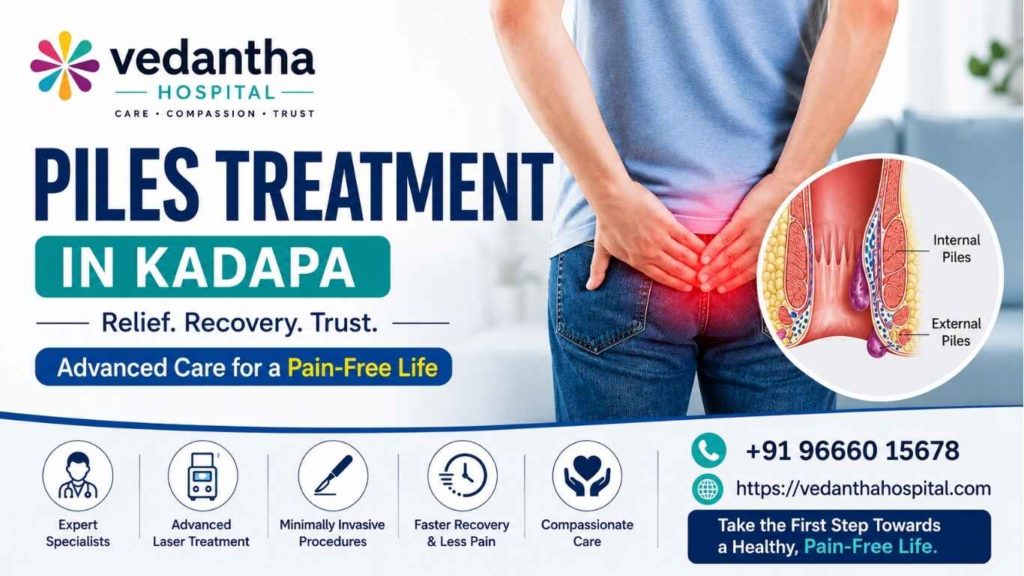
- Internal Piles: These develop inside the rectum and are usually painless. They are not visible during a routine physical examination but can cause bleeding during bowel movements. In advanced cases, they may prolapse and push out through the anal opening.
- External Piles: These form beneath the skin around the anus. They are more likely to cause pain, itching, and swelling. If a blood clot develops inside an external pile (thrombosed hemorrhoid), it can become extremely painful and may require urgent treatment.
Grades of Piles: How Severe Is Your Condition?
Doctors classify internal piles into four grades to determine the right course of treatment:
| Grade | Description |
|---|---|
| Grade I | Small swellings inside the anal canal. Not visible externally. No prolapse. |
| Grade II | Larger swellings that may prolapse during bowel movements but return on their own. |
| Grade III | Prolapse outside the anus and need to be manually pushed back in. |
| Grade IV | Permanently prolapsed; cannot be pushed back. Requires surgical intervention. |
Knowing your grade is critical. A Grade I pile can often be managed with lifestyle changes and medication, while Grade IV almost always requires surgery. Self-diagnosis is not recommended — visit a qualified proctologist or general surgeon in Kadapa for a proper assessment.
Common Causes of Piles in Kadapa
Several lifestyle and dietary factors contribute to the development of piles. Here are the most common causes seen among patients in the Kadapa region:
- Chronic constipation due to a low-fibre diet — very common with the local dietary pattern of consuming less raw vegetables and fruits
- Prolonged straining during bowel movements, which increases pressure on rectal veins
- Sedentary lifestyle — sitting for long hours, particularly for office workers and drivers
- Dehydration — inadequate water intake, especially during the intense summer months in Kadapa
- Obesity — excess body weight puts added pressure on pelvic veins
- Pregnancy — the growing uterus increases pressure on the rectum, making piles common in the third trimester
- Aging — the supporting tissues around the rectum weaken with age
- Hereditary factors — a family history of piles increases your risk
Symptoms: When to See a Doctor in Kadapa
The symptoms of piles vary depending on the type and grade. Watch out for these warning signs:
- Bright red bleeding during or after passing stools (blood on toilet paper or in the toilet bowl)
- A lump or swelling around or just inside the anus
- Itching or irritation around the anal region
- Pain or discomfort, especially when sitting or during bowel movements
- A feeling of incomplete bowel emptying even after passing stools
- Mucous discharge from the anus in advanced cases
Important: Rectal bleeding should never be ignored or assumed to be piles without a medical diagnosis. Conditions like anal fissures, anal fistulas, and in rare cases, colorectal cancer, share similar symptoms. Always consult a doctor for accurate diagnosis.
Diagnosis of Piles in Kadapa
A qualified general surgeon or proctologist in Kadapa will typically diagnose piles through:
- Physical examination of the anal area to identify external piles or skin tags
- Digital rectal examination (DRE) to check for internal piles and assess tissue condition
- Proctoscopy or sigmoidoscopy — a small camera is inserted to get a clear view of the rectal area, used for Grade II and above cases
- Colonoscopy — may be recommended if the doctor wants to rule out other conditions causing rectal bleeding
Early and accurate diagnosis makes a significant difference in treatment outcomes. Do not delay your visit to a hospital in Kadapa simply because the symptoms seem minor.
Piles Treatment in Kadapa: All Available Options
Treatment for piles depends on the grade and severity of the condition. Here is a complete breakdown of what is available in Kadapa:
1. Lifestyle & Dietary Changes (Grade I)
For mild cases, the first line of treatment involves non-surgical measures:
- Increasing dietary fibre intake through vegetables, fruits, whole grains, and legumes
- Drinking at least 2–3 litres of water per day to soften stools
- Avoiding prolonged sitting on the toilet
- Doing regular light exercise such as walking to stimulate bowel movement
- Avoiding spicy and processed foods that worsen inflammation
These changes alone are sufficient for many Grade I patients and can prevent the condition from progressing.
2. Medications (Grade I & II)
Doctors may prescribe a combination of the following:
- Stool softeners and fibre supplements to make bowel movements easier
- Topical creams and ointments to reduce inflammation, itching, and discomfort around the anal area
- Flavonoid-based medications (like Daflon) that strengthen vein walls and reduce bleeding
- Sitz baths — soaking the anal area in warm water for 10–15 minutes, 2–3 times a day, to relieve pain and swelling
3. Non-Surgical Office Procedures (Grade II & III)
Several minimally invasive procedures are available in hospitals and clinics in Kadapa for patients who do not respond to medication:
- Rubber Band Ligation (RBL): A small rubber band is placed at the base of the internal pile, cutting off its blood supply. The pile shrinks and falls off within a few days. It is the most commonly performed in-office procedure with minimal discomfort.
- Sclerotherapy: A chemical solution is injected directly into the pile tissue, causing it to shrink. It is effective for small internal piles and requires no anaesthesia.
- Infrared Coagulation (IRC): Infrared light is used to cut off the blood supply to the pile. It is a quick procedure done in outpatient settings.
4. Laser Treatment for Piles in Kadapa (Grade II, III & IV)
Laser treatment has become one of the most preferred and advanced options for piles treatment in Kadapa. Here is why patients are increasingly opting for it:
- Minimally invasive — no large cuts or open wounds
- Virtually painless procedure with minimal bleeding
- Faster recovery — most patients resume normal activities within 2–3 days
- High success rate with low chances of recurrence
- Day-care procedure — no overnight hospital stay needed in most cases
- Significantly reduced risk of post-operative complications compared to traditional surgery
Laser surgery uses a concentrated beam of light energy to precisely ablate (remove) the pile tissue. It is suitable for Grade II, III, and select Grade IV cases. The cost of laser piles treatment in Kadapa typically ranges from ₹41,000 to ₹95,000, depending on the grade, the hospital, and whether additional procedures are needed.
5. Conventional Open Surgery — Haemorrhoidectomy (Grade IV)
For severe Grade IV piles that cannot be treated with laser or non-surgical methods, a traditional haemorrhoidectomy may be recommended. In this procedure:
- The pile tissue is surgically excised under general or spinal anaesthesia
- It has a longer recovery period of 2–4 weeks
- Post-operative pain is more significant compared to laser treatment
- It is highly effective and provides permanent relief for advanced cases
This surgery is performed by trained general surgeons at multispeciality hospitals in Kadapa.
Post-Treatment Care: What You Must Follow
Regardless of the treatment method, recovery and prevention of recurrence depend largely on what you do after treatment:
- Continue a high-fibre diet and adequate hydration permanently
- Take sitz baths for the first week after any surgical procedure to reduce swelling
- Avoid heavy lifting and strenuous physical activity for at least 2–3 weeks post-surgery
- Do not strain during bowel movements — use stool softeners if needed
- Attend all follow-up appointments to monitor healing and catch any complications early
- Maintain a healthy weight through regular exercise and a balanced diet
Why Early Treatment Matters
Many people in Kadapa and surrounding areas like Proddatur, Rajampet, and Pulivendula postpone piles treatment for months or even years. This delay typically leads to:
- Progression from a manageable Grade I or II to a painful Grade III or IV
- Development of complications like anaemia from chronic bleeding
- Thrombosis in external piles causing severe acute pain
- Significantly higher treatment costs and longer recovery times
Getting treated early — when the condition is still at an early grade — means less invasive procedures, faster recovery, lower cost, and a much better quality of life.
Frequently Asked Questions (FAQs)
Q: Can piles be cured without surgery in Kadapa?
Yes. Grade I piles can be managed entirely through dietary changes, hydration, and medication. Grade II piles may also respond well to rubber band ligation or sclerotherapy without the need for surgery.
Q: Is laser treatment for piles painful?
No. Laser treatment is performed under local or spinal anaesthesia and is virtually painless during the procedure. Post-procedure discomfort is minimal and manageable with standard pain medication.
Q: How long does recovery take after laser piles surgery in Kadapa?
Most patients recover within 2–3 days and can return to light work. Full recovery typically takes 1–2 weeks.
Q: What is the cost of piles treatment in Kadapa?
The cost ranges from ₹41,000 to ₹95,000 for surgical treatment, depending on the hospital, grade of piles, type of surgery, and diagnostic tests involved. Non-surgical treatments and medications are significantly less expensive.
Q: Can piles come back after treatment?
Piles can recur if underlying lifestyle issues are not addressed. Maintaining a high-fibre diet, staying hydrated, exercising regularly, and avoiding prolonged straining can significantly reduce the risk of recurrence.
Q: Is it safe to consult a doctor for piles online in Kadapa?
Yes. Many hospitals and clinics in Kadapa now offer online consultations. You can speak with a proctologist or general surgeon over a call or video before deciding on in-person treatment.
Conclusion
Piles is a common but entirely treatable condition. Residents of Kadapa and nearby areas have access to a range of effective treatment options — from simple lifestyle interventions for mild cases to advanced laser surgery for severe or recurrent piles. The key is early action. The longer you wait, the more invasive and expensive the treatment becomes.
If you or a family member is experiencing symptoms of piles, do not rely on home remedies alone. Visit a qualified surgeon or proctologist in Kadapa, get a proper diagnosis, and choose the treatment plan that is right for your grade and lifestyle. Effective, long-term relief from piles is well within reach.