
Why Does My Chest Feel Heavy? Causes, Warning Signs, Tests & Treatment
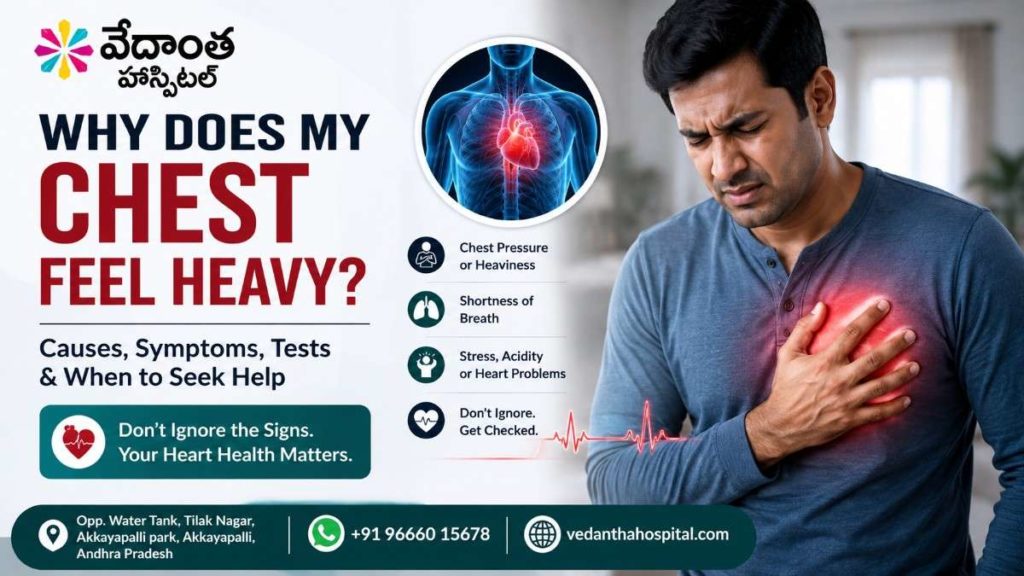
Chest heaviness can feel frightening, especially when you are unsure whether it is caused by stress, acidity, a muscle problem, or your heart. The feeling may range from mild pressure or tightness to a heavy sensation in the centre of the chest.
Why does my chest feel heavy? There is no single answer. Chest heaviness can have several causes, and some are harmless while others need urgent medical attention. Heart-related problems such as angina or a heart attack can cause pressure, squeezing, fullness, or heaviness in the chest.
This guide explains the common causes, heart-related warning signs, tests doctors may recommend, treatment options, and when you should seek medical care.
Important: If you have new or unexplained chest heaviness, especially with shortness of breath, sweating, nausea, dizziness, or pain spreading to the arm, jaw, back, or neck, treat it as a medical emergency rather than assuming it is gas or stress.
What Does Chest Heaviness Feel Like?
Chest heaviness does not always feel like sharp pain. Some people describe it as pressure, tightness, fullness, squeezing, burning, or a weight sitting on the chest.
The sensation may be constant or may come and go. It can happen while resting, walking, exercising, eating, or during stressful situations.
Some people may also experience:
- Pressure or tightness in the chest
- A feeling of something heavy sitting on the chest
- Burning or discomfort behind the breastbone
- Shortness of breath
- Fast or irregular heartbeat
- Sweating
- Dizziness or lightheadedness
- Nausea
- Chest discomfort that spreads to the arm, shoulder, back, neck, or jaw
The important point is that you cannot determine the cause from the feeling alone. Even conditions that are not related to the heart can feel similar to heart problems.
Common Causes of Chest Heaviness
Chest heaviness can come from the heart, digestive system, muscles, lungs, or even emotional stress. Some causes may improve with time, but others need medical attention.
Anxiety and Stress
Anxiety can cause a feeling of pressure or tightness in the chest. When you are stressed or frightened, your body releases stress hormones that can increase your heart rate and change your breathing.
You may notice chest heaviness together with:
- Rapid heartbeat
- Fast breathing
- Sweating
- Trembling
- Dizziness
- A feeling of fear or panic
A panic attack can feel very similar to a heart problem. That is why it is unsafe to automatically assume that chest heaviness is caused by anxiety, particularly when the symptom is new or severe.
Example: Chest tightness that begins during a stressful situation and improves after calming down may be related to anxiety.
But another example is chest pressure with sweating and breathlessness, which should not be dismissed as stress because these can also occur during a heart attack.
Acid Reflux or GERD
Acid reflux happens when stomach contents move back into the oesophagus, the tube connecting your mouth to your stomach.
It can cause a burning sensation behind the breastbone, commonly called heartburn. Some people may describe this as chest discomfort or heaviness.
Symptoms may be more noticeable:
- After a large meal
- When lying down
- After eating certain trigger foods
- When bending over
GERD can sometimes feel similar to heart-related chest discomfort, so symptoms that are new, severe, or difficult to explain should not automatically be blamed on acidity.
Muscle Strain
Chest wall muscles can become sore or strained after exercise, heavy lifting, coughing, or an injury.
Musculoskeletal chest discomfort may become more noticeable when moving the upper body or using the affected muscles. Conditions such as costochondritis can also cause pain around the ribs and breastbone.
For example, someone who develops chest soreness after starting a new upper-body workout may have a muscle-related problem.
However, being able to identify a possible muscle trigger does not automatically rule out a heart problem. New or unexplained chest symptoms should still be assessed when there is concern.
Asthma and Respiratory Conditions
Breathing-related conditions can sometimes cause chest tightness or heaviness.
Asthma, for example, can cause chest tightness, wheezing, coughing, and difficulty breathing. Other lung conditions can also cause chest discomfort.
Chest symptoms accompanied by significant breathing difficulty need medical attention because serious lung problems can sometimes produce symptoms similar to heart conditions.
Heart-Related Causes of Chest Heaviness
This is the section you should not skip if you are experiencing unexplained chest heaviness.
Heart-related chest discomfort can happen when the heart muscle does not receive enough oxygen-rich blood. The symptoms may feel like pressure, squeezing, tightness, fullness, or heaviness rather than sharp pain.
Angina
Angina occurs when reduced blood flow to the heart causes chest pressure, tightness, or discomfort.
It may occur when the heart needs more oxygen, such as during physical activity or emotional stress.
A person may feel pressure or heaviness in the chest that improves after resting. However, new, worsening, or unexpected chest discomfort can represent a more serious problem and requires prompt medical assessment.
Coronary Artery Disease
Coronary artery disease occurs when the arteries supplying blood to the heart become narrowed, often because of plaque buildup.
Reduced blood flow can cause angina and, if a blockage suddenly develops, can lead to an acute coronary syndrome or heart attack.
Risk factors include:
- High blood pressure
- High cholesterol
- Diabetes
- Smoking
- Obesity
- Physical inactivity
- Increasing age
- Family history of heart disease
Chest heaviness that repeatedly appears with exertion should not simply be treated as acidity or tiredness. It deserves medical evaluation.
Heart Attack
A heart attack happens when a blockage prevents enough blood and oxygen from reaching part of the heart muscle.
The discomfort may feel like:
- Pressure
- Squeezing
- Tightness
- Fullness
- Heaviness
- Pain
The sensation may last several minutes or disappear and return.Pain or pressure may extend from the chest to the arm, shoulder, back, neck, jaw, or upper abdomen.Shortness of breath, sweating, nausea, dizziness, or unusual tiredness may occur as well.
Importantly, a heart attack does not always begin with dramatic, unbearable pain.Some people experience milder or less typical symptoms.
Women may also experience symptoms such as shortness of breath, nausea, anxiety, unusual tiredness, or discomfort in the back, shoulder, or arm.
Chest Heaviness With Shortness of Breath
Chest heaviness combined with shortness of breath deserves particular attention.
It can occur with conditions such as anxiety, asthma, respiratory infections, or acid reflux, but it can also be a sign of a heart attack or another serious heart or lung problem.
The combination becomes especially concerning when symptoms occur suddenly or are accompanied by:
- Sweating
- Nausea
- Dizziness
- Fainting
- Rapid or irregular heartbeat
- Pain spreading to the arm, jaw, back, or neck
If these symptoms are happening now, do not wait for the blog or try to identify the cause yourself. Seek emergency medical care immediately.
When Is Chest Heaviness an Emergency?
New, sudden, severe, or unexplained chest heaviness should be taken seriously.
Seek emergency medical care if chest heaviness is accompanied by difficulty breathing, sweating, nausea, fainting, severe dizziness, or discomfort spreading to the arm, back, neck, jaw, or stomach.
You should also seek urgent help if the heaviness:
- Starts suddenly
- Lasts for several minutes
- Goes away and comes back
- Occurs during physical activity
- Becomes increasingly frequent or severe
- Happens along with a fast or irregular heartbeat
- Is associated with loss of consciousness
Do not drive yourself if you may be having a heart attack. Emergency medical services can begin assessment and treatment during transport.
If you are in Kadapa and experiencing possible heart-attack symptoms now, go to the nearest emergency department or call your local emergency medical service.
What Tests May a Doctor Recommend?
The tests depend on your symptoms, age, medical history, examination findings, and whether the doctor suspects a heart, lung, digestive, or musculoskeletal cause.
ECG
An electrocardiogram (ECG) records the electrical activity of the heart.
It is commonly used when doctors are evaluating chest discomfort because it can identify certain patterns associated with acute coronary syndromes and other heart problems.
However, a normal ECG does not always rule out angina or every heart problem, so doctors may recommend additional tests when symptoms continue or the clinical risk is significant.
Echocardiogram
An echocardiogram, often called an echo, uses ultrasound to create images of the heart.
It can help doctors assess how the heart muscle and valves are working and how effectively the heart pumps blood.
Blood Tests
Blood tests may be used to look for evidence of heart muscle damage.
One important test is cardiac troponin. Troponin can enter the bloodstream when heart muscle is damaged and is commonly used when a heart attack is suspected.
Doctors may also check cholesterol, blood sugar, and other blood markers depending on the situation.
Other Tests Depending on Symptoms
If the initial evaluation does not fully explain the symptoms, additional tests may include a chest X-ray, stress testing, coronary CT angiography, cardiac MRI, or invasive coronary angiography.
These tests are not required for everyone.
The doctor chooses them based on the suspected cause and the patient’s individual risk.
How Is Chest Heaviness Treated?
There is no single medicine or treatment for chest heaviness because chest heaviness is a symptom, not a diagnosis.
Treatment starts by identifying the underlying cause.
If the cause is acid reflux, treatment may focus on diet, lifestyle changes, and medicines recommended by a healthcare professional.
If anxiety is contributing to the symptoms, treatment may involve stress management, psychological support, and medicines when appropriate.
For muscle-related chest discomfort, treatment may include rest, activity modification, and other measures recommended by a doctor.
If the cause is a heart condition, treatment depends on the diagnosis. It may include medicines, lifestyle changes, cardiac rehabilitation, angioplasty or stenting, or bypass surgery in selected patients.
For acute coronary syndrome, rapid treatment is important because restoring blood flow can limit heart muscle damage.
Do not start heart medicines or stop prescribed medicines simply because you think the chest heaviness is caused by acidity or stress.
When Should You See a Cardiologist?
You should consider a cardiology evaluation when chest heaviness is:
- Recurrent
- Triggered by walking or exercise
- Associated with breathlessness
- Accompanied by palpitations or dizziness
- Associated with unusual sweating or fatigue
- Occurring in someone with diabetes, high blood pressure, or high cholesterol
- Occurring in someone with a history of heart disease
- Becoming more frequent or severe
A cardiologist can assess your symptoms and determine whether further heart testing is appropriate.
If you are in Kadapa, Vedanta Hospitals provides cardiology services for chest pain, palpitations, dyspnea, coronary artery disease, heart failure, and other cardiovascular conditions. The hospital lists ECG, echocardiography, TMT, Holter monitoring, angiography, and interventional cardiology services.
Frequently Asked Questions
Why does my chest feel heavy but I am not having pain?
Chest heaviness does not have to feel like sharp pain. Heart-related symptoms can feel like pressure, tightness, squeezing, fullness, or heaviness. Anxiety, acid reflux, muscle problems, and respiratory conditions can also cause chest discomfort.
Can gas or acidity cause chest heaviness?
Yes. GERD and acid reflux can cause burning or discomfort in the chest. However, heart problems can sometimes feel similar to indigestion, so new or unexplained chest heaviness should not automatically be blamed on gas.
Can anxiety cause chest heaviness?
Yes. Anxiety and panic attacks can cause chest tightness, rapid breathing, sweating, dizziness, and a racing heartbeat. But because panic symptoms can resemble heart problems, new or severe chest symptoms should be medically assessed when there is uncertainty.
Is chest heaviness always a sign of a heart problem?
No. Chest heaviness can have many causes, including digestive, respiratory, muscular, and psychological conditions. However, heart-related causes can be serious, so unexplained or concerning symptoms should not be ignored.
Can chest heaviness happen without a heart attack?
Yes. Angina, GERD, anxiety, asthma, muscle strain, and other conditions can cause chest discomfort without a heart attack. A doctor may need to assess you to determine the cause.
When should I go to the hospital for chest heaviness?
Seek emergency medical care for sudden or unexplained chest heaviness, especially if it occurs with shortness of breath, sweating, nausea, dizziness, fainting, or discomfort spreading to the arm, jaw, back, neck, or stomach.
What is the first test for chest heaviness?
An ECG is commonly performed when a heart-related cause is suspected. Depending on the symptoms and initial findings, doctors may also recommend blood tests such as troponin, echocardiography, stress testing, CT angiography, or other investigations.
Chest Heaviness Evaluation and Cardiac Care at Vedanta Hospital, Kadapa
If you frequently experience chest heaviness, getting the cause evaluated is more useful than repeatedly treating the symptom as gas or stress.
At Vedanta Hospitals, Kadapa, the cardiology department provides evaluation and treatment for chest pain, palpitations, breathlessness, coronary artery disease, heart failure, and other heart conditions. The hospital lists ECG, echocardiography, TMT, Holter monitoring, angiography, angioplasty, pacemaker implantation, and other cardiac services.
The cardiology department is headed by Dr. Sravan Kumar Nandaluru, MBBS, MD (General Medicine), DM (Cardiology), FACC, FSCAI, Senior Consultant Interventional Cardiologist. His listed services include evaluation of chest pain, palpitations, and dyspnea, as well as coronary angiography, angioplasty, complex coronary interventions, and heart-failure management.
For patients with severe or sudden symptoms, Vedanta Hospitals also lists 24/7 emergency and casualty services, including chest pain management and cardiac emergency care.
Final Takeaway
Why does my chest feel heavy? It could be something relatively common such as anxiety, acid reflux, or muscle strain, but it can also be a warning sign of angina, coronary artery disease, or a heart attack.
The biggest mistake is trying to diagnose the cause from the sensation alone.
If the heaviness is new, unexplained, severe, persistent, or associated with breathlessness, sweating, nausea, dizziness, or discomfort in the arm, jaw, back, or neck, seek emergency medical care immediately.
For recurring or unexplained symptoms, a proper medical evaluation can help determine whether you need cardiac testing or treatment for another underlying condition.
Medical disclaimer: This article is for educational purposes and does not replace a medical examination. Chest symptoms can sometimes indicate a medical emergency. If you are experiencing symptoms now, seek urgent medical care rather than waiting for an online answer.