
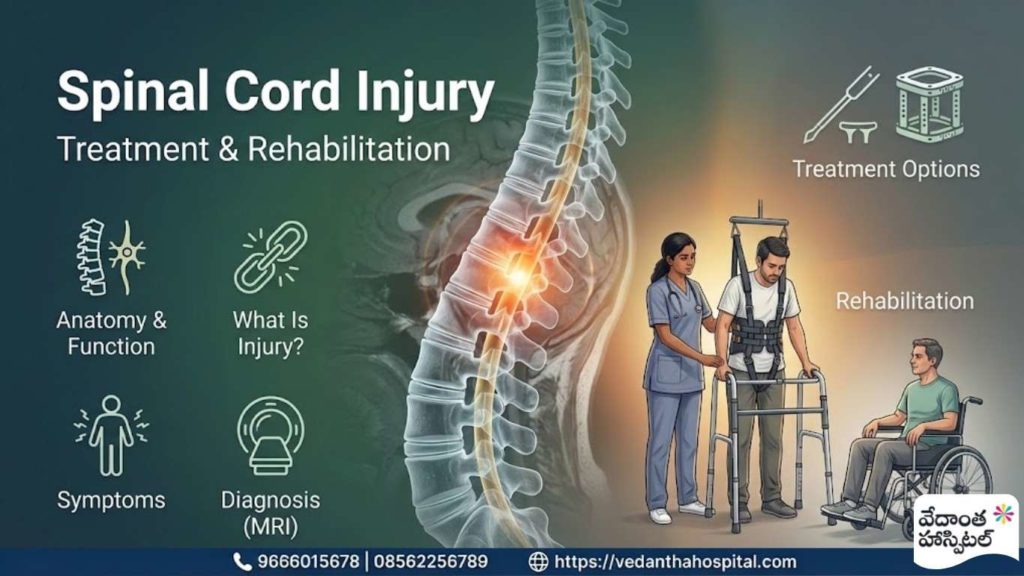

Spinal cord injury is a serious medical condition that can change a person’s life within seconds. It affects movement, sensation, and sometimes even breathing, depending on the severity and location of the injury. With early diagnosis, proper treatment, and structured rehabilitation, many patients can regain function and improve quality of life.
Today, advanced medical care available at a Multispeciality Hospital in Kadapa allows early intervention, surgical management, and long-term rehabilitation for injury patients. This blog explains spinal cord injury, its causes, symptoms, treatment options, and the importance of rehabilitation in simple and clear language.
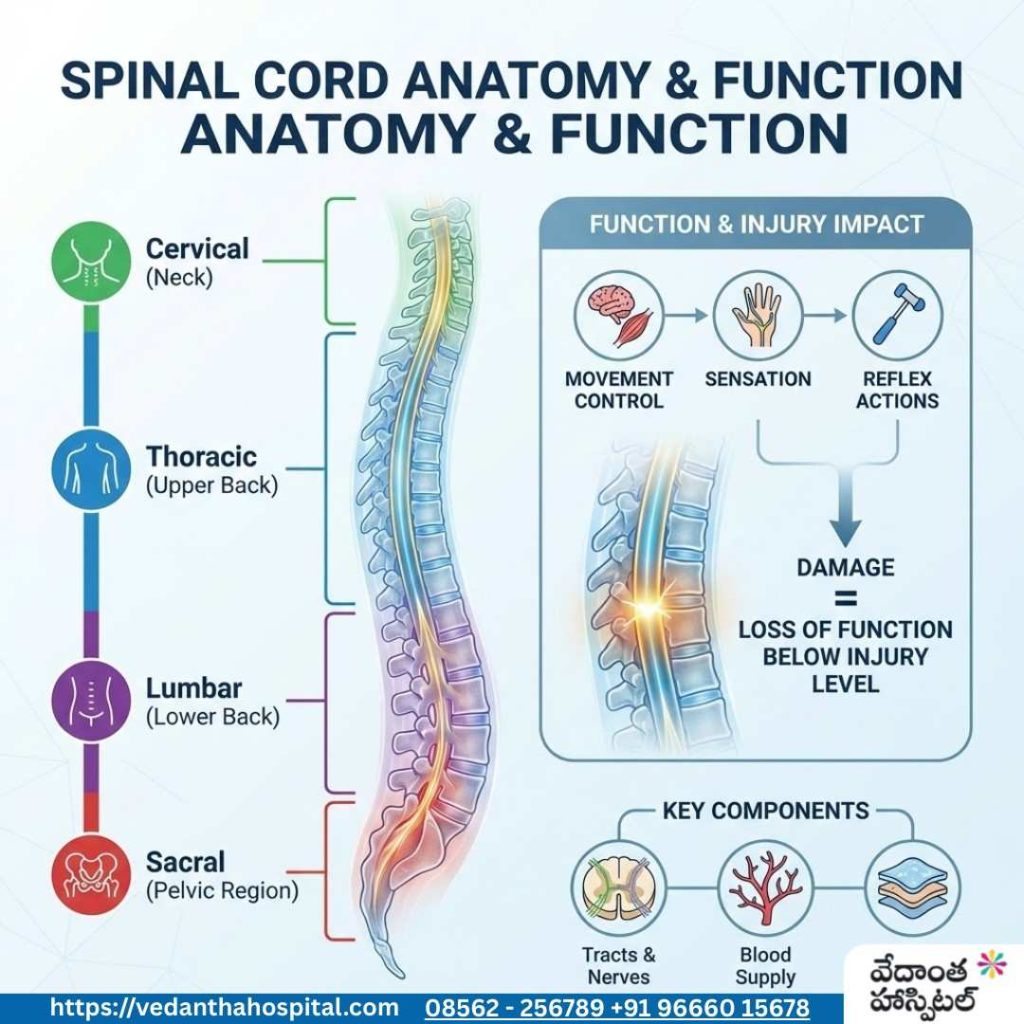
Understanding spinal cord anatomy helps explain how injuries affect the body. The spinal cord is protected by vertebrae, muscles, and spinal cord fluid. It is divided into regions based on spinal cord vertebrae:
Each section controls different body functions. The spinal cord function includes movement control, sensation, and reflex actions. Damage to specific spinal cord parts results in loss of function below the injury level.
The spinal cord also contains spinal cord tracts, spinal cord nerves, and a complex spinal cord blood supply that keeps nerve tissues healthy.
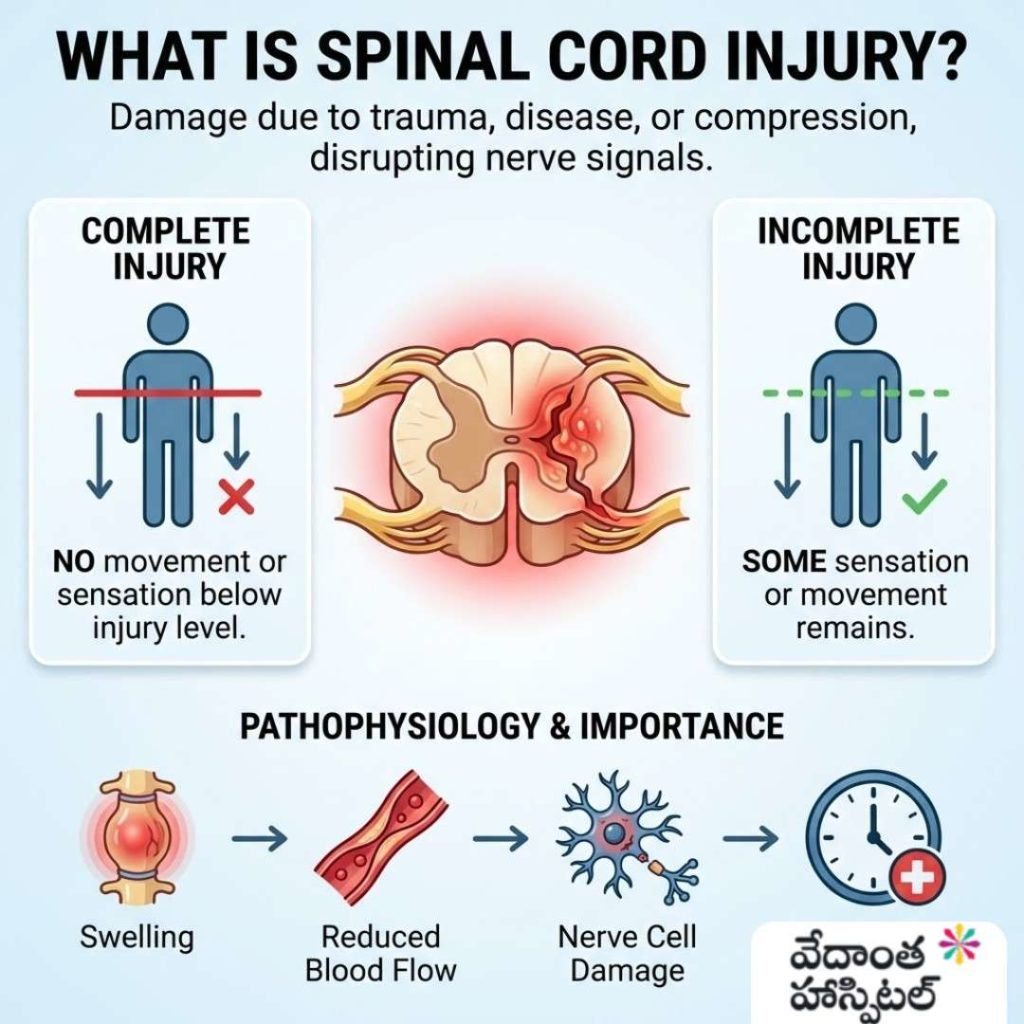
This occurs when trauma, disease, or compression damages the spinal cord. This damage may be partial or complete, depending on whether nerve signals can still pass through the injured area.
Doctors often explain injury severity using complete vs incomplete spinal cord injury classification:
Complete injury: No movement or sensation below the injury level
Incomplete injury: Some sensation or movement remains
The pathophysiology involves swelling, reduced blood flow, and nerve cell damage, which is why early treatment is essential.
Diagnosis involves:
Doctors may use CT scans, MRI, and nerve tests to evaluate spinal cord cross section, spinal cord layers, and surrounding bones. Early diagnosis improves outcomes, especially when managed by specialists like Dr. Kranthi Kumar Sunnepaneni, who was expertised.
|
Treatment Option |
Purpose |
How It Helps the Patient |
|
Emergency Stabilization |
Prevent further spinal damage |
Immobilizes the spine, controls blood pressure, and protects nerve tissue immediately after injury |
|
Medications |
Reduce swelling and inflammation |
Helps limit secondary damage to the spinal cord and surrounding nerves |
|
Spinal Cord Surgery |
Relieve pressure or stabilize the spine |
Removes bone fragments, discs, or blood clots compressing the spinal cord |
|
Physiotherapy |
Restore movement and strength |
Improves mobility, muscle control, and circulation |
|
Rehabilitation Therapy |
Improve daily functioning |
Trains patients to regain independence in daily activities |
|
Assistive Devices |
Support mobility |
Includes braces, wheelchairs, and walking aids |
|
Psychological Support |
Address emotional impact |
Helps patients cope with stress, anxiety, and lifestyle changes |
|
Long-Term Management |
Prevent complications |
Reduces risks like pressure sores, infections, and muscle stiffness |
Spinal cord injury rehabilitation is a long-term process aimed at restoring independence and function. Rehabilitation begins early and continues after discharge.
Key Rehabilitation Methods
A structured rehabilitation process significantly improves quality of life. Many patients show improvement in spinal cord injury recovery when therapy is consistent.
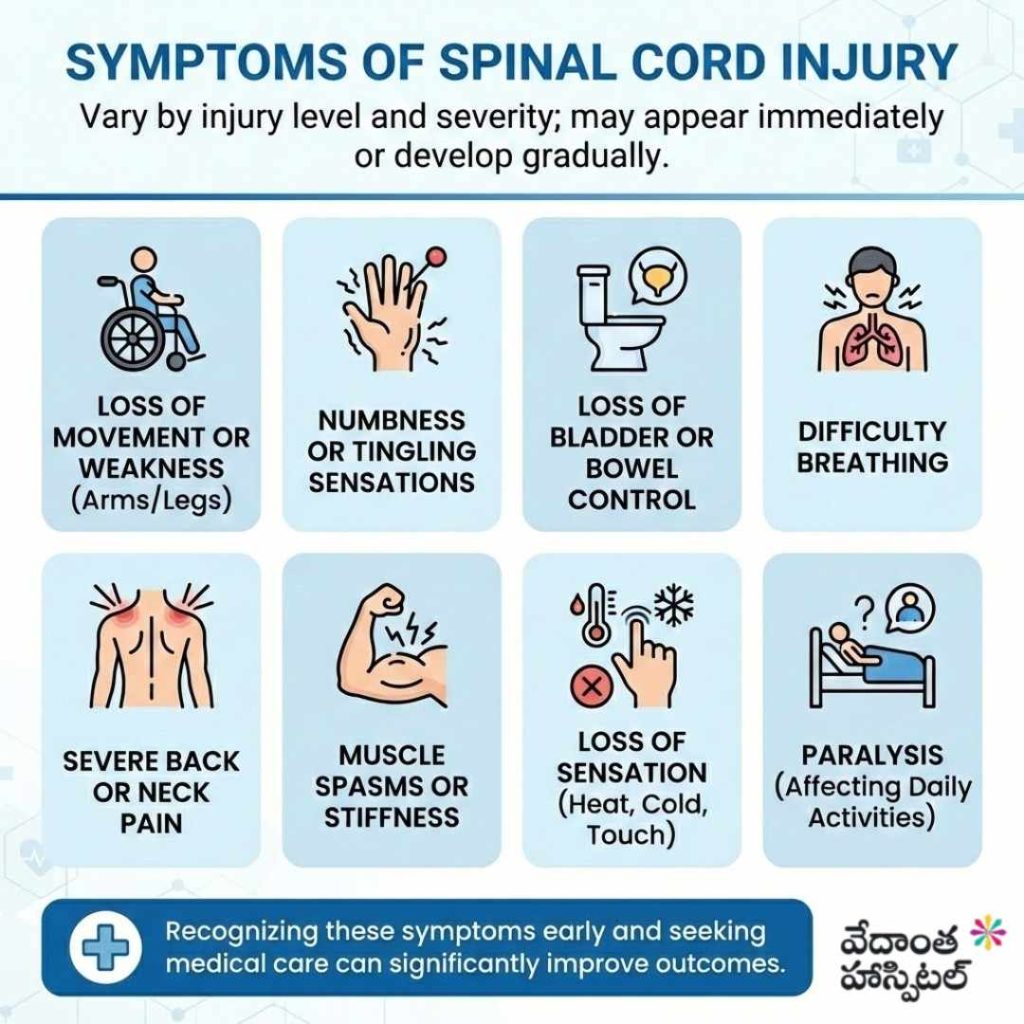
Symptoms vary depending on the injury level and severity. Symptoms may appear immediately or develop gradually over time.
Common symptoms include:
In severe cases, paralysis may occur, affecting daily activities and independence. Recognizing these symptoms early and seeking medical care can significantly improve outcomes.
Treatment and rehabilitation require a team approach involving:
Centers such as Vedanta Hospitals in Kadapa provide coordinated care, combining surgery, rehabilitation, and long-term support. The experience of specialists like Dr. Kranthi Kumar Sunnepaneni ensures evidence-based decision-making for spinal injuries.
Life after spinal cord injury requires adaptation and support. With modern rehabilitation techniques, assistive devices, and medical follow-up, many individuals regain independence.
Patients and families are guided on:
Access to care at a Multispeciality Hospital in Kadapa ensures continued medical supervision throughout recovery.
This is the damage to the spinal cord that affects movement, sensation, or body functions below the injury level.
It usually occurs due to accidents, falls, sports injuries, or spinal cord compression.
Symptoms include weakness, numbness, paralysis, and loss of bladder or bowel control.
While complete cure is not always possible, early treatment and rehabilitation can greatly improve function and independence.
It usually occurs due to accidents, falls, sports injuries, or spinal cord compression.
Treatment includes medications, surgery, physiotherapy, and long-term rehabilitation.
Surgery is needed when there is spinal instability or nerve compression.
It is a structured therapy program aimed at restoring movement, strength, and daily function.
Recovery time varies from person to person. Some improvement may occur within months, while long-term recovery can take years with consistent rehabilitation.
In a complete spinal cord injury, there is total loss of movement and sensation below the injury level. In incomplete, some nerve signals remain, allowing partial movement or sensation.