
Symptoms of Blocked Heart Arteries: Early Warning Signs You Should Never Ignore
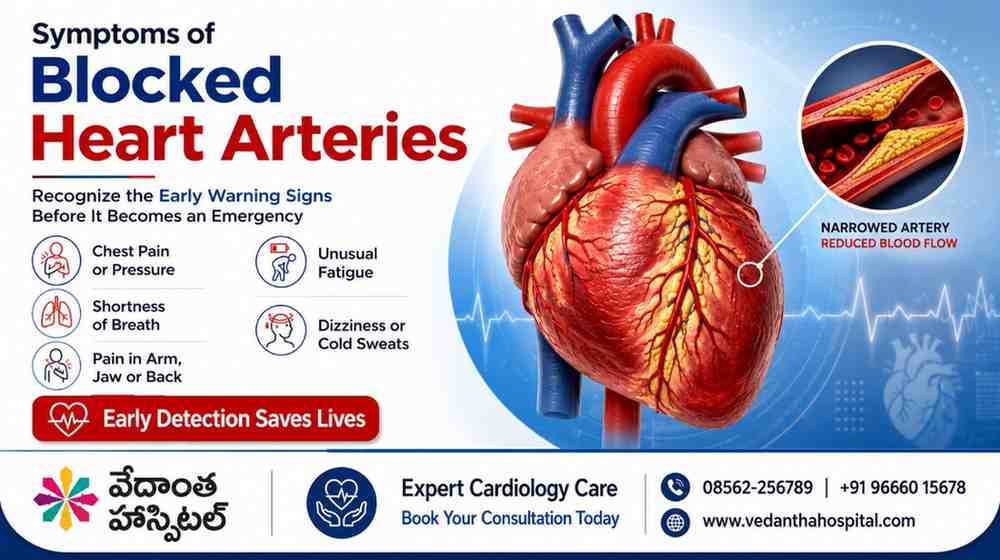
Heart disease is one of the leading causes of death worldwide, and one of the biggest reasons is that many people ignore the early warning signs. A blocked heart artery usually does not develop overnight. It builds up slowly over several years, often without causing noticeable symptoms in the beginning.
Many people think a heart attack happens suddenly without any warning. In reality, the body often gives several signals before a serious heart problem occurs. Recognizing these symptoms early and seeking medical attention can reduce the risk of severe complications.
If you are searching for symptoms of blocked heart arteries, this guide explains everything in simple language. Whether you are concerned about yourself or a loved one, understanding these warning signs can help you make the right decision at the right time.
Quick Answer
Blocked heart arteries occur when fatty deposits, called plaque, build up inside the arteries that supply blood to the heart. This reduces blood flow and prevents the heart from getting enough oxygen.
Some of the most common symptoms include:
- Chest pain or pressure
- Shortness of breath
- Pain that extends from the chest to nearby areas such as the left arm, shoulder, neck, jaw, or back.
- Unusual tiredness
- Dizziness or fainting
- Cold sweats
- Nausea
These symptoms should never be ignored, especially if they occur repeatedly or become more severe. Early diagnosis and treatment can help prevent a heart attack and protect your heart health.
What Are Blocked Heart Arteries?
Your heart works like a powerful pump that sends blood to every part of your body. To keep pumping properly, the heart itself also needs a constant supply of oxygen-rich blood.
This blood reaches the heart through special blood vessels called coronary arteries.
When these arteries become narrow or blocked, the heart does not receive enough oxygen. As a result, the heart has to work harder, and symptoms begin to appear.
Think of a water pipe supplying water to your home.
When the pipe is clean, water flows smoothly. But if dirt and debris slowly build up inside the pipe, the water flow becomes weaker.
The same thing happens inside your heart arteries. Fatty deposits gradually narrow the arteries, making it harder for blood to reach the heart muscle.
This condition is known as coronary artery disease (CAD), which is one of the most common causes of heart attacks.
Why Do Heart Arteries Become Blocked?
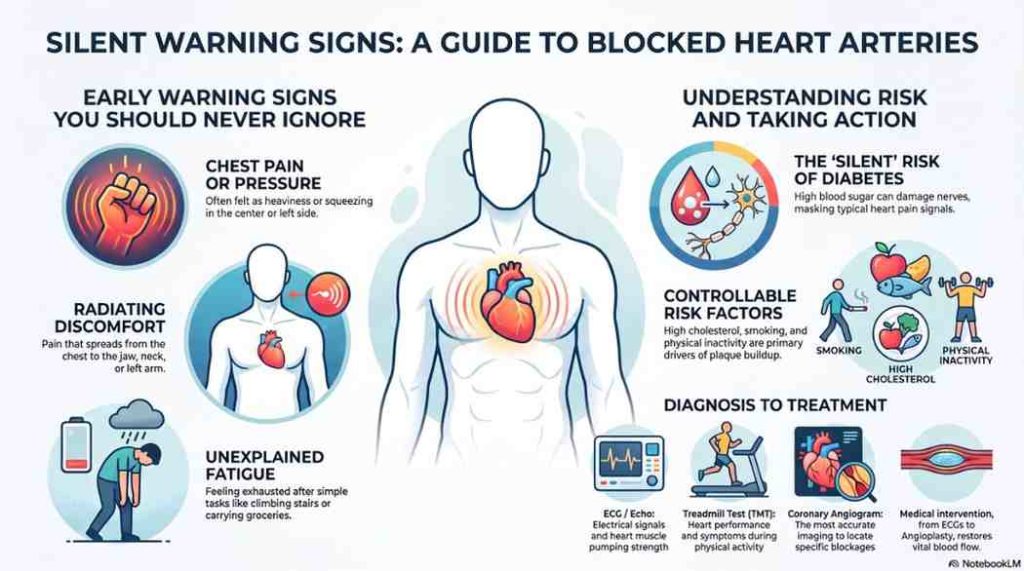
Heart artery blockage usually develops over many years. It is caused by a combination of unhealthy lifestyle habits, medical conditions, and genetic factors.
One of the biggest reasons is the buildup of cholesterol inside the arteries. Over time, cholesterol mixes with fat, calcium, and other substances to form plaque.
As plaque grows, the arteries become narrower, reducing blood flow to the heart.
Several factors can increase the risk of blocked heart arteries.
Common risk factors include:
- High cholesterol levels
- High blood pressure
- Diabetes
- Smoking
- Obesity
- Lack of physical activity
- Unhealthy diet
- Family history of heart disease
- Long-term stress
Having one risk factor does not always mean you will develop heart disease. However, having multiple risk factors significantly increases the chances of artery blockage.
The good news is that many of these risk factors can be controlled through healthy lifestyle changes and regular medical checkups.
Symptoms of Blocked Heart Arteries
One of the biggest challenges with blocked heart arteries is that symptoms may appear gradually. Some people experience mild discomfort for months before realizing something is wrong, while others may have no symptoms until a heart attack occurs.
Understanding these warning signs can help you seek treatment before the condition becomes serious.
1. Chest Pain or Pressure
Chest pain is one of the most common symptoms of blocked heart arteries.
Many people describe it as:
- Tightness
- Pressure
- Heaviness
- Burning sensation
- Squeezing feeling
The discomfort usually occurs in the center or left side of the chest.
Some people compare it to having a heavy object placed on their chest.
The pain may appear during physical activity or emotional stress because the heart needs more oxygen during these times.
If blood flow is restricted, chest pain develops.
2. Shortness of Breath
When the heart cannot pump blood efficiently, the body receives less oxygen.
As a result, even simple activities such as climbing stairs or walking short distances may leave a person feeling breathless.
Some patients notice they become tired more quickly than before.
Others may feel out of breath while lying flat or during routine daily activities.
Shortness of breath should never be ignored, especially when it occurs together with chest discomfort.
3. Pain That Spreads to Other Parts of the Body
Heart-related pain is not always limited to the chest.
In many cases, it spreads to nearby areas because the nerves carrying pain signals are connected.
The discomfort may travel to:
- Left arm
- Right arm
- Shoulder
- Neck
- Jaw
- Upper back
Some people only experience jaw pain or shoulder pain without obvious chest discomfort.
This is why recognizing unusual pain patterns is so important.
4. Unusual Tiredness
Most people feel tired after a long day of work or regular activities.
However, extreme tiredness without a clear reason may be an early warning sign of reduced blood flow to the heart.
Some people notice they become exhausted after performing activities they previously managed easily.
For example:
- Walking a short distance
- Climbing one flight of stairs
- Carrying groceries
- Doing household work
If this unusual fatigue continues for several days or weeks, it should be evaluated by a healthcare professional.
5. Cold Sweats
Sweating during exercise or hot weather is completely normal.
But suddenly developing cold, clammy sweat while resting or experiencing chest discomfort can be a warning sign of a heart problem.
This type of sweating often occurs because the body reacts to reduced blood flow and stress on the heart.
Many people mistake it for anxiety or weakness.
If cold sweating occurs along with chest pain or breathlessness, seek immediate medical attention.
6. Dizziness or Feeling Faint
Your brain depends on a steady supply of oxygen-rich blood.
If blocked arteries reduce the heart’s ability to pump effectively, the brain may temporarily receive less oxygen.
This can cause:
- Light-headedness
- Dizziness
- Feeling faint
- Loss of balance
Although dizziness can occur for many reasons, repeated episodes combined with other heart-related symptoms should not be ignored.
7. Nausea or Indigestion
Some people experience symptoms that feel more like stomach problems than heart problems.
These may include:
- Nausea
- Indigestion
- Upset stomach
- Vomiting
Because these symptoms resemble digestive issues, many patients delay seeking treatment.
This is particularly common in women and older adults.
If nausea occurs together with chest discomfort, sweating, or shortness of breath, it should be treated as a possible heart emergency rather than simple indigestion.
8. Fast or Irregular Heartbeat
A healthy heart usually beats in a steady rhythm.
Blocked arteries may sometimes cause the heart to beat faster, slower, or irregularly because it is struggling to receive enough oxygen.
Some people describe this feeling as:
- Heart racing
- Fluttering
- Skipping beats
- Pounding heartbeat
Occasional palpitations are not always dangerous, but frequent irregular heartbeats accompanied by chest pain or dizziness require prompt medical evaluation.
9. Silent Heart Blockage – When There Are No Warning Signs
One of the most dangerous things about blocked heart arteries is that some people may not experience any symptoms at all. This is known as silent heart blockage or silent ischemia.
Instead of experiencing severe chest pain, some people may notice only mild symptoms such as:
- Mild tiredness
- Slight shortness of breath
- Weakness
- Mild discomfort in the chest
Because these symptoms are easy to ignore, many people do not realize they have a serious heart condition until they suffer a heart attack.
People with diabetes are more likely to develop silent heart blockage because high blood sugar can affect the nerves that normally carry pain signals.
This is why regular heart checkups are especially important for people with diabetes, high blood pressure, or a family history of heart disease.
Important Facts About Blocked Heart Arteries
Understanding a few important facts can help you recognize the seriousness of this condition.
- Coronary artery disease is one of the leading causes of heart attacks worldwide.
- Heart artery blockage usually develops slowly over many years.
- Smoking and high cholesterol can gradually damage the arteries, increasing the risk of heart disease over time.
- Regular exercise and a healthy diet can reduce the risk of heart disease.
- Many people experience warning signs weeks or even months before a heart attack.
One important thing to remember is that not everyone experiences the same symptoms. Some people may have severe chest pain, while others may only feel tired or short of breath.
Who Is More Likely to Develop Blocked Heart Arteries?
Although anyone can develop heart disease, certain people have a much higher risk.
You are more likely to develop blocked heart arteries if you:
- Have high blood pressure
- Have diabetes
- Smoke or use tobacco products
- Have high cholesterol
- Are overweight or obese
- Exercise very little
- Eat unhealthy food regularly
- Have a family history of heart disease
- Experience long-term stress
As people grow older, the risk also increases. However, younger adults are increasingly developing heart disease due to unhealthy lifestyle habits, poor diet, smoking, and lack of physical activity.
The best way to reduce this risk is through regular health checkups and healthy daily habits.
How Doctors Diagnose Blocked Heart Arteries
If your doctor suspects a blockage, they may recommend one or more tests to understand how well your heart is working.
The type of test depends on your symptoms, medical history, and overall health.
Electrocardiogram (ECG)
An ECG checks the electrical signals of your heart to see if it is beating normally and working properly.
It helps doctors detect:
- Abnormal heart rhythms
- Previous heart damage
- Signs of reduced blood flow
An ECG is one of the first and most commonly performed tests to evaluate heart function.
Echocardiogram (Echo)
An echocardiogram creates real-time images of the heart with the help of sound waves, allowing doctors to check how well the heart is functioning.
This test helps doctors evaluate:
- Heart muscle function
- Heart valves
- Blood flow
- Pumping strength
Treadmill Test (TMT)
During this test, you walk on a treadmill while your heart activity is monitored.
The purpose is to see how your heart performs during physical activity.
Sometimes symptoms appear only when the heart is working harder.
CT Coronary Angiography
This advanced scan creates detailed images of the heart arteries.
It helps identify:
- Narrowed arteries
- Plaque buildup
- Early blockages
Because it is less invasive than a conventional angiogram, it is useful in selected patients.
Coronary Angiogram
A coronary angiogram is considered one of the most accurate tests for identifying blocked heart arteries.
During a coronary angiogram, the doctor inserts a thin, flexible tube called a catheter through a blood vessel. A special dye is then injected to produce clear images of the coronary arteries and identify any blockages.
This helps doctors determine:
- Whether a blockage is present
- How severe it is
- Which treatment is most appropriate
Treatment for Blocked Heart Arteries
Treatment depends on:
- The severity of the blockage
- Your symptoms
- Your overall health
- The number of arteries involved
The goal is to improve blood flow to the heart and reduce the risk of a heart attack.
Lifestyle Changes
For mild blockages, lifestyle changes are often the first step.
Doctors usually recommend:
- Eating a heart-healthy diet
- Walking or exercising regularly
- Maintaining a healthy weight
- Controlling diabetes
- Managing blood pressure
- Quitting smoking
- Reducing stress
These changes may not remove existing plaque, but they can slow the progression of the disease and improve overall heart health.
Medicines
Many patients can manage heart disease with medicines prescribed by their doctor.
Depending on the condition, medicines may help:
- Lower cholesterol
- Control blood pressure
- Prevent blood clots
- Reduce chest pain
- Improve blood flow
Always take your medications according to your doctor’s instructions.
Never stop your prescribed medications without medical advice, as this can increase the risk of heart attacks, stroke, or other serious complications.
Angioplasty
If an artery becomes significantly narrowed, doctors may recommend angioplasty.
During this minimally invasive procedure, a small balloon is used to open the blocked artery. In many cases, doctors place a small mesh tube called a stent inside the artery to keep it open and allow blood to flow more freely.
Patients who want to understand when this procedure is recommended can also explore minimally invasive heart treatment options through our detailed guide comparing angioplasty and bypass surgery.
Bypass Surgery
Patients with multiple or complex heart artery blockages may require a treatment approach other than angioplasty.
In these situations, bypass surgery may be the most suitable option.
The procedure creates a new pathway for blood to reach the heart by bypassing the blocked artery.
You can also learn more about advanced surgical options for severe heart blockages in our detailed comparison of bypass surgery and angioplasty.
Can Blocked Heart Arteries Be Prevented?
Although not every case can be prevented, healthy habits can greatly reduce your risk.
Simple lifestyle changes can make a big difference.
Heart-Healthy Habits
- Eat more fruits and vegetables.
- Reduce fried and processed foods.
- Aim to stay physically active by exercising for at least 30 minutes on most days of the week.
- Maintain a healthy weight.
- Keep blood pressure under control.
- Manage diabetes properly.
- Avoid smoking and tobacco.
- Get regular health checkups.
Even small improvements in your daily routine can have long-term benefits for your heart.
When Should You See a Cardiologist?
Never ignore symptoms that could indicate reduced blood flow to the heart.
You should seek medical evaluation if you experience:
- Chest pain
- Shortness of breath
- Pain spreading to the arm, jaw, or back
- Frequent dizziness
- Unexplained tiredness
- Irregular heartbeat
If these symptoms occur suddenly or become severe, seek emergency medical attention immediately.
For people living in Kadapa and nearby areas, early consultation with a cardiologist can help identify heart problems before they become life-threatening.
Why Choose Vedanta Hospital for Heart Care in Kadapa?
Heart conditions require timely diagnosis, experienced specialists, and access to advanced diagnostic facilities.
At Vedanta Hospital, patients receive comprehensive cardiac evaluation and personalized treatment for various heart conditions under the care of experienced specialists.
Our cardiac services include:
- Heart health evaluation
- ECG and Echo testing
- Coronary angiography
- Angioplasty
- Management of coronary artery disease
- Preventive heart care
- Long-term follow-up and lifestyle guidance
Patients are treated with an individualized approach based on their symptoms, medical history, and overall heart health.
Frequently Asked Questions
Can blocked heart arteries have no symptoms?
Yes. Some people develop silent heart blockage and may not experience noticeable symptoms until the condition becomes serious.
Is chest pain always caused by heart blockage?
No. Chest pain can have many causes, but it should never be ignored, especially if it occurs during activity or is accompanied by breathlessness or sweating.
Can exercise remove artery blockage?
Exercise cannot remove existing plaque, but it helps improve heart health and slows disease progression when combined with medical treatment.
Which test confirms blocked heart arteries?
A coronary angiogram is one of the most accurate tests for diagnosing blocked heart arteries. Other tests such as ECG, Echo, TMT, and CT coronary angiography also help evaluate heart health.
Can young people develop heart blockage?
Yes. Although more common in older adults, younger people can develop heart disease due to smoking, diabetes, obesity, poor diet, and family history.
Is angioplasty always necessary?
No. Some patients can be treated with lifestyle changes and medicines, while others may require angioplasty or bypass surgery depending on the severity of the blockage.
Final Thoughts
Blocked heart arteries often develop silently, giving the body enough time to adapt but also making it easy to overlook the early warning signs. Chest pain, shortness of breath, unusual fatigue, dizziness, or pain that spreads to the arm or jaw should never be ignored.
The earlier a blockage is detected, the more treatment options are available and the better the chances of preventing a heart attack. Regular health checkups, a healthy lifestyle, and timely medical attention play a key role in protecting your heart.
If you or a loved one are experiencing symptoms of blocked heart arteries, consult an experienced cardiologist without delay. Early diagnosis can save heart muscle, improve recovery, and in some cases, save a life.