
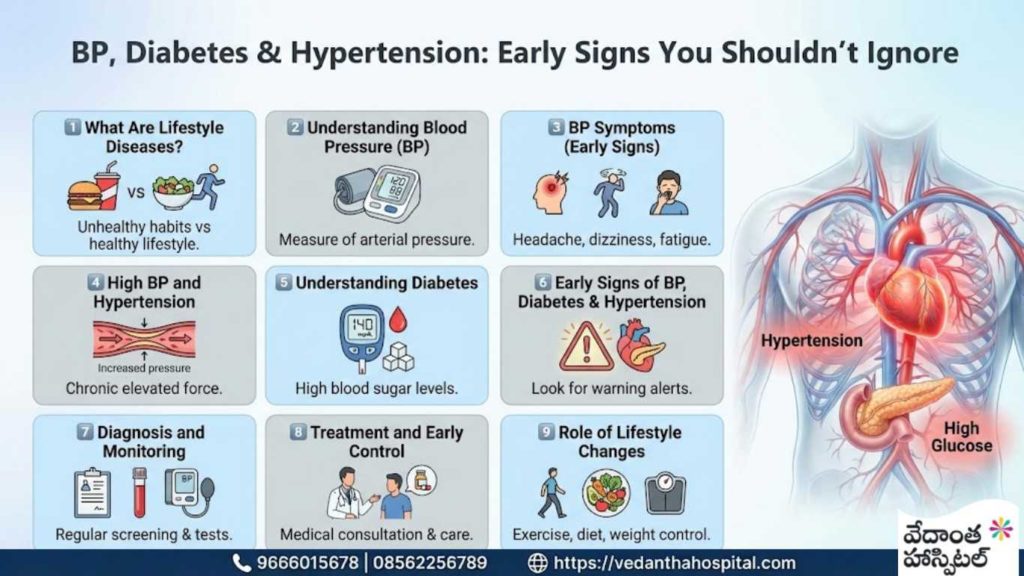

Lifestyle diseases like BP and Diabetes, also hypertension are no longer conditions seen only in older adults. Today, they affect people in their 30s and even 20s due to stress, poor diet, lack of exercise, and irregular health checkups. Early detection and timely control can prevent serious complications such as heart disease, kidney failure, stroke, and nerve damage.
This blog explains the early signs, causes, risks, diagnosis, and management of BP, diabetes, and hypertension, with a strong focus on prevention and long-term health.
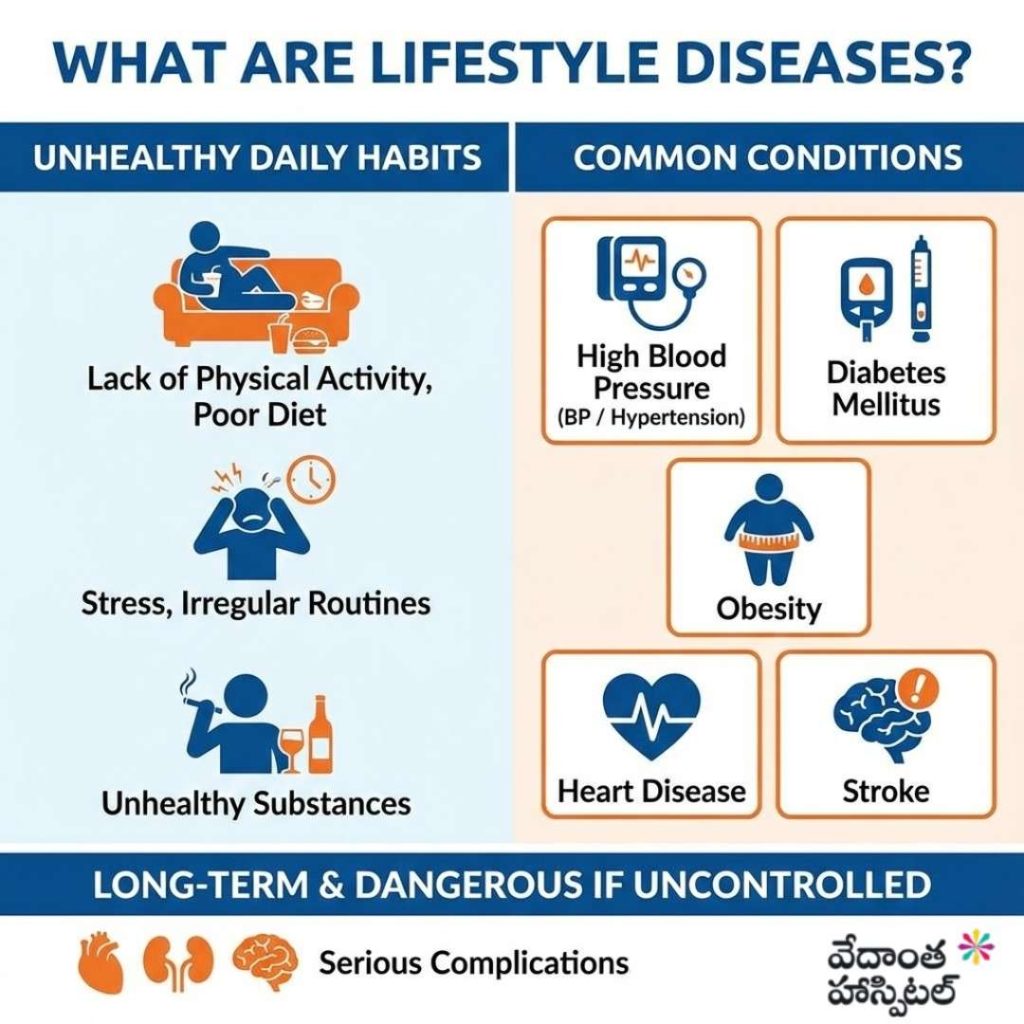
Lifestyle diseases are medical conditions that develop mainly due to unhealthy daily habits. Common lifestyle diseases include:
Among these, BP, diabetes, and hypertension are the most widespread and dangerous when left uncontrolled.
Lifestyle diseases are long-term health conditions that mainly develop due to unhealthy daily habits, stress, lack of physical activity, poor diet, and irregular routines. Common lifestyle diseases include high blood pressure (BP or hypertension), diabetes mellitus, obesity, heart disease, and stroke. Among these, BP, diabetes, and hypertension are the most widespread and dangerous, especially when they remain undiagnosed or poorly controlled for a long time, leading to serious complications affecting the heart, kidneys, brain, and overall quality of life.
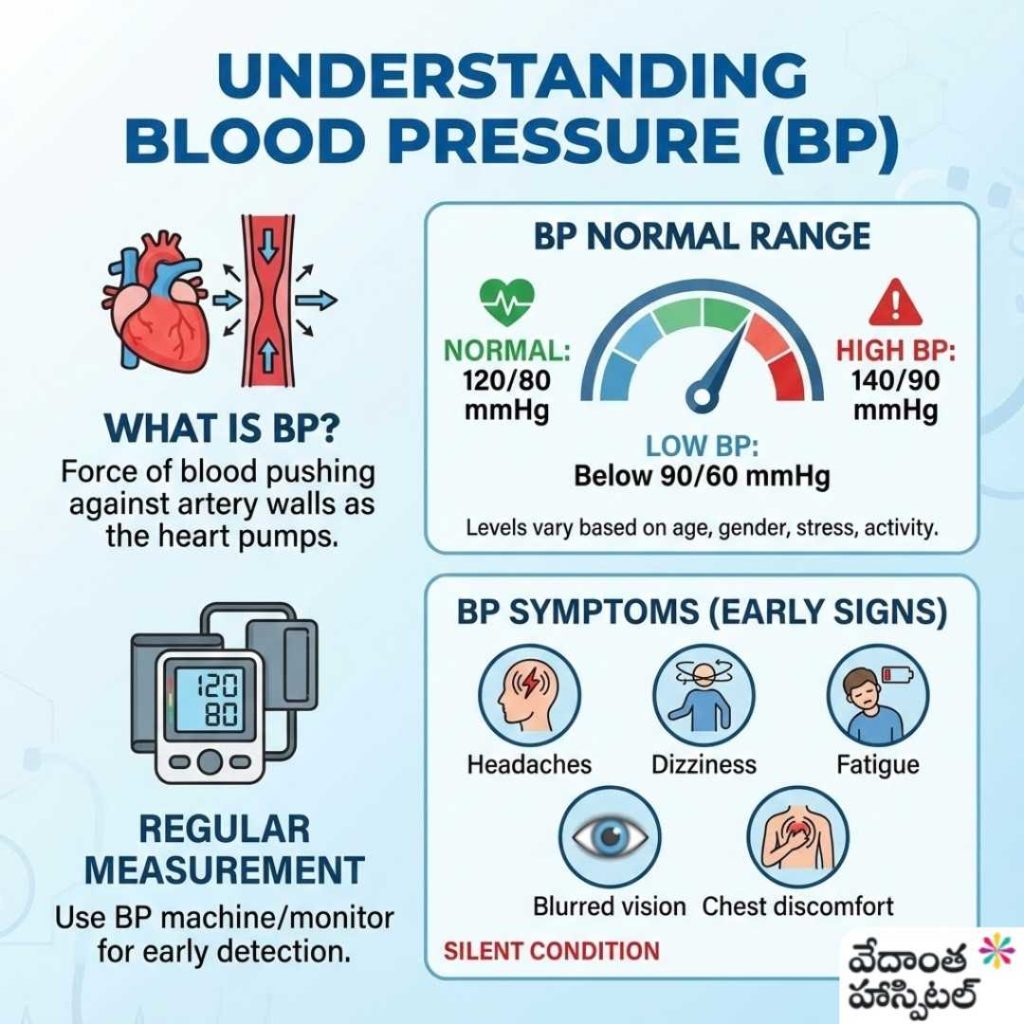
BP stands for Blood Pressure, which is the force of blood pushing against artery walls as the heart pumps blood.
BP Normal Range
BP levels vary based on age, gender, stress, and physical activity. Regular BP measurement using a BP machine or BP monitor helps detect problems early.
BP Symptoms (Early Signs)
Many people with high BP show no symptoms, which is why it’s called a silent condition.
Hypertension means persistently high blood pressure. It is medically referred to as hypertension high blood pressure.
Hypertension Normal Range
High BP Reasons
Hypertension Types
Hypertension Emergency
Severely high BP can lead to:
Kidney failure
This is called a hypertension crisis and requires immediate medical care.
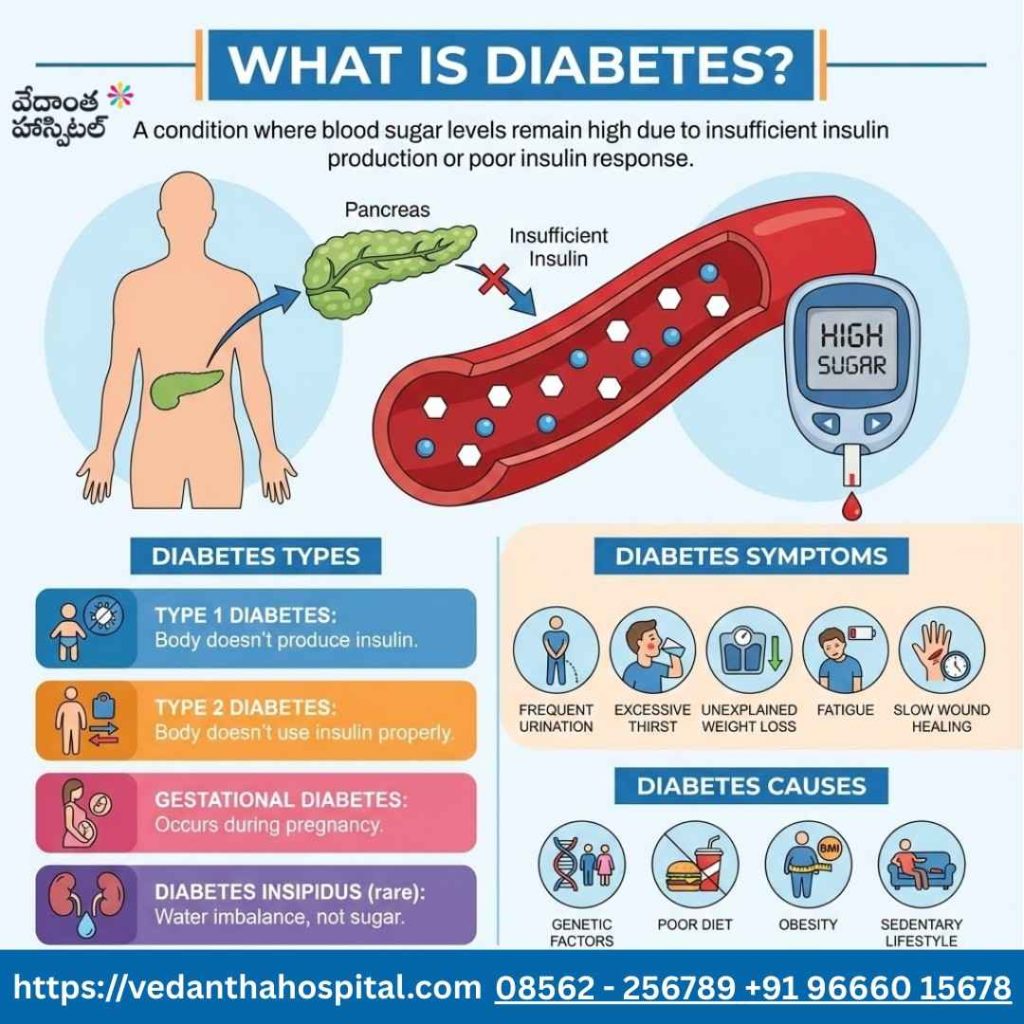
Diabetes is a condition where blood sugar levels remain high due to insufficient insulin production or poor insulin response.
Diabetes Types
Diabetes Symptoms
Diabetes Causes
When BP and diabetes occur together, the risk of complications increases significantly. High blood sugar damages blood vessels, while high BP puts extra strain on the heart.
Possible complications include:
Early care at a General Medicine Hospital in Kadapa can prevent long-term complications.
Condition | Early Signs | Risk If Ignored | Monitoring Method | When to See Doctor |
BP | Headache, dizziness | Stroke, heart attack | BP monitor | Persistent high readings |
High BP | Fatigue, chest pain | Hypertension crisis | Digital BP machine | BP >140/90 |
Diabetes | Thirst, urination | Kidney, nerve damage | Blood sugar test | Fasting sugar high |
Hypertension | Often silent | Organ damage | BP measurement | No symptoms but high BP |
BP & Diabetes | Weakness | Multiple organ failure | Regular tests | Early diagnosis needed |
BP Measurement
Diabetes Tests
Regular screening is advised, especially for adults above 30.
A healthy lifestyle plays a key role in controlling BP, diabetes, and hypertension at an early stage. Small daily habits can make a big difference:
Lifestyle correction is the foundation of early control.
High BP Treatment
Diabetes Treatment
Hypertension Treatment
Early treatment reduces the risk of emergencies and hospitalizations.
High BP often has no symptoms, but some people experience headaches, dizziness, or tiredness. Regular BP checks are important to detect it early.
Yes, BP and diabetes commonly occur together and increase the risk of heart, kidney, and eye problems if not controlled early.
A normal BP range is around 120/80 mmHg. Readings consistently above 140/90 mmHg are considered high BP.
Common diabetes symptoms include frequent urination, increased thirst, tiredness, and unexplained weight loss.
High BP in young adults can be caused by stress, obesity, lack of exercise, high salt intake, and family history.
Yes, hypertension is the medical term for high blood pressure, especially when BP stays high over a long period.
BP can be controlled by reducing salt intake, exercising regularly, managing stress, and maintaining a healthy weight.
Normal BP range for both men and women is below 120/80 mmHg, though slight variations may occur with age.
Diabetes is diagnosed using blood tests like fasting blood sugar, post-meal sugar, and HbA1c levels.
Untreated BP and diabetes can lead to heart disease, stroke, kidney failure, vision loss, and nerve damage.