Cervical and Lumbar Disc Disease:
Symptoms, Causes & Treatment Options
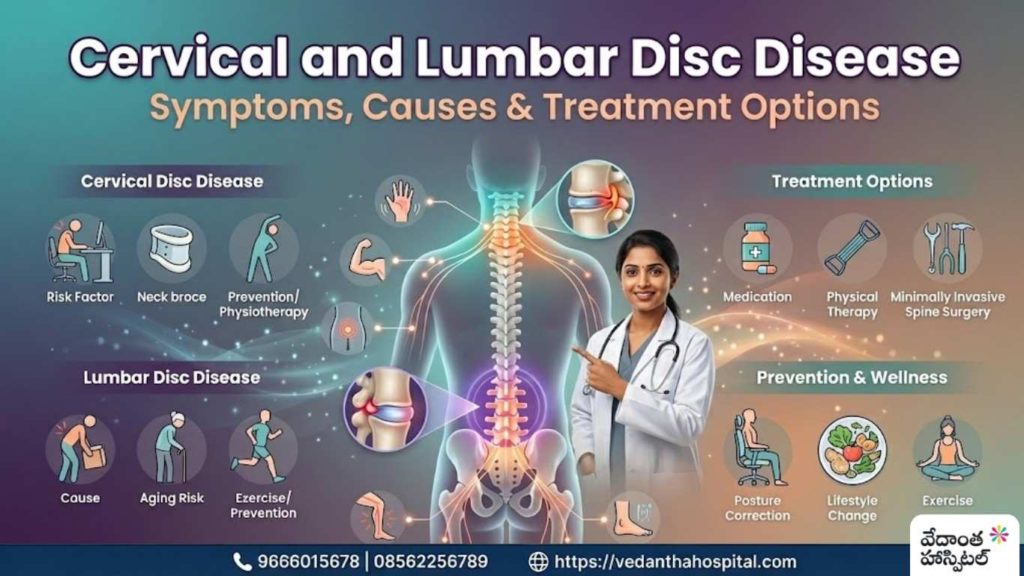
Cervical and Lumbar Disc Disease is one of the most common spine related conditions affecting people of all age groups today. Due to long working hours, poor posture, lack of physical activity, and increasing stress on the spine, disc related problems are becoming more frequent. These conditions mainly affect the neck (cervical spine) and lower back (lumbar spine), leading to pain, stiffness, numbness, and difficulty in daily activities.
When the discs between the vertebrae weaken, bulge, or herniate, they can press on nearby nerves. This pressure results in symptoms that can range from mild discomfort to severe pain and neurological issues. Early diagnosis and proper treatment play a key role in preventing complications and maintaining a good quality of life.
Many patients today seek advanced care at a Spine Surgery Hospital in Kadapa where experienced specialists and modern technology help manage cervical and lumbar disc disease effectively.
What is Cervical Disc Disease?
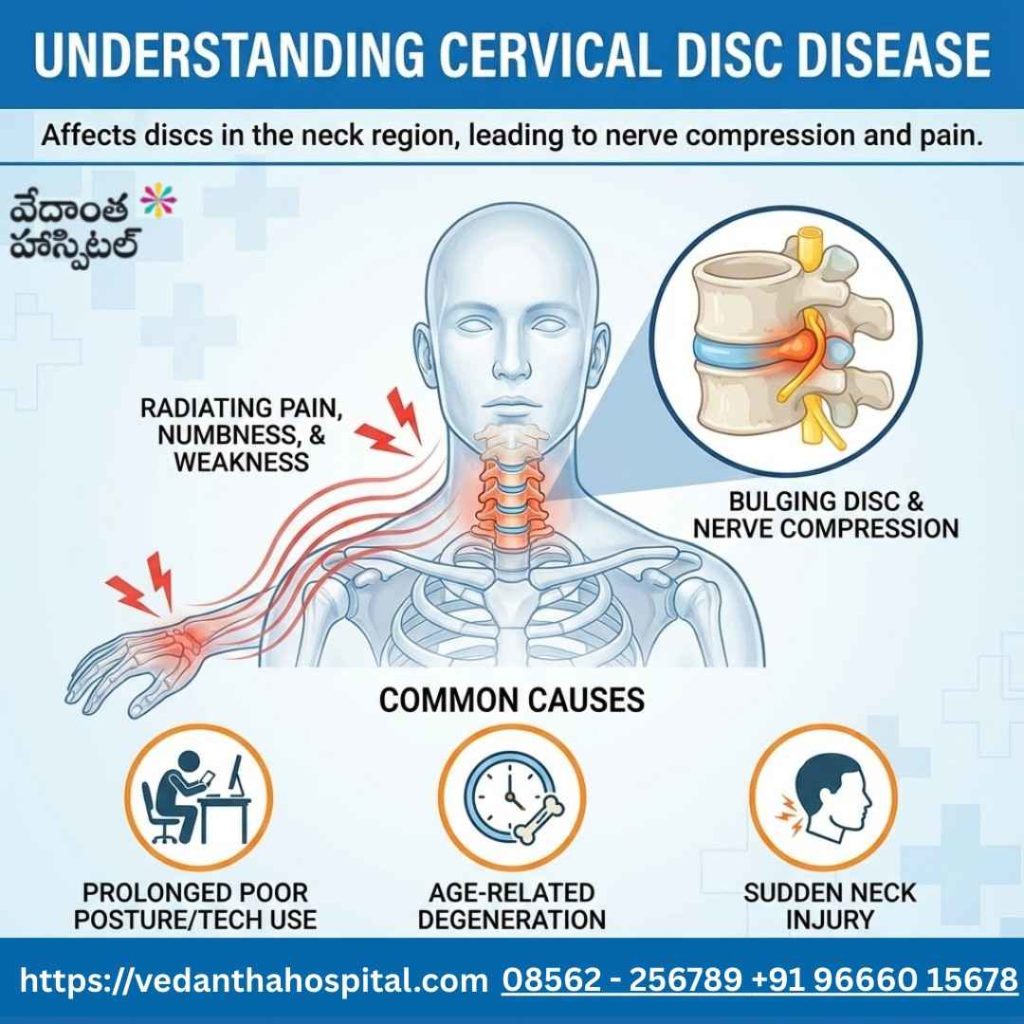
- Cervical Disc Disease affects the discs located in the neck region of the spine. The cervical spine consists of seven vertebrae that support the head and allow neck movement. Between these vertebrae are soft, cushion-like discs that absorb shock and enable flexibility.
- Over time, these discs may lose hydration and elasticity due to aging or wear and tear. When a disc degenerates or bulges, it may compress nearby nerves or the spinal cord. This compression causes neck pain and can radiate pain to the shoulders, arms, and hands.
- Common reasons for cervical disc disease include prolonged use of mobile phones or computers, poor posture, sudden neck injuries, and age-related degeneration. If left untreated, the condition can worsen and affect nerve function.
- Patients experiencing persistent neck pain often consult specialists at a Multispeciality Hospital in Kadapa, where comprehensive spine evaluation and treatment options are available.
What is Lumbar Disc Disease?
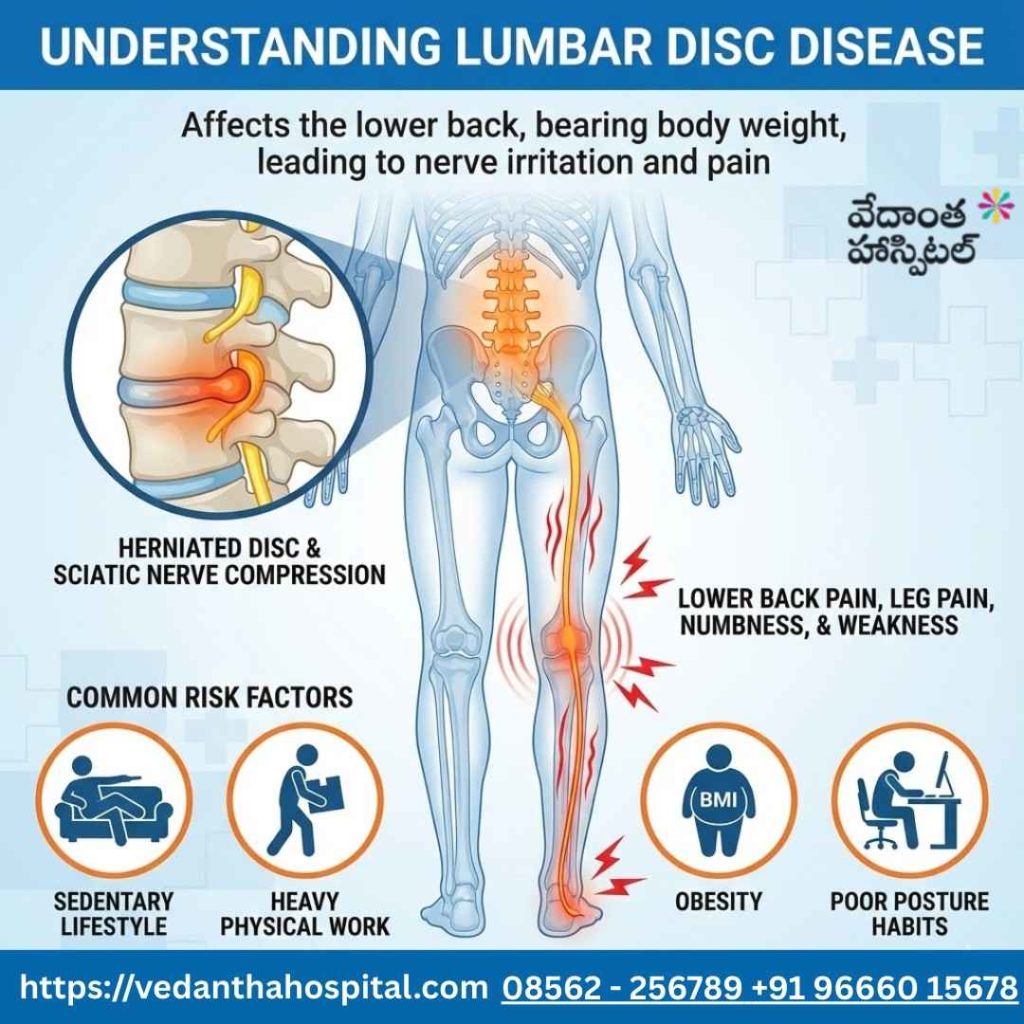
- Lumbar Disc Disease affects the lower back region, which bears most of the body’s weight. The lumbar spine consists of five vertebrae, and the discs between them act as shock absorbers during walking, bending, and lifting.
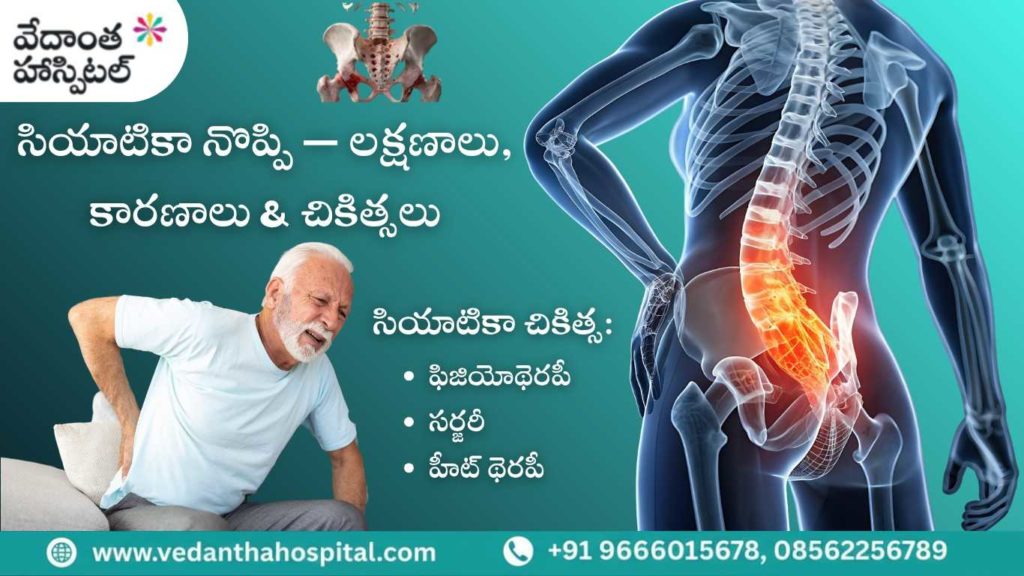
- When a lumbar disc degenerates, bulges, or herniates, it can irritate nearby nerves, especially the sciatic nerve. This may lead to lower back pain, leg pain, numbness, or weakness. In severe cases, daily activities like standing, sitting, or walking become difficult.
- Over time, untreated lumbar disc disease can gradually worsen and cause chronic pain or nerve damage. If the pressure on the nerves continues, it may affect bowel or bladder control and reduce mobility. Timely diagnosis and treatment can help protect nerve function and improve long-term spine health.
- Lumbar disc disease is often seen in people with sedentary lifestyles, heavy physical work, obesity, or poor posture habits. Early care at a Spine Surgery Hospital in Kadapa helps prevent long-term disability.
Symptoms and Causes of Cervical and Lumbar Disc Disease
| Area Affected | Common Symptoms | Main Causes | Pain Location | Daily Impact |
|---|---|---|---|---|
| Cervical Disc (Neck) | Neck pain, stiffness | Age-related disc wear | Neck & shoulders | Difficulty turning head |
| Cervical Disc (Nerves) | Arm pain, tingling | Disc bulge or herniation | Arms & hands | Weak grip strength |
| Lumbar Disc (Lower Back) | Lower back pain | Poor posture, heavy lifting | Lower back | Trouble standing or sitting |
| Lumbar Disc (Sciatic Nerve) | Leg pain, numbness | Disc pressing nerves | Buttock to leg | Difficulty walking |
| Both Cervical & Lumbar | Muscle weakness | Lack of exercise, obesity | Neck or lower back | Reduced daily activity |
Risk Factors of Cervical and Lumbar Disc Disease
Certain factors increase the risk of developing Cervical and Lumbar Disc Disease:
- Increasing age
- Desk jobs with prolonged sitting
- Poor ergonomic setups
- Lack of regular exercise
- Excess body weight
- Family history of spine disorders
- Improper lifting techniques
Patients with multiple risk factors are advised to seek regular spine check-ups at Vedanta Hospital in Kadapa to detect early signs of disc degeneration.
Treatment Options for Cervical and Lumbar Disc Disease
Treatment depends on the severity of symptoms, disc damage, and nerve involvement. Most cases can be managed without surgery if detected early.
Non-Surgical Treatments
- Medications: Pain relievers, muscle relaxants, and anti-inflammatory drugs
- Physiotherapy: Strengthens spine muscles and improves flexibility
- Lifestyle Modifications: Correct posture, weight management, and activity changes
- Heat and Cold Therapy: Helps reduce pain and inflammation
- Cervical or Lumbar Braces: Provide support during recovery
Many patients recover well with conservative treatment under expert guidance at a Multispeciality Hospital in Kadapa.
Surgical Treatments
Surgery is recommended only when non-surgical treatments fail or when there is severe nerve compression.
Common surgical procedures include:
- Discectomy (removal of damaged disc portion)
- Spinal decompression surgery
- Minimally invasive spine surgery
- Disc replacement or spinal fusion
Advanced spine procedures are safely performed at a Spine Surgery Hospital in Kadapa, using modern techniques that reduce recovery time.
Under the expertise of Dr. Kranthi Kumar Sunnepaneni, patients receive personalized treatment plans focused on long-term relief and mobility restoration.
Prevention of Cervical and Lumbar Disc Disease
Preventing disc disease is possible with simple lifestyle changes:
- Maintain correct posture while sitting and standing
- Use ergonomic chairs and workstations
- Exercise regularly to strengthen core muscles
- Avoid heavy lifting or learn proper lifting techniques
- Maintain a healthy weight
- Take frequent breaks during long working hours
- Quit smoking
Regular spine evaluations at Vedanta Hospital in Kadapa help monitor spine health and prevent complications.
Why Choose Advanced Spine Care in Kadapa?
- Patients suffering from Cervical and Lumbar Disc Disease benefit from early diagnosis, expert consultation, and personalized treatment. Access to a Spine Surgery Hospital in Kadapa ensures advanced imaging, skilled specialists, and comprehensive rehabilitation services under one roof.
- A Multispeciality Hospital in Kadapa offers coordinated care, combining neurosurgery, orthopedics, physiotherapy, and pain management for optimal outcomes.
Conclusion
- Cervical and Lumbar Disc Disease can significantly affect daily life if ignored. Understanding the symptoms, causes, and treatment options helps patients take timely action. With early diagnosis, proper care, and preventive measures, most people can manage disc disease effectively and live pain-free lives.
- Expert care from specialists like Dr. Kranthi Kumar Sunnepaneni, combined with advanced facilities at Vedanta Hospital in Kadapa, ensures reliable treatment outcomes. If you experience persistent neck or back pain, seeking timely medical advice can make all the difference.
FAQ'S
1. Is Cervical and Lumbar Disc Disease permanent?
Not always. Many cases improve with early treatment, lifestyle changes, and physiotherapy without requiring surgery.
2. Can disc disease heal on its own?
Mild disc bulges may improve over time with rest, medication, and physical therapy.
3. When is surgery required for disc disease?
Surgery is needed if pain persists, nerve weakness increases, or daily activities are severely affected.
4. Is cervical disc disease dangerous?
If untreated, it can lead to nerve damage, weakness, or balance problems.
5. How long does recovery take after spine surgery?
Recovery varies, but minimally invasive procedures allow faster healing and early return to daily activities.
6. Can physiotherapy help lumbar disc disease?
Yes, physiotherapy is one of the most effective treatments for improving mobility and reducing pain.
7. Does sitting for long hours worsen disc disease?
Yes, prolonged sitting increases pressure on discs and worsens symptoms.
8. Are disc problems common in young adults?
Yes, due to poor posture, long screen time, and lack of exercise.
9. Can cervical disc disease cause headaches?
Yes, nerve irritation in the neck can lead to cervicogenic headaches.
10. Where should I seek treatment for disc disease?
Consult experienced spine specialists at a Spine Surgery Hospital in Kadapa for proper evaluation and care.