WHAT IS ENDOSCOPIC BRAIN SURGERY?
Brain surgery has changed dramatically over the last two decades. What once required large skull openings and long hospital stays can now be done using advanced minimally invasive techniques. One such breakthrough is endoscopic brain surgery, a modern procedure that allows neurosurgeons to operate through very small natural openings with high precision.
This blog explains what endoscopic brain surgery is, how it works, who needs it, its benefits, risks, recovery, and when to consult a Neurosurgeon in Kadapa at a trusted Neurosurgery Hospital.
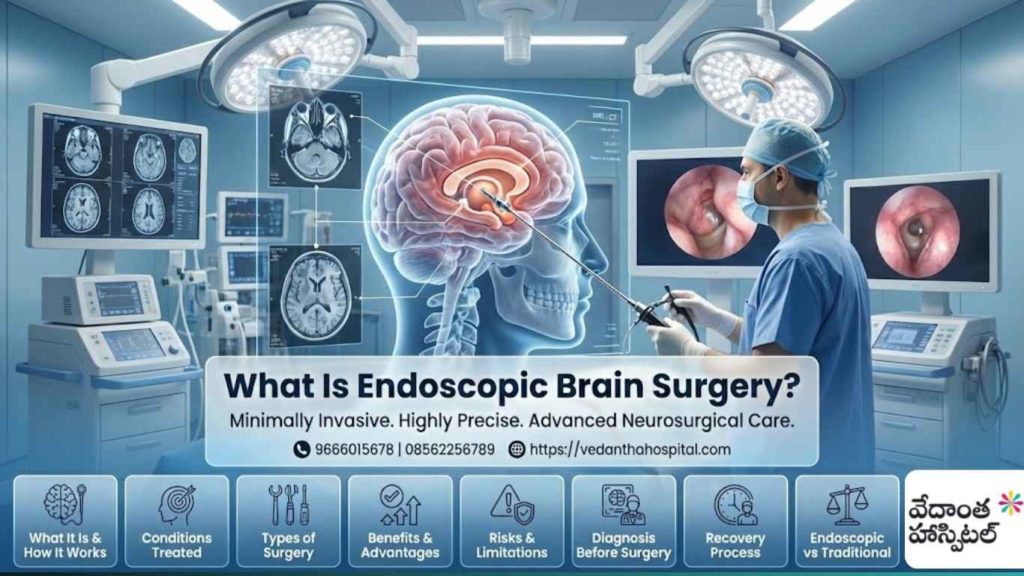
What Is Endoscopic Brain Surgery?
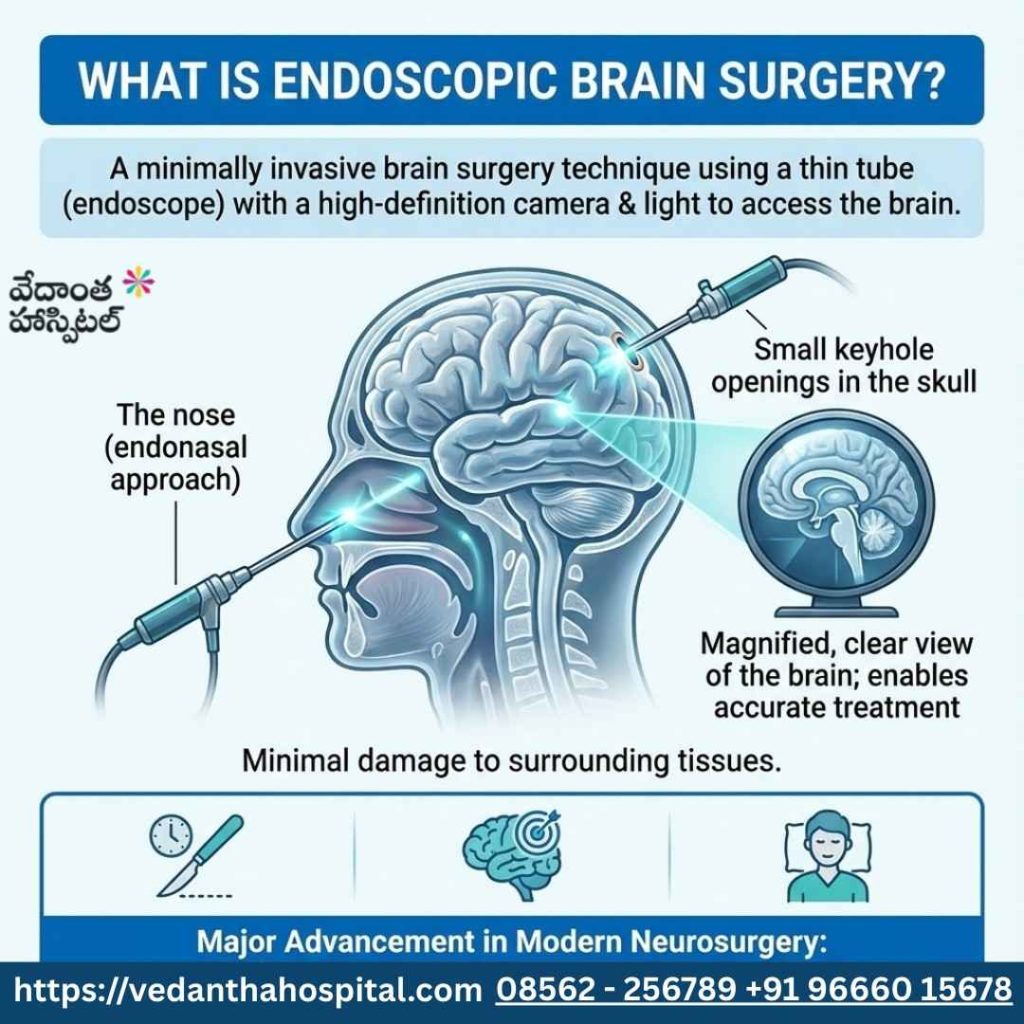
Endoscopic brain surgery is a minimally invasive brain surgery technique where doctors use a thin tube called an endoscope, fitted with a high-definition camera and light, to access the brain.
Instead of opening the skull widely, surgeons reach the affected area through:
- The nose (endonasal approach)
- Small keyhole openings in the skull
This technique provides a magnified, clear view of the brain, enabling accurate treatment with minimal damage to surrounding tissues.
Endoscopic brain surgery represents a major advancement in modern neurosurgery. With less pain, faster recovery, and improved precision, it offers hope to many patients who once feared brain surgery.
How Endoscopic Brain Surgery Works
The procedure involves:
- Inserting an endoscope through a natural opening or small incision
- Viewing the brain on a high-resolution monitor
- Using micro-instruments alongside the endoscope
- Treating the condition with precision
This approach is widely used in Interventional Neurosurgery Hospital in Kadapa setups where advanced imaging and surgical navigation systems are available.
Conditions Treated with Endoscopic Brain Surgery
Endoscopic brain surgery is commonly used for:
- Pituitary tumors
- Skull base tumors
- Brain cysts
- Hydrocephalus
- CSF leaks
- Ventricular tumors
- Selected brain tumors
Many patients prefer this approach at a Brain SurgeryHospital in Kadapa because of reduced pain and faster recovery.
Types of Endoscopic Brain Surgery
| Type | Purpose |
|---|---|
| Endonasal Endoscopic Surgery | Access tumors through the nose |
| Endoscopic Ventricular Surgery | Treat fluid buildup |
| Endoscopic Tumor Removal | Remove small to medium tumors |
| Endoscopic CSF Leak Repair | Seal brain fluid leaks |
Benefits of Endoscopic Brain Surgery
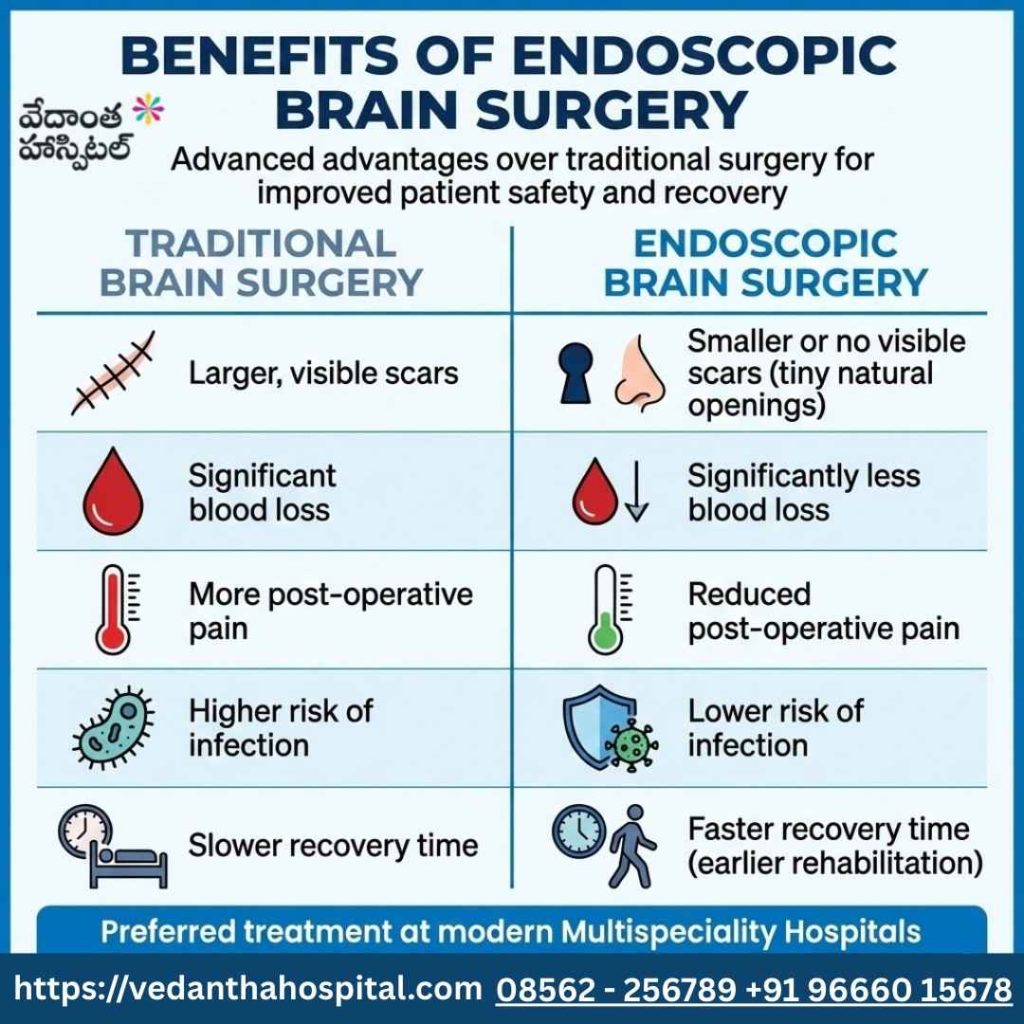
Compared to traditional brain surgery, endoscopic brain surgery offers several advanced advantages that improve patient safety and recovery outcomes:
Smaller or no visible scars, as the procedure is performed through tiny natural openings or keyhole incisions.
Significantly less blood loss, reducing the need for blood transfusions and lowering surgical risks.
Reduced post-operative pain, helping patients feel comfortable sooner after surgery.
Lower risk of infection, since minimal tissue exposure decreases chances of complications.
Faster recovery time, enabling earlier rehabilitation and improved quality of life.
Because of these benefits, endoscopic brain surgery has become a preferred treatment option at a Multispeciality Hospital , especially where modern neurosurgical technology and experienced specialists are available.
Risks and Limitations
Although safer, endoscopic brain surgery may still involve risks such as:
- Bleeding
- Infection
- CSF leakage
- Hormonal imbalance (in pituitary cases)
An experienced Neurosurgeon in Kadapa carefully evaluates whether this approach is suitable for each patient.
Endoscopic vs Traditional Brain Surgery
Feature | Endoscopic | Traditional |
Incision | Very small | Large |
Recovery | Faster | Slower |
Pain | Minimal | More |
Scarring | Minimal | Visible |
Diagnosis Before Surgery
Diagnosis includes:
- MRI brain scan
- CT scan
- Hormonal tests
- Neurological examination
Accurate diagnosis ensures safe surgery at a trusted Neurosurgery Hospital in Kadapa.
Role of Advanced Interventional Neurosurgery
Endoscopic procedures are a key part of interventional neurosurgery, which focuses on precision based treatments. An Interventional Neurosurgery Hospital in Kadapa uses technology driven approaches to improve patient safety and outcomes.
When Should You See a Neurosurgeon?
Consult a Neurosurgeon in Kadapa if you experience:
- Persistent headaches
- Vision problems
- Hormonal imbalance
- Seizures
- Balance issues
Early consultation improves treatment succes.
FAQ'S
1. What is endoscopic brain surgery?
Endoscopic brain surgery is a minimally invasive procedure where surgeons use a small camera (endoscope) to operate on the brain through tiny openings. It reduces tissue damage and speeds up recovery compared to open surgery.
2. How is endoscopic brain surgery different from traditional brain surgery?.
Unlike traditional open brain surgery, endoscopic brain surgery requires smaller incisions and causes less pain. Patients usually experience shorter hospital stays and faster healing.
3. Is endoscopic brain surgery safe?
Yes, endoscopic brain surgery is considered safe when performed by experienced neurosurgeons using advanced imaging and navigation systems. It lowers the risk of infection and complications in many cases.
4. Who is eligible for endoscopic brain surgery?
Patients with brain tumors, pituitary tumors, hydrocephalus, or cysts may be eligible. A detailed scan and evaluation by a neurosurgeon are required to confirm suitability.
5. What conditions can be treated with endoscopic brain surgery?
This procedure is commonly used for brain tumors, pituitary adenomas, CSF leaks, ventricular blockages, and certain skull base conditions. It is also helpful in selected epilepsy cases.
6. How long does recovery take after endoscopic brain surgery?
Most patients recover faster compared to open surgery, often within a few weeks. Hospital stay is usually shorter, and daily activities can be resumed earlier with medical guidance.
7. Does endoscopic brain surgery cause less pain?
Yes, because the surgery uses smaller incisions and minimal tissue disruption, patients generally experience less post-operative pain and discomfort.
8. Are there risks involved in endoscopic brain surgery?
As with any brain surgery, risks like bleeding or infection exist, but they are significantly reduced. Proper diagnosis and expert surgical care help minimize complications.
9. Can brain tumors be removed completely with endoscopic surgery?
In many cases, especially for small or well-located tumors, complete or near-complete removal is possible. The outcome depends on tumor size, type, and location.
10. How long does an endoscopic brain surgery procedure take?
The duration varies based on the condition being treated, usually ranging from 2 to 5 hours. Advanced planning and imaging help make the procedure precise and efficient.
11. Is endoscopic brain surgery suitable for elderly patients?
Yes, elderly patients often benefit because the procedure is less invasive and puts less stress on the body. Doctors carefully assess overall health before recommending surgery.
12. Will there be visible scars after endoscopic brain surgery?
Scarring is minimal because the surgery uses small entry points, often through natural pathways like the nose. In many cases, scars are barely noticeable.
13. How is endoscopic brain surgery diagnosed and planned?
Doctors use MRI, CT scans, and neurological exams to plan the surgery. Advanced navigation systems help surgeons operate with high accuracy.
14. Is endoscopic brain surgery covered by insurance?
In most cases, it is covered under health insurance as it is a recognized neurosurgical procedure. Coverage depends on the policy and medical necessity.
15. When should I consult a neurosurgeon for endoscopic brain surgery?
You should consult a neurosurgeon if you have persistent headaches, vision problems, hormonal issues, seizures, or symptoms linked to brain tumors. Early evaluation leads to better outcomes.