Prostate Enlargement – TURP Surgery
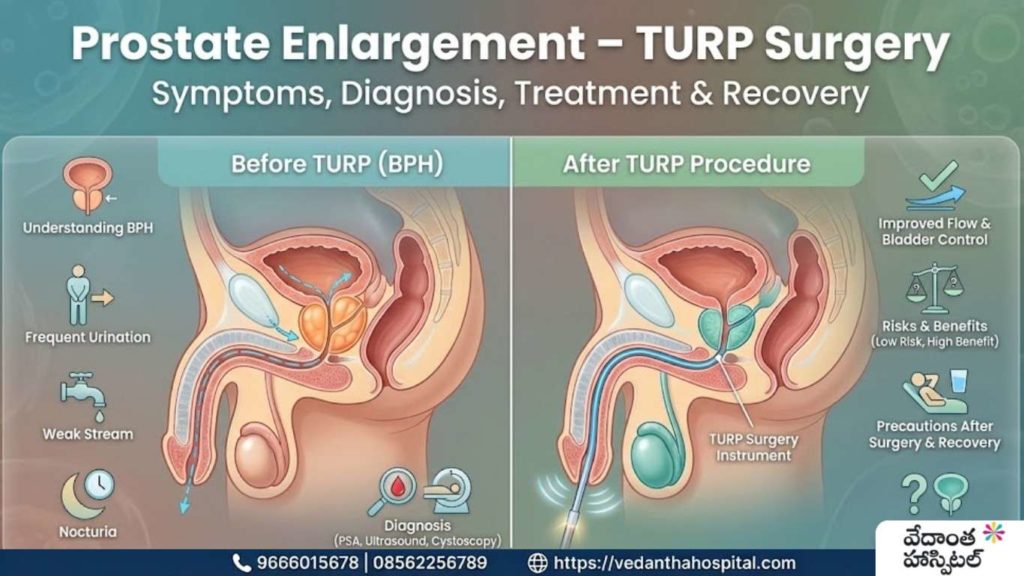
Prostate enlargement is a very common condition seen in men, especially after the age of 50. Medically, this condition is known as benign prostatic hyperplasia (BPH). As men grow older, the prostate gland gradually increases in size, which can interfere with normal urine flow and cause discomfort in daily life. Many men ignore early symptoms, assuming them to be part of aging, but untreated prostate enlargement can lead to serious urinary complications.
When medications are no longer effective, TURP surgery (Transurethral Resection of the Prostate) is considered one of the most reliable and widely performed surgical treatments. At a well-equipped Urology Hospital in Kadapa, TURP surgery is used to relieve urinary obstruction and improve quality of life.
The prostate gland is a small, walnut-shaped organ located just below the bladder and surrounding the urethra. Its main role is to produce fluid that nourishes and protects sperm. Understanding the prostate gland location, prostate gland zones, and prostate gland function and location helps explain why enlargement affects urination.
What Is Prostate Enlargement – TURP Surgery?
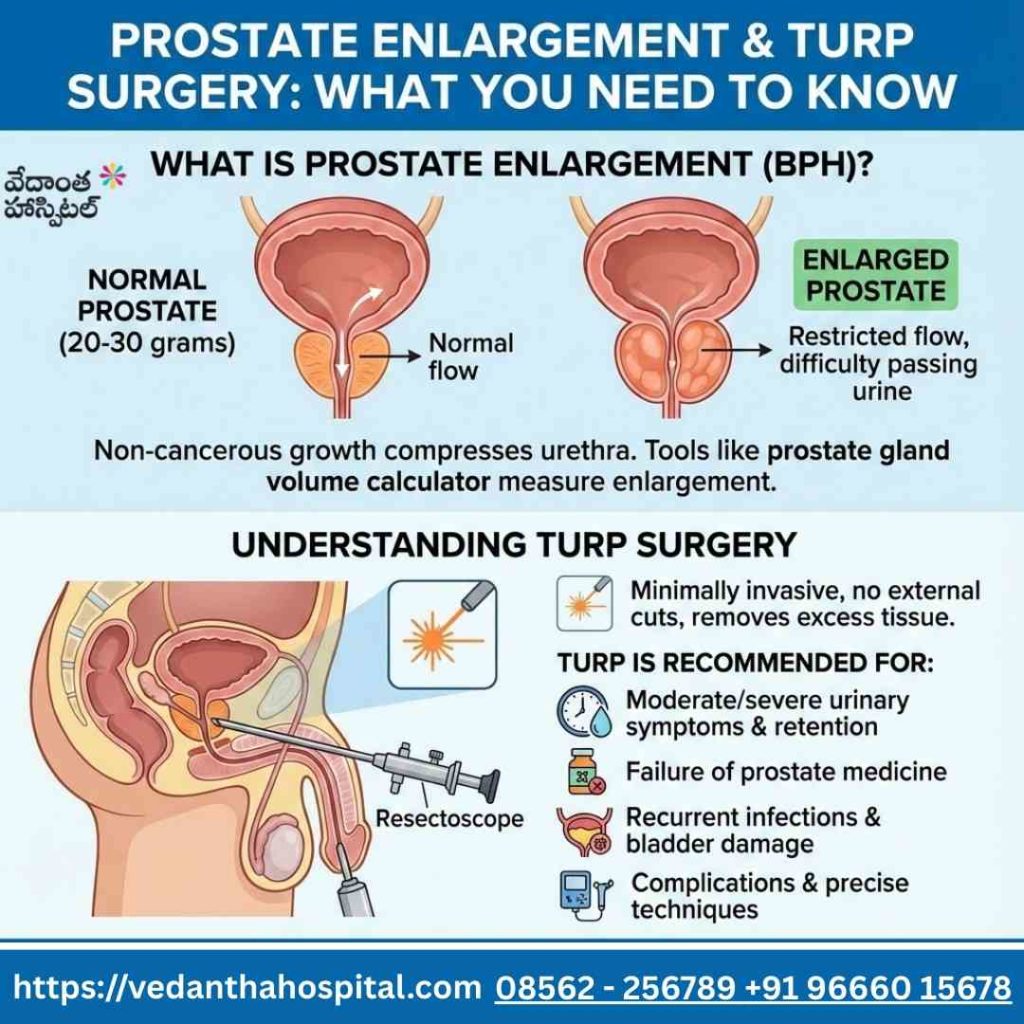
Prostate enlargement refers to the non-cancerous growth of the prostate gland. In normal adult men, the prostate gland normal size is approximately 20–30 grams. As the gland enlarges, it compresses the urethra, leading to difficulty in passing urine. Tools like a prostate gland volume calculator are often used to measure enlargement accurately.
Understanding TURP Surgery
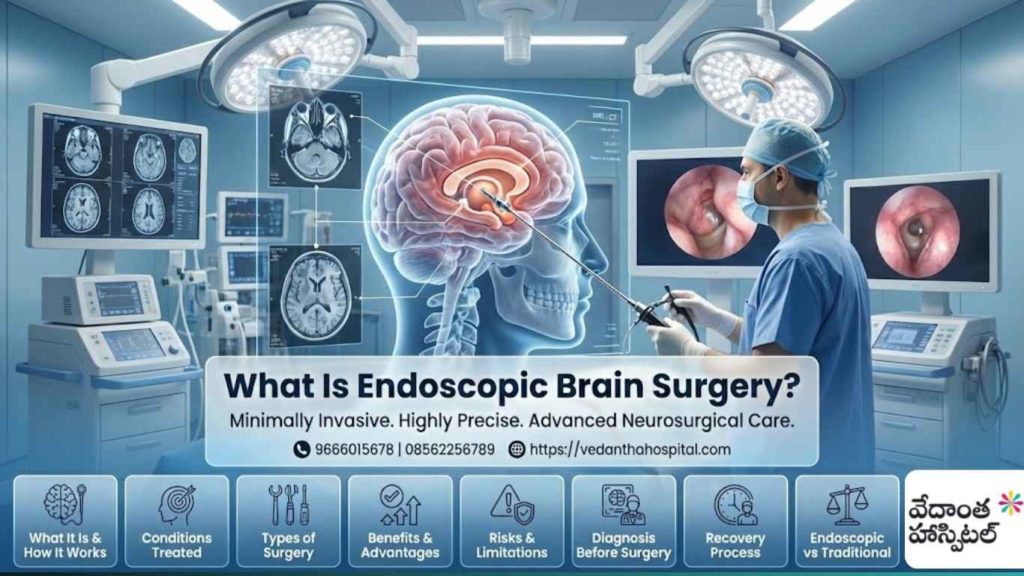
TURP surgery, or transurethral resection of the prostate, is a minimally invasive surgical procedure performed through the urethra without external cuts. During the procedure, excess prostate tissue blocking urine flow is carefully removed.
This surgery is commonly recommended for men with:
- Moderate to severe urinary symptoms
- Failure of prostate enlargement medicine
- Recurrent urinary retention
- Complications such as bladder damage or infections
Modern urology centers, including a Multispeciality Hospital in Kadapa, perform TURP using advanced equipment, sometimes including TURP surgery laser techniques for improved precision.
Why Is TURP Surgery Done?
TURP surgery is done when prostate enlargement begins to affect normal bladder function and overall health. While mild cases may be managed with medication, surgery becomes necessary in advanced stages.
Common Reasons TURP Is Recommended
- Persistent difficulty in urination
- Weak urine stream or dribbling
- Frequent night-time urination
- Incomplete bladder emptying
- Recurrent urinary tract infections
- Bladder stones or kidney damage
Conditions like benign prostate enlargement symptoms, mild enlargement of prostate, and advanced benign prostatic hyperplasia are evaluated carefully before deciding surgery.
Ignoring symptoms can result in prostate enlargement complications, including permanent bladder damage. That is why consultation with an experienced Urologist in Kadapa is essential for timely treatment.
Understanding
Benign Prostatic Hyperplasia (BPH)
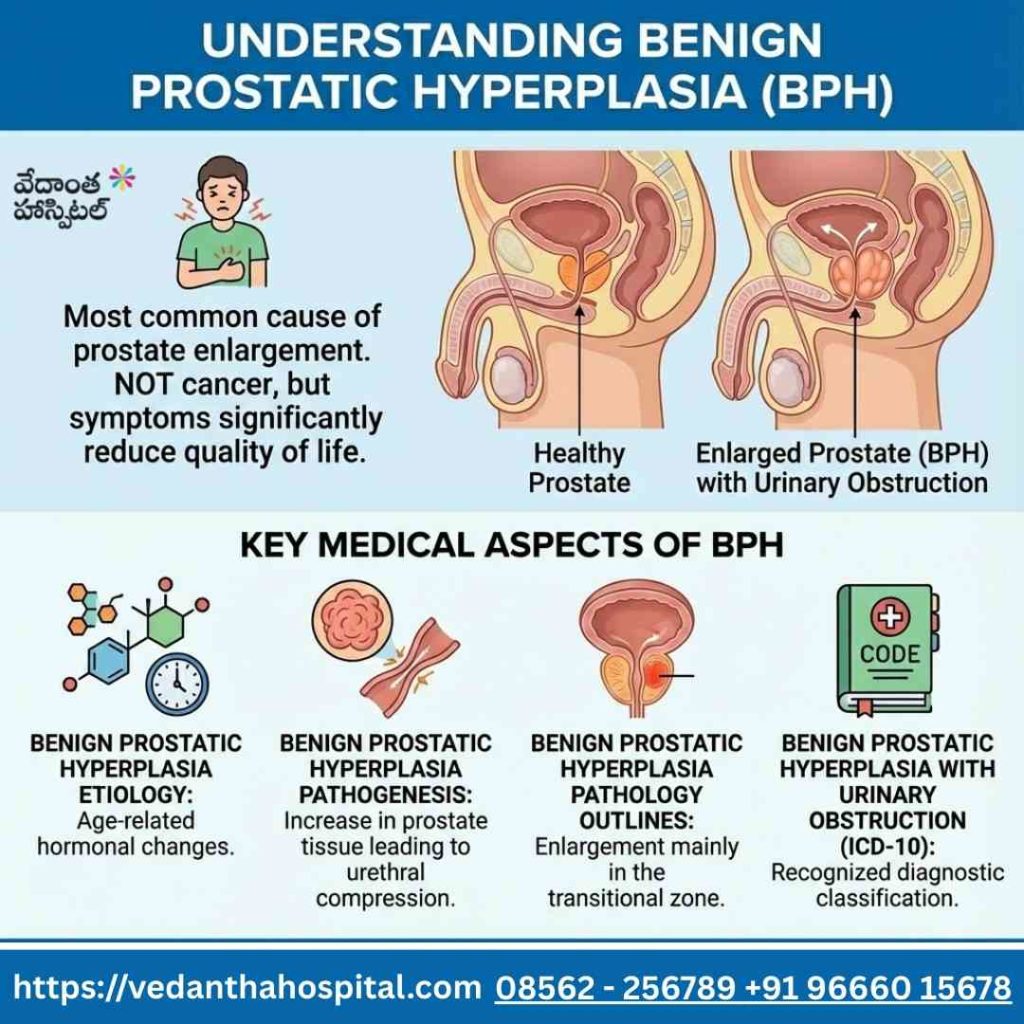
Benign prostatic hyperplasia is the most common cause of prostate enlargement. It is not cancer, but its symptoms can significantly reduce quality of life.
Key Medical Aspects of BPH
- Benign prostatic hyperplasia etiology: Age-related hormonal changes
- Benign prostatic hyperplasia pathogenesis: Increase in prostate tissue leading to urethral compression
- Benign prostatic hyperplasia pathology outlines: Enlargement mainly in the transitional zone
- Benign prostatic hyperplasia with urinary obstruction (ICD-10): Recognized diagnostic classification
Men often search whether prostate enlargement curable or if a permanent prostate enlargement cure exists. TURP surgery is currently considered the gold-standard surgical solution for long-term relief.
Symptoms and Risk Factors of Prostate Enlargement
Common Symptoms
- Difficulty starting urination
- Weak urine flow
- Frequent urination, especially at night
- Urgency to urinate
- Incomplete bladder emptying
- Prostate gland pain symptoms in advanced cases
These symptoms are often referred to as enlarged prostate signs symptoms or prostate gland disease symptoms.
Risk Factors
- Increasing age
- Family history
- Obesity and sedentary lifestyle
- Hormonal imbalance
- Chronic illnesses
Men looking for prostate gland exercise, dietary changes, or benign prostatic hyperplasia diet often try conservative methods first. However, when symptoms persist, surgical intervention becomes necessary.
Before and After of Prostate Enlargement TURP Surgery
Aspect | Before TURP Surgery | After TURP Surgery |
Urine Flow | Weak stream, difficulty starting urination | Improved urine flow and better bladder emptying |
Night-time Urination | Frequent waking at night | Reduced or no night-time urination |
Bladder Emptying | Feeling of incomplete emptying | Complete bladder emptying in most patients |
Urinary Infections | Recurrent urinary tract infections | Lower risk of infections |
Daily Comfort | Discomfort, urgency, hesitation | Improved comfort and quality of life |
Dependence on Medicines | Continuous use of prostate enlargement medicine | Reduced or no long-term medication needed |
Bladder Health | Risk of bladder damage | Protection of bladder and kidney function |
This comparison highlights why TURP surgery is considered a long-term solution for moderate to severe prostate enlargement.
Diagnosis Before TURP Surgery
Before recommending surgery, doctors perform a detailed evaluation that may include:
- Digital rectal examination
- Ultrasound imaging
- Urine flow test
- Blood tests
- Benign prostatic hyperplasia test
- Imaging to assess prostate gland zones anatomy
This diagnostic approach helps determine the severity and best treatment method.
At Vedanta Hospitals in Kadapa, urology specialists focus on evidence-based diagnosis to avoid unnecessary surgery and ensure patient safety.
Role of Expert Urology Care
Choosing the right hospital and specialist plays a crucial role in successful outcomes. A well-established Urology Hospital in Kadapa provides:
- Accurate diagnosis
- Advanced surgical techniques
- Post-operative monitoring
- Patient education and follow-up
Under the expertise of Dr. Dinesh Kumar Reddy, patients receive individualized care plans tailored to their prostate size, symptoms, and overall health. Consulting a qualified Urologist in Kadapa ensures clarity, safety, and long-term relief.
Risks and Benefits of TURP Surgery
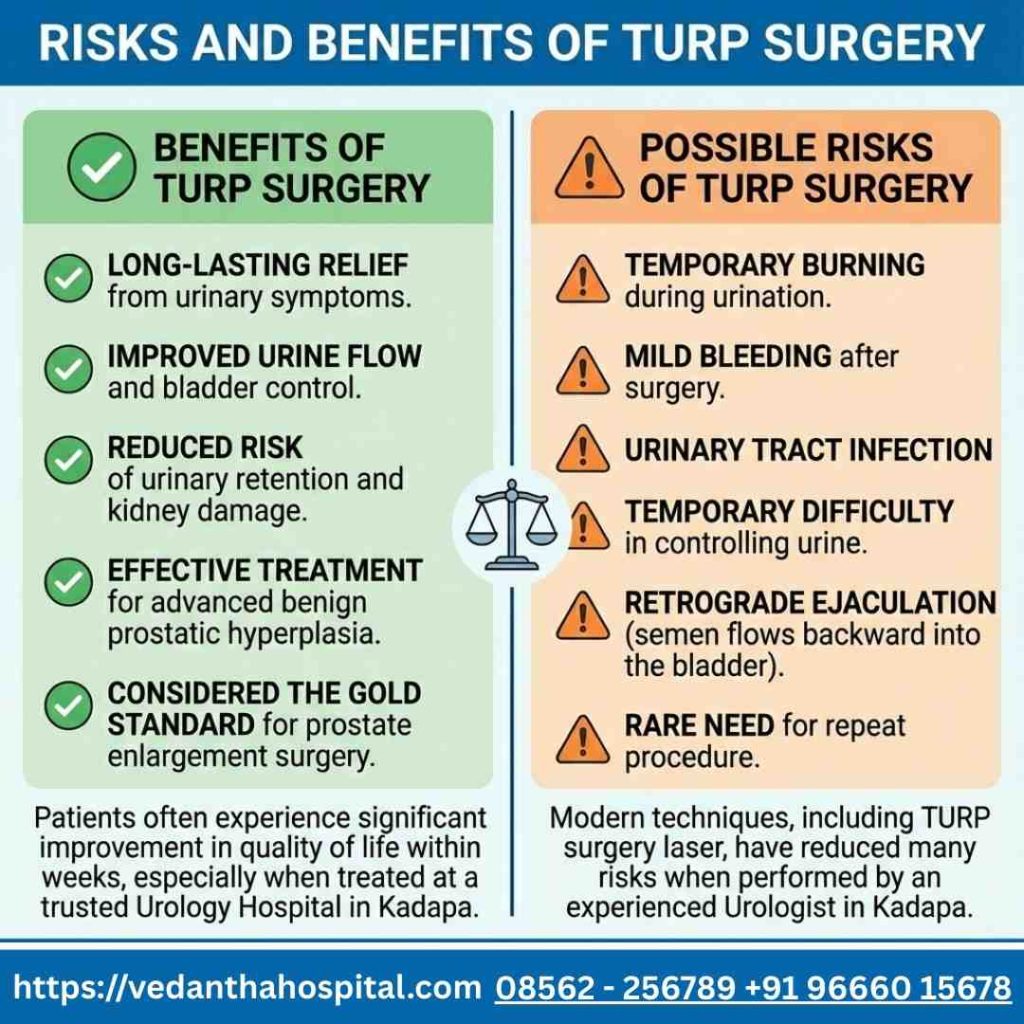
Benefits of TURP Surgery:
- Long-lasting relief from urinary symptoms
- Improved urine flow and bladder control
- Reduced risk of urinary retention and kidney damage
- Effective treatment for advanced benign prostatic hyperplasia
- Considered the gold standard for prostate enlargement surgery
Patients who undergo TURP often experience significant improvement in quality of life within weeks after surgery, especially when treated at a trusted Urology Hospital in Kadapa.
Possible Risks of TURP Surgery:
Although TURP is generally safe, some risks may include:
- Temporary burning during urination
- Mild bleeding after surgery
- Urinary tract infection
- Temporary difficulty in controlling urine
- Retrograde ejaculation (semen flows backward into the bladder)
- Rare need for repeat procedure
Modern techniques, including TURP surgery laser, have helped reduce many of these risks when performed by an experienced Urologist in Kadapa.
Precautions After TURP Surgery
Proper care after surgery is essential for smooth recovery and long-term success.
Important Precautions to Follow
- Drink plenty of water to flush the bladder
- Avoid heavy lifting and strenuous activity for a few weeks
- Follow prescribed medications carefully
- Avoid alcohol and smoking during recovery
- Maintain good hygiene to prevent infections
- Attend follow-up visits as advised
Patients are also advised to watch for warning signs such as fever, severe bleeding, or difficulty urinating and seek medical attention immediately if they occur.
At Vedanta Hospitals in Kadapa, post-surgery care focuses on patient education and gradual recovery to normal routine.
Is Prostate Enlargement Curable?
Many patients ask whether prostate enlargement curable or if there is a permanent prostate enlargement cure. While medicines can control symptoms in early stages, they may not stop progression in moderate to severe cases.
TURP surgery provides long-term relief by removing the obstructing prostate tissue. For most men, it effectively resolves symptoms and prevents further complications, making it one of the most reliable treatments available today.
Expert Urology Care in Kadapa
- Managing prostate enlargement requires timely diagnosis, proper treatment selection, and expert surgical care. A specialized Urology Hospital in Kadapa ensures accurate evaluation, advanced surgical options, and structured follow-up.
- With experienced specialists like Dr. Dinesh Kumar Reddy, patients receive evidence-based care tailored to their condition. Consulting a qualified Urologist in Kadapa helps prevent complications and improves long-term urinary health.
- As a Multispeciality Hospital in Kadapa, Vedanta Hospitals supports urology care with diagnostics, anesthesia, and post-operative services under one roof.
- TURP surgery provides long-term relief by removing the obstructing prostate tissue. For most men, it effectively resolves symptoms and prevents further complications, making it one of the most reliable treatments available today.
Conclusion
- Prostate enlargement is a common but manageable condition when addressed early. Understanding symptoms, risk factors, and treatment options such as TURP surgery (Transurethral Resection of the Prostate) empowers patients to take timely action.
- With modern surgical techniques, careful diagnosis, and expert care at Vedanta Hospitals in Kadapa, men with prostate enlargement can regain comfort, confidence, and quality of life.
- Early consultation, correct treatment, and proper follow-up remain the key to successful long-term outcomes.
- Our urology team has helped hundreds of patients regain their health. You can read our latest patient reviews here to see their experiences
FAQ'S
1. What is TURP surgery used for?
TURP surgery is used to treat prostate enlargement that causes urinary blockage. It removes excess prostate tissue to improve urine flow.
2. Is TURP surgery painful?
The surgery itself is painless due to anesthesia. Mild discomfort during urination may occur temporarily after the procedure.
3. How long does TURP surgery take?
TURP surgery usually takes about 60 to 90 minutes, depending on prostate size and complexity.
4. How long is recovery after TURP surgery?
Most patients recover within 2 to 4 weeks, with gradual improvement in urinary symptoms.
5. Can prostate enlargement come back after TURP?
In most cases, TURP provides long-term relief. Rarely, prostate tissue may regrow over many years.
6. Is TURP better than prostate medicines?
Medicines help in early stages, but TURP offers a more permanent solution for advanced prostate enlargement.
7. Are there alternatives to TURP surgery?
Yes, options include prostate gland laser surgery and other minimally invasive procedures, depending on the case.
8. Is TURP surgery safe for elderly patients?
Yes, TURP is commonly performed in elderly patients after proper medical evaluation.
9. What precautions should be taken after TURP surgery?
Avoid heavy work, drink plenty of fluids, and follow medical advice for smooth recovery.
10. When should I consult a doctor for prostate enlargement?
You should consult a doctor if urinary symptoms persist, worsen, or interfere with daily life.